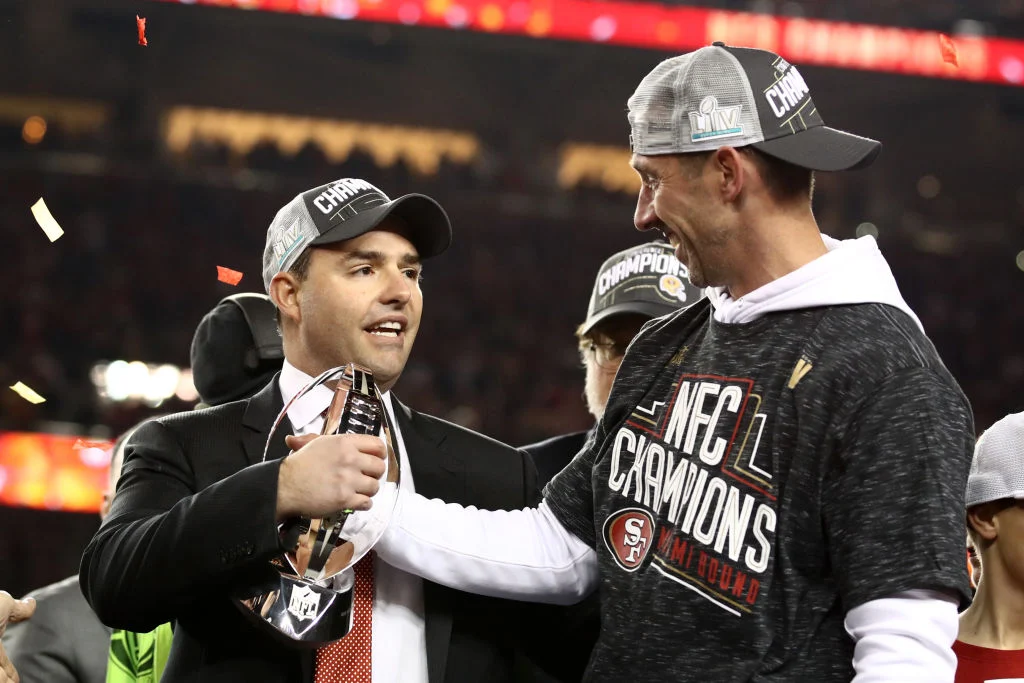

The San Francisco 49ers are one of the most valuable and successful franchises in professional sports. They’ve won five Super Bowls, played in three more, and produced some of the most famous players in NFL history.
And for nearly half a century, the team has been controlled by the same extended family.
The 49ers’ controlling owner is Jed York, whose mother, Denise DeBartolo York, and father, John York, remain co-chairmen. The family has controlled the franchise since 1977, when Denise’s father, shopping mall magnate Edward J. DeBartolo Sr., financed its purchase for roughly $17 million.
Today, that investment is worth more than $9 billion.
The family did not make its original fortune in football. It came from construction, real estate and, most importantly, the explosive growth of the American shopping mall.
And the story of how a mall fortune from Youngstown, Ohio, turned into ownership of the San Francisco 49ers involves a father who became one of America’s richest real estate developers, a son who built an NFL dynasty, a $400,000 Louisiana political scandal, a bitter family asset split and one of the greatest investments in the history of professional sports.

Ezra Shaw/Getty Images
The DeBartolo Fortune Started With Construction
The family fortune begins with Edward J. DeBartolo Sr.
Long before his family owned NFL teams and billions of dollars worth of real estate, DeBartolo learned the construction business in Youngstown, Ohio. He began helping his stepfather’s contracting business as a teenager, writing bids for projects that ranged from roads to commercial buildings.
He studied civil engineering at the University of Notre Dame and worked in construction before serving with the Army Corps of Engineers during World War II.
After the war, DeBartolo saw an enormous opportunity.
Millions of returning servicemen were starting families and moving into newly built suburbs. DeBartolo initially concentrated on housing, but he recognized that all of those new suburban communities were going to need places to shop.
That insight made his family extraordinarily rich.
The Edward J. DeBartolo Corporation expanded from homes and strip centers into large enclosed regional shopping malls. By the 1960s and 1970s, the company was developing shopping centers across the country.
By the early 1980s, DeBartolo had reportedly developed around 60 million square feet of retail space and was considered one of the largest shopping mall developers in America.
The family’s empire eventually stretched beyond malls into hotels, office buildings, condominiums, horse-racing tracks and other investments. Edward Sr. became one of America’s richest businessmen, with his wealth approaching $1 billion by the 1980s and exceeding $1 billion around the beginning of the 1990s.
Sports were another passion.
And in 1977, Edward Sr. decided to add an NFL franchise to the family portfolio.
The DeBartolos Buy the 49ers for $17 Million
The San Francisco 49ers were founded by Tony Morabito in 1946 and remained under Morabito family control for three decades.
In 1977, the DeBartolos purchased roughly 90% of the franchise for about $17 million.
Edward Sr. had the money, but he essentially handed the football operation to his 31-year-old son, Edward “Eddie” DeBartolo Jr.
The early results were not promising.
The 49ers finished 2-14 in both 1978 and 1979. But Eddie hired Bill Walsh, and the organization drafted a quarterback from Notre Dame named Joe Montana.
Everything changed.
Eddie DeBartolo Builds a Dynasty
Under Eddie DeBartolo Jr., the 49ers became the defining NFL dynasty of the 1980s and one of the most successful franchises in league history.
San Francisco won its first Super Bowl following the 1981 season. It won again following the 1984, 1988 and 1989 seasons. With Jerry Rice becoming the greatest wide receiver in NFL history and Steve Young eventually succeeding Montana at quarterback, the 49ers added a fifth championship following the 1994 season.
Eddie’s influence went beyond simply signing the checks.
He became famous for treating players and their families unusually well, providing first-class travel, facilities, meals and other amenities at a time when NFL owners were generally much more frugal. Former players have repeatedly described DeBartolo’s 49ers as a family atmosphere, and stars sometimes accepted less money than they could have earned elsewhere to remain with the organization.
During DeBartolo’s tenure, the 49ers made the playoffs 16 times in 18 seasons and became the first franchise in NFL history to win five Super Bowls.
His success eventually earned him induction into the Pro Football Hall of Fame.
But while Eddie was building a football dynasty, the business that financed it was undergoing a major transformation.
The $3 Billion Simon Property Merger
Edward DeBartolo Sr. died in 1994.
By then, the mall business had been through a difficult period. The family’s real estate empire had accumulated billions of dollars of debt during the commercial real estate downturn of the late 1980s and early 1990s.
DeBartolo Realty Corporation had gone public, and in 1996 it agreed to merge with Simon Property Group in a transaction valued at roughly $3 billion.
The combination was enormous.
The DeBartolo side brought 49 regional malls, 11 community shopping centers and other properties into the merged company. The business initially operated as Simon DeBartolo Group before eventually returning to the name Simon Property Group.
Today, Simon Property Group remains one of the largest publicly traded shopping mall owners in the world.
The DeBartolo family retained a major equity interest in the merged company. That stock would soon become extremely important because Eddie and Denise were about to divide their father’s empire.
The Louisiana Casino Scandal
In the late 1990s, Eddie DeBartolo became involved in an effort to obtain a Louisiana riverboat casino license.
Former Louisiana Governor Edwin Edwards demanded $400,000 from DeBartolo in connection with the licensing process. DeBartolo paid the money but did not report the incident to federal authorities.
In 1997, as the federal investigation intensified, Eddie stepped away from control of the 49ers.
In 1998, he pleaded guilty to failing to report a felony. He was fined $1 million, sentenced to probation and suspended by the NFL for one year. He later testified against Edwards.
The legal problems overlapped with another conflict: Eddie and his sister Denise had been fighting over control of the enormous collection of assets left by their father.
Ultimately, they decided to split the empire.
And Denise chose the football team.
Denise Gets the 49ers. Eddie Gets the Real Estate.
By 2000, NFL owners had approved the transfer of control of the 49ers from Eddie to Denise DeBartolo York.
The broader family settlement was completed around the same period.
Denise emerged with control of the 49ers.
Eddie received more of the family’s other business holdings, including an approximately 11.3% stake in Simon Property Group that was worth roughly $583 million at the time, along with other real estate interests.
On paper, it was not an absurd trade. Eddie received hundreds of millions of dollars worth of stock in the largest shopping mall company in America.
And things worked out fine for him. Today, Eddie DeBartolo Jr. has a net worth of $4 billion.
But Denise got the asset that went absolutely ballistic.
A franchise the family had acquired for $17 million was eventually going to be worth billions.
The York Family Takes Over
Denise and her husband John York assumed control of the franchise after Eddie’s departure.
Denise had extensive experience inside her father’s business empire. She had worked for the DeBartolo Corporation, served in senior leadership positions and had previously been involved with another family-owned professional sports franchise, the Pittsburgh Penguins.
John’s background was entirely different. He was a physician and cancer research pathologist who built and operated a medical laboratory business before becoming more involved with the family’s sports and business holdings.
Their son Jed joined the 49ers in 2005 after working as a financial analyst at Guggenheim Partners.
By the end of 2008, Jed had been elevated to team president at just 28 years old. He subsequently became CEO and gradually emerged as the public face and operating head of the family’s football empire.
In March 2024, another important transition occurred. Jed acquired enough additional equity from his mother to become the 49ers’ official principal owner.
Denise and John remained co-chairmen, but Jed became the controlling representative of the family’s ownership group.
In February 2026, longtime team president Al Guido was promoted to CEO. Jed remains principal owner, with Guido, general manager John Lynch and head coach Kyle Shanahan reporting to him.
So Who Owns the 49ers Today?
The York-DeBartolo family still overwhelmingly controls the San Francisco 49ers, but it no longer owns virtually the entire team.
Before 2025, members of the extended family controlled roughly 97% of the franchise.
Then they started selling small pieces.
In May 2025, three Bay Area families purchased a combined 6.2% interest in the 49ers at a valuation of roughly $8.6 billion.
The largest buyer was the family of Vinod Khosla, the billionaire co-founder of Sun Microsystems and founder of Khosla Ventures. Vinod and his son Neal acquired approximately 3.1%.
Venture capitalist Byron Deeter and his family acquired approximately 2.1%, while ICONIQ Capital executive Will Griffith and his family acquired approximately 1%.
Later in 2025, Pete Briger Jr., executive chairman of Fortress Investment Group, purchased another 3.2% stake at the same $8.6 billion valuation. That stake was worth roughly $275 million.
Then came another deal.
In December 2025, Bret Taylor acquired approximately 1% of the 49ers.
Taylor is a longtime Silicon Valley executive who helped create Google Maps, founded FriendFeed and Quip, served as Facebook’s chief technology officer, became co-CEO of Salesforce, chaired Twitter’s board and later co-founded artificial intelligence company Sierra.
His purchase valued the 49ers at more than $9 billion.
All told, the family sold roughly 10.4 percentage points of the franchise during 2025 while comfortably retaining control.
The 49ers also have several longer-standing minority owners, including Silicon Valley real estate billionaire John Sobrato, businessman Mark Wan and former team president and technology investor Gideon Yu.
There is one upcoming change to that ownership group. The Khosla family has agreed to purchase the Seattle Seahawks for $9.612 billion and, under NFL rules, will have to relinquish its 49ers interest as part of that transaction.
From Shopping Malls to a $9+ Billion Football Team
The simplest answer to “Who owns the San Francisco 49ers?” is the York-DeBartolo family.
But the family fortune behind the team wasn’t created by football.
It started with Edward DeBartolo Sr. building houses for America’s growing postwar suburbs. Those houses created communities. Those communities needed shopping centers. The shopping centers became malls. The malls became a nationwide real estate empire.
Profits from that empire allowed the family to spend $17 million on a struggling NFL franchise in 1977.
Eddie DeBartolo Jr. turned that franchise into a dynasty.
His legal problems eventually resulted in his sister Denise taking control of the team while he took hundreds of millions of dollars worth of real estate assets.
Denise and John York passed day-to-day leadership to their son Jed, who is now the team’s principal owner.
And nearly 50 years after Edward DeBartolo Sr. wrote the original check, the family has managed to pull hundreds of millions of dollars out of the 49ers by selling small minority interests while still retaining complete control.
The original investment:
$17 million.
The valuation established by the team’s most recent minority transaction:
More than $9 billion.
That’s not a bad return on a shopping mall fortune.