
During its original run on CBS between 1959 and 1964, Rod Serling‘s The Twilight Zone would debut episodes around 10:00 p.m. ET, well after the average American child went to bed.
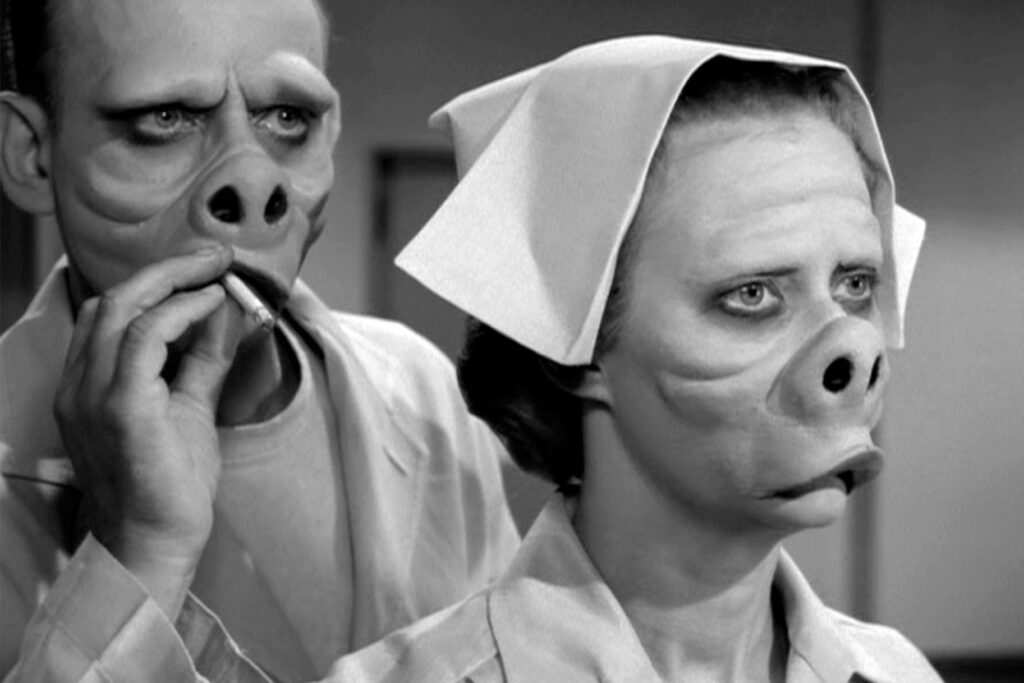
As such, parents didn’t need to worry about their kids becoming traumatized by a show that could often be quite scary. Perhaps the most shocking visual of all arrived in season two’s iconic rumination on societal beauty standards, “Eye of the Beholder” (originally aired as “The Private World of Darkness”).
William Tuttle’s makeup effects for the big twist reveal are still haunting well over six decades later. But try to imagine what it was like seeing those pig-like punims back in 1961, long before they became part of instantly recognizable pop culture iconography. It might very well have been the scariest sight some viewers had ever seen, particularly if they were young.
How The Twilight Zone‘s “Eye of the Beholder” Gave Children Nightmares
“Eye of the Beholder” caused a small controversy on that front about a year after it first premiered.
The trouble, as recounted by Grams Jr. in The Twilight Zone: Unlocking the Door to a Television Classic, began after a commercial promoting Twilight Zone accidentally aired during the daytime after a children’s show. Said advertisement contained a number of disconcerting close-ups showing the grotesque hospital workers from “Beholder,” as well as Robin Hughes’s Satan from “The Howling Man” and the devilish bobble head from “Nick of Time.”
San Francisco-based mother Lynn Anderson wrote about the incident to Serling, saying, “As a result of viewing this macabre presentation, [my son] has had various nightmares involving horrible faces and is frightened in his room at night with the lights off. He says he’s afraid of those people—and describes the commercial.”
Serling took the time to respond with an apology, explaining that the commercial was shown without his prior knowledge or approval.
“I deeply regret that this has been the case, but unfortunately have no control whatsoever over the network’s promotional planning and programming,” he wrote. “Please accept my apologies for this. I’m sending a copy of your letter to the network here on the Coast in the hopes that this particular film clip will be taken out of use during the daytime hours.”
Classic episodes of The Twilight Zone air regularly on SYFY. Click here for complete scheduling info!