
A warren of corridors under the city centre holds priceless artefacts — but we can’t tell you where it is

05:00, 07 Sep 2026

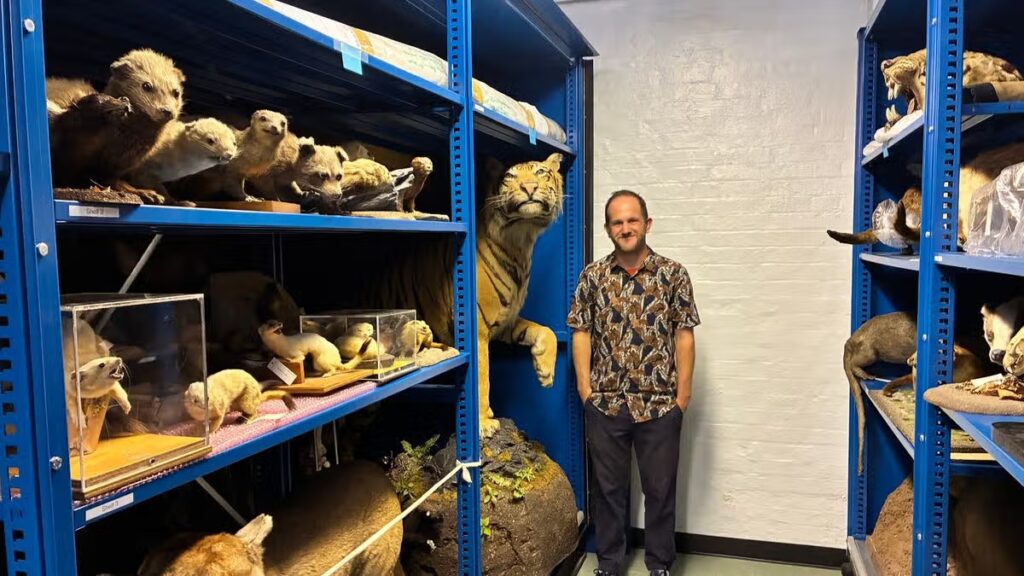
Dr John Wilson, head curator of zoology, at the National Museums Liverpool stores(Image: Liverpool Echo)
In a warren of subterranean corridors beneath Liverpool city centre, hundreds of thousands of treasures are held in long, tall cabinets, away from public view. National Museums Liverpool has one of the biggest collections in the country, with more than four million items across its various museums.
This week, the ECHO was granted rare access to the museum’s stores — but at the request of museum bosses, and to safeguard the rare items inside, we can’t tell you where they are located.
Dr John Wilson, 44, is lead curator for zoology at National Museums Liverpool, and spends his time managing and researching the huge number of specimens held down in the basement, including thousands of dried bird skins held in deep drawers in towering cabinets; boxed animal skeletons held in cupboards; taxidermy specimens, and jars full of toads, snakes and other reptiles or amphibians pickled in gloomy-looking yellow spirits.
Behind a single-width wooden door, rows of metal cabinets stretch off to the distant wall. Dr Wilson told the ECHO the room holds nearly 20,000 clutches of bird eggs (around five per clutch among those the ECHO saw).
A drawer from one of the cabinets lies open. Within this one drawer are 40 dried skins of red-billed and green magpies from south-east Asia.
This is one drawer in one of 24 cabinets, stacked two high against one wall of the large subterranean room.
Dr Wilson said: “If you see down the corridor how many cabinets we’ve got, these are all full of drawers. Every drawer is full of bird skins. There are between 40,000 to 50,000 of these bird skins that we have in the collection.
“What they do is they remove all the internal organs, dry out the skin, and then once it’s been dried, it’s very resistant to decomposing. Then you just have to protect it from insect pests, which is why we store them in bags.
“Often insects are attracted to the smell. These ones don’t smell that bad, but some of the sea birds in particular really have that sea smell. That contains the smell and anything that might attract the insect pests as well.”
The bird collection is the second largest in the UK. The oldest bird skins in the collection date from 1760. The newest skins are a mere 200 years younger.
Dr Wilson said: “Because they’re so old, the historical context is quite important nowadays: the colonial origins. A lot of our collections come from former British colonies or other European colonies, where people went exploring or exploiting those regions. That’s an interesting aspect.”
The collection includes the only known specimen of the Liverpool Pigeon. Dr Wilson said: “It’s actually from the Pacific Islands, we’re not sure which one, Tahiti is people’s best guess. But because it’s been in this museum for nearly 200 years, that’s why it’s known as the Liverpool Pigeon.”
Dr Wilson is currently investigating a rare bird specimen from Hawaii reportedly collected during Captain Cook’s voyage, to see if it’s the real deal.
He said: “It’s like that TV show, Fake or Fortune. We do the same thing, but for animals. Lots of the specimens have a really interesting story.”
3,000 items lost in Blitz
The bombing of the World Museum during the Blitz led to the loss of around 3,000 items in the National Museums Liverpool collection. The disaster still looms large in these basements. Close to Dr Wilson’s desk, two large prints show the natural history gallery of the museum before and after the devastating fire.
All the exhibits were completely destroyed, including a taxidermy elephant that came to the museum after living and dying in Barnum & Bailey’s circus. The animal was strangled to death for being too unruly.
Cupboards and cabinets holding important and rare specimens are marked with orange stickers. If the unthinkable should happen and these stores are caught in another blaze, these are the specimens that would be evacuated first or preserved and protected after a fire.
Gorilla, tiger, and leopard in a cupboard
Back out in the warren of corridors, Dr Wilson leads us past supermarket-style freezers that line the corridors outside the taxidermy stores. He said: “The specimens go in these deep freezers to kill the insects. We have a policy where any new specimen coming in needs to go into the freezer for a few weeks before it goes in.”
Inside the taxidermy stores, tigers, lions, badgers, hares, leopards, and all manner of beasts are kept on sliding shelves, packed tightly together. A taxidermy gorilla crouches behind a leopard in the dark on a shelf just behind. Primate skeletons are his nearest neighbours.
After the museum’s taxidermy collection was completely destroyed in the Blitz, curators put out a callout in museum journals worldwide for taxidermy specimens.
While some came from distant corners of the world, others came from Merseyside itself, including stuffed domestic cats Dr Wilson said were donated to the RSPCA, which had no use for them, and subsequently gave them to National Museums Liverpool.
The pets stand posed on the shelf opposite the mice and rats.
Standing next to a taxidermy tiger, Dr Wilson said: “It’s work that never ends. It’s the only national collection outside of London in England. Because of the history of Liverpool, it’s the largest in England outside of London, so it’s really important. That’s why when smaller museums close down, they have given us things.”
“You can imagine trying to keep track of it all. We can only work on a small part of it at a time.
“We try our best to look after it as much as we can, and leave it in a better position in terms of documentation and telling stories about the collection. The context changes over time, and what you might find important about it changes over time.”