
“I went on these fishing trips with people who didn’t really have real jobs,” the director recalls. “They only worked short-term jobs in order to get the money to allow them to fish. And I went on a lot of trips with these people, with the group sometimes as large as 10 people. Other times it was just two people, but… I had so much fun because these were not the kinds of people I’d met before.”
What intrigued the filmmaker wasn’t just that they liked the sport; it’s that they seemed to lived for nothing else: “They don’t go home, they don’t shower, they don’t sleep, they just continue to fish.” It’s a lifestyle that greatly influenced Hope’s vision of humanity, something that’s “more primal and instinctive.” Another way to say that, then, might be tribal.
Indeed, while the film is ultimately a stylish action spectacle wherein the film’s hunters come face-to-face with aliens from beyond, the trick of the film is that the extraterrestrials (played unrecognizably in motion-capture by famous Western actors like Michael Fassbender and Alicia Vikander) are also revealed to be a culture unable to comprehend the squishy humans they meet in the East Asian woods—and noticeably near the minefields of Korea’s Demilitarized Zone.
“During the time when I was just starting to find the inspiration for the movie Hope, there was a lot of news on the television about an impending war in Korea,” says Na. “So I think all of these things added up.” There can be surprisingly tense action sequences, including a spectacular third act chase of alien versus horse, but at its heart this is a sci-fi film about what happens when communication is perceived to be the last resort if not outright futile.
Says Na, “The aliens are metaphors for victims of society, and humans, in contrast, would represent the assaulters. So at the end of this movie, these two opposing sides, the assaulters and the victims, their perspective and their story converge, and the movie asks the question of what kind of future lies ahead for them.”
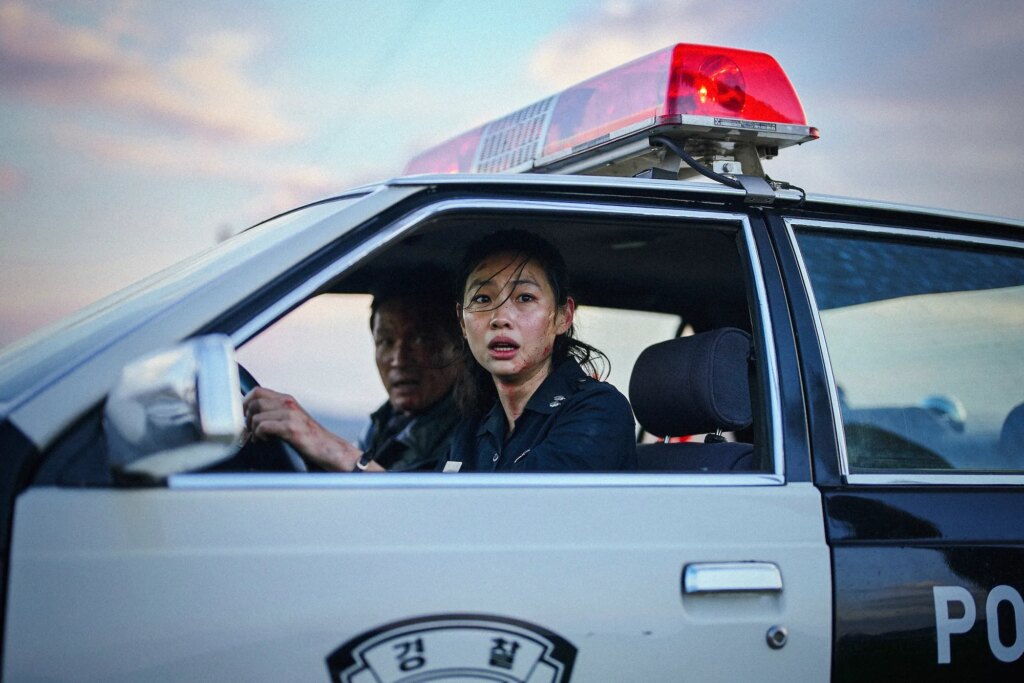
Thematically it’s a potent idea, yet we suspect what might stay with viewers is sequences like the extended first act wherein Hwang’s hapless police chief is going virtually door to door in his ruined community, trying to find the unseen beast that left a bloody trail of carnage in its wake.