
This is a notable year for short films at the Venice Film Festival, with Saoirse Ronan making her directorial debut (“Paper Plane”), Laura Poitras looking at the ICE occupation of Minneapolis (“They’re Here”) and Nathan Silver chronicling a life change through the songs of birds (“Sounds From Home”), among others.
But if you’re looking for star power and cinematic oomph, “Flesh Impact” is the biggest short to come out of Venice since Wes Anderson’s Oscar-winning “The Wonderful Story of Henry Sugar” premiered on the Lido in 2023. The 21-minute film was directed by Maggie Gyllenhaal, who’s serving as president of the Venice jury this year; it will make its debut before the Golden Lion Award ceremony to honor Ellen Burstyn, who stars in the film with Dakota Fanning; and it also features Peter Sarsgaard and newly-minted Emmy nominee Sepideh Moafi from “The Pitt.”
And, oh yeah, it’s about Marilyn Monroe, who was born 100 years ago this year.
Or, perhaps, it’s about the world that created, idolized and wrecked Marilyn Monroe, and the industry that simultaneously adored and exploited her. And about the women who followed her and got their own taste of the adoration and exploitation, definitely including Gyllenhaal herself.

As a director, she is something of a provocateur, jumping through time to present two sides of a troubled and troubling woman in the quietly unnerving “The Lost Daughter” and then going a little nuts with this year’s grungy horror riff “The Bride!” “Flesh Impact” gives Gyllenhaal another complex heroine to consider, but the film itself is gentler, imbued with more sorrow than anger.
In many ways it’s a lovely reverie delivered by a ghost, but it also has bite. And it ends by serenading Marilyn Monroe with the snarling voice of punk icon Patti Smith, a master stroke that is simultaneously surprising, defiant and wonderfully appropriate.
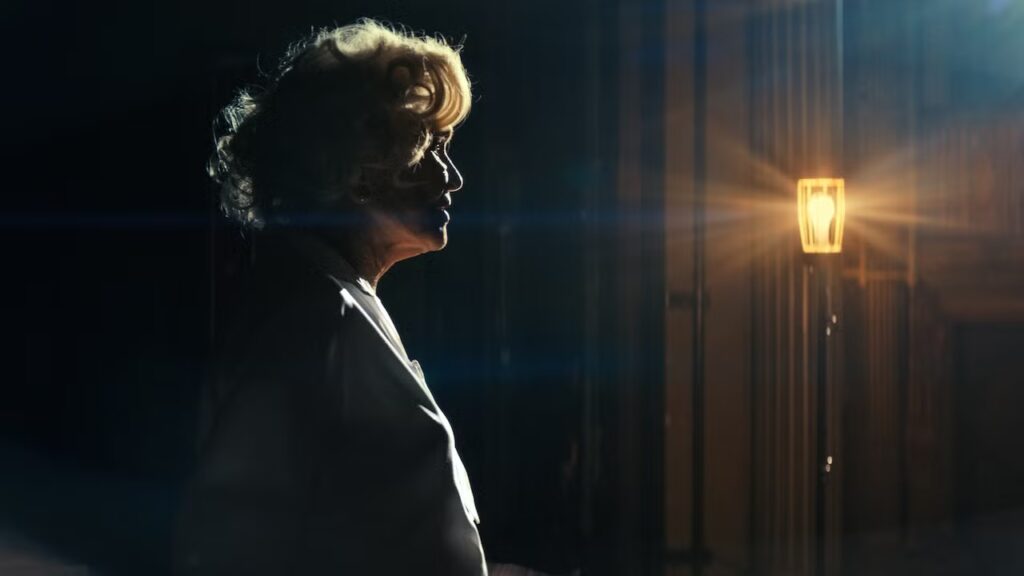
The short, which is screening out of competition in Venice, is also a marvelous showcase for Burstyn, who at the age of 93 plays Marilyn – or Norma, as she first introduces herself – as a woman who has never forgotten that she had to walk around the studio lot in a negligee before she could get any job offers.
The film picks her up as she walks in a stage door, strolls onto a stage and announces that she’s there to audition for the role of socialite Carol Cutrere in Tennessee Williams’ 1957 play “Orpheus Descending.” She’s an hour late, but the casting director (Moafi) points out that’s not the only problem: “Carol is 25 and beautiful,” she says.
“I’m aware,” Marilyn says simply, and then adds that she turned 100 in June. (Monroe was born on June 1, 1926.)
As the casting director and an unnamed director played by Sarsgaard watch with increasing interest, Marilyn begins to ramble, her wandering monologue covering territory familiar to Monroe aficionados: her marriage to Arthur Miller, the orphanage where she spent time as a child, the lure of the nearby film studio, her studies with Lee Strasberg, her mistreatment and dismissal at the hands of Hollywood.
“Billy Wilder said I had flesh impact,” she says, and then defines the term: “You could reach out and touch me.” A pause. “And everybody did.”

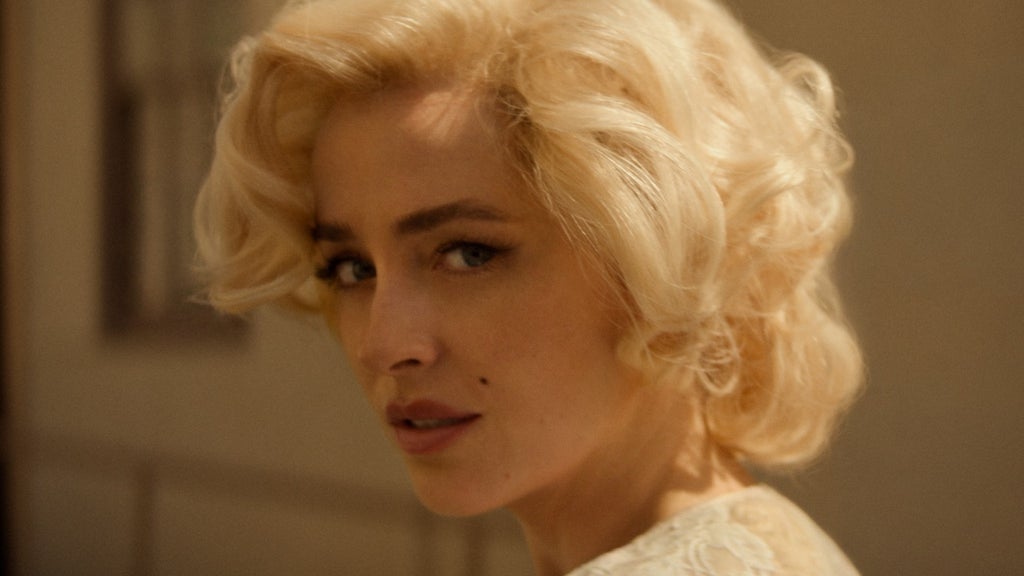
Between lines from “A Streetcar Named Desire” and a riveting monologue from “Orpheus Descending,” she calmly sketches her career in a town where she said the prevailing attitude was that actresses were “all whores.” Burstyn makes the hurt palpable but also shows the layers that were erected to hide the pain – and as a 100-year-old legend dropped into a theater that seems unmoored in time, she doesn’t need to point out that much of what she says can also apply to current-day Hollywood.
The film has a leisurely pace that’s always rooted in sorrow. As Marilyn circles through Hollywood injustices both small and large, Gyllenhaal deploys flashbacks that eventually find Burstyn’s Marilyn morphing into Johnson’s Marilyn and vice versa.
It’s not revelatory, but it’s not meant to be; it’s an offhand, restrained meditation on fame and femininity from a woman who has been battered and bruised but knows her power. “I can still manage it, sometimes,” she says. “Flesh impact.”
The film is partly a commercial, commissioned by the automotive brand Genesis and featuring one of their electric vehicles in the opening scene. But Gyllenhaal turns product placement into a wry punchline of sorts, another example of the finesse with which she handles the material.
The movie is timed to Monroe’s centennial, but its filmmaker isn’t one for uncomplicated celebration. “Flesh Impact” is sweet and funny with an edge, convincing us that even blonde screen goddesses contain an inner Patti Smith ready to roar.