
In anime, and fiction more broadly, worldbuilding is one of the most crucial elements that ensures viewers’ complete immersion in the unfamiliar universe they embark on exploring. When moving away from reality and constructing a world of impossible wonders, be it a gritty sci-fi setting or an expansive fantasy realm, the significance lies in making this imaginary universe feel internally consistent, lived-in, and compelling to investigate.
Thankfully, anime introduces fans to no shortage of worlds that feel both joyous to explore and awe-inspiringly intricate in their construction. And within these fascinating alternate universes unfold stories just as brilliant as the settings themselves.
Witch Hat Atelier Hides the Brilliance of Its Worldbuilding in the Details
A recent fantasy anime sensation that, in reality, has been developing its awe-inspiring universe for over a decade in manga format, Witch Hat Atelier creates a world built upon a crucial lie: that magic is innate to witches and not an art of drawing anyone can master. While much of Witch Hat Atelier’s worldbuilding might appear standard for fantasy at first glance, it stands out for its elaborateness and intricacy, as well as how this seemingly fantastical world reflects grounded problems of our reality.
Witch Hat Atelier spends time exploring how exactly magic is drawn and utilized, how witch society functions and coexists with the world of ordinary people, and what flaws fill this fragile system with subtle cracks. However, the greatest aspects of Witch Hat Atelier’s worldbuilding still await fans in future seasons.
The Fate Series’ Lore Is Famously Complex & Multifaceted

The Fate series is a famously enormous franchise that, given the overwhelming number of games, anime series, novels, and so forth of which it consists, takes place in a world complex enough to justify such grandness. At the heart of the franchise lies an immediately intriguing and remarkably intricate magic system, but there are more layers to it than just the well-known Holy Grail Wars.
While somewhat lacking consistency between some of its entries and regrettably not too interested in exploring the broader scope of its world, Fate still has brilliant worldbuilding that appeals to fans compelled to lose themselves in stories with near-infinite detail. However, even without diving into the complexities of its magic rules and history, one can easily immerse themselves in almost any given Fate entry.
Shinsekai Yori’s Utopian Facade Hides a Complicated, Dark Truth

At first glance, the world of Shinsekai Yori, also known as From the New World, appears to be a deceptively tranquil futuristic utopia where the protagonists – a group of children possessing telekinetic powers – grow up happy and content. Gradually, however, the series unfolds a considerably darker, more disturbing truth, revealing the horrifying price this society pays for peace and stability.
Shinsekai Yori’s world is not expansive or particularly exciting to traverse. However, the strength of its worldbuilding lies in how well-crafted and sociologically complex its dystopian future is. Rather than spoon-feeding viewers information, the series encourages them to uncover the secrets of its intriguing and frightening setting step by step through an eerie, deliberate thriller narrative.
The Twelve Kingdoms Has the Best Worldbuilding Within the Isekai Anime Genre

A 2002 epic fantasy isekai series that was released long before the genre’s mid-2010s boom, The Twelve Kingdoms immerses viewers not in a generic medieval-inspired magical setting, but in a breathtaking world that borrows heavily from Chinese mythology. Similar to the protagonist, Youko Nakajima, fans initially enter this world completely unprepared, gradually learning about its complex rules, customs, and cultures.
The Twelve Kingdoms pays attention to aspects of worldbuilding that most fantasy series (particularly in the isekai genre) regrettably glance over: political systems, biological differences, linguistic barriers, and foreign societal practices. However, 45 episodes end up being nowhere near enough to truly explore this world in all of its glory, as the anime adapts only a small portion of the original novel series.
Lord of Mysteries’ World Is Peerlessly Detailed & Rich in Riveting Enigmas

Fans enter the gloomy world of Lord of Mysteries just as confused and hungry for answers as its protagonist, a transmigrator who assumes the identity of the recently deceased Klein Moretti. At first, the complexity of Lord of Mysteries’ setting can feel almost overwhelming with its numerous factions, layered magic system, and rich, elaborate history.
However, every aspect of this universe that Klein gradually unveils is crucial to ultimately solving what this world and Klein’s role in it ultimately are. In terms of uniqueness and thoroughness, few dark fantasy works hold a candle to the worldbuilding of Lord of Mysteries, with the donghua adaptation only suffering from having to exclude many of its more refined nuances that, nonetheless, shine in the original novel series.
The Horrifying Dangers Don’t Make Made in Abyss’ World Any Less Fascinating to Explore
The titular enigmatic phenomenon of Made in Abyss – the horrifying yet alluring Abyss – is a setting that hides an infinity of secrets, which is precisely what makes it so compelling to explore. Once adventurers dive deep enough, they no longer have a way to return, bound to continue probing this world even if it costs them their lives.
While the Abyss remains an enigma, it never stops surprising viewers (and the protagonists) with the beautiful and horrific things that lie in its depths. All of its layers, largely isolated from one another, possess unique qualities that can only be grasped firsthand, and the series does an immaculate job of making the joy of exploration seem worth the terrors.
Few fantasy shonen titles boast a world that feels as believable and lived-in as the universe of Fullmetal Alchemist: Brotherhood; even alchemy, the series’ version of magic, fits neatly into its setting, treated more akin to a science than a supernatural art. Even more remarkably, the fantastical elements tie firmly to the grander socio-political frictions of the series, influencing how its world operates both in the present and in the turbulent past.
Fullmetal Alchemist: Brotherhood doesn’t shy away from giving its world realistic depth, putting it on a clear physical map and openly showcasing its grounded horrors, be it political corruption or a devastating history of ethnic conflict. Wherever Edward and Alphonse travel on their adventures, every location feels alive and rich with history that still affects them.
Hunter x Hunter’s World Is Much Larger & More Nuanced Than It Appears
Gon’s grand adventure in Hunter x Hunter begins on tiny Whale Island, which he promptly leaves to fulfill his dream of becoming a Hunter. At the start, it’s hard to imagine just how much bigger and more complex the series’ world is going to grow, and how naturally its scope will expand.
Hunter x Hunter takes a remarkably naturalistic approach to worldbuilding, gradually dropping hints about the bigger picture and introducing viewers to new facets of this universe without boring them with needless exposition. This trend of organic world expansion leaps to a whole new level in the Hunter x Hunter manga, which recently introduced the biggest development in the series’ worldbuilding to date: the Dark Continent.
Fans Want to Keep Exploring the World of One Piece Forever
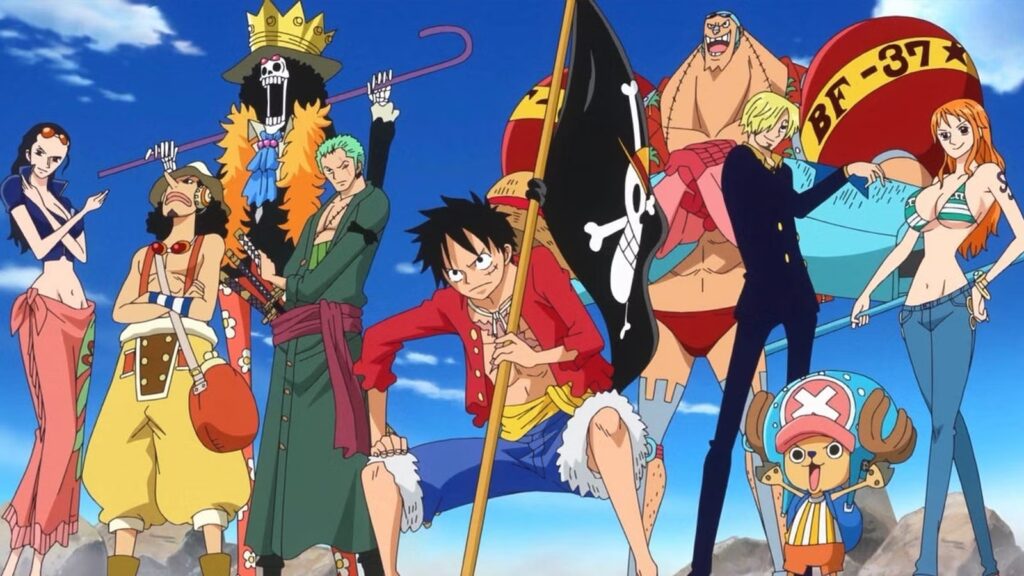
Notoriously an enormous series that has been going on for nearly thirty years, One Piece justifies its overwhelming length with the magnificence of its worldbuilding. In the seafaring world of One Piece, each location is unique in every feasible way, possessing a distinct culture, aesthetic, form of government, and even climate.
On a macro scale, One Piece also excels at gradually introducing the more complex, overarching elements of its worldbuilding over large stretches of time. The Straw Hats’ voyage is never fully isolated from the global forces operating behind the scenes in the world of One Piece, and even minor conflicts and the structural changes that various factions undergo usually carry considerable significance.
Legend of the Galactic Heroes Feels Like a Chronicle of Real-Life Futuristic War

Arguably the most grandiose and meticulous space opera narrative in anime, Legend of the Galactic Heroes excels at making its futuristic world feel realistic. Instead of using straightforward, surface-level exposition to set up its core conflicts, it gradually unravels the history and present tensions of its world throughout the narrative, accounting for how this universe operates both on a macro scale and in relation to individual actors.
Legend of the Galactic Heroes pays great attention to nuance, be it in establishing the timeline of its core conflict or outlining the strategic steps each side is taking in the present. Thanks to its thoroughness, the series barely requires fans to suspend their disbelief, as its world feels closer to a historical chronicle than to fantastical speculation.