
Robert Kojder chats with Hope writer-director Na Hong-jin…
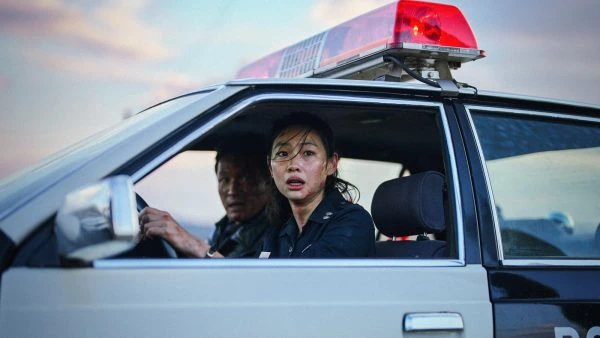
One of South Korea’s most exciting filmmakers working today, Na Hong-jin has proven himself to be skillful across several genres, whether in criminal thrillers, supernatural horror, or, with his latest film Hope, an action-horror epic creature feature with plenty of demented humor scattered throughout. At almost 3 hours long, it’s also only part one of something much larger.
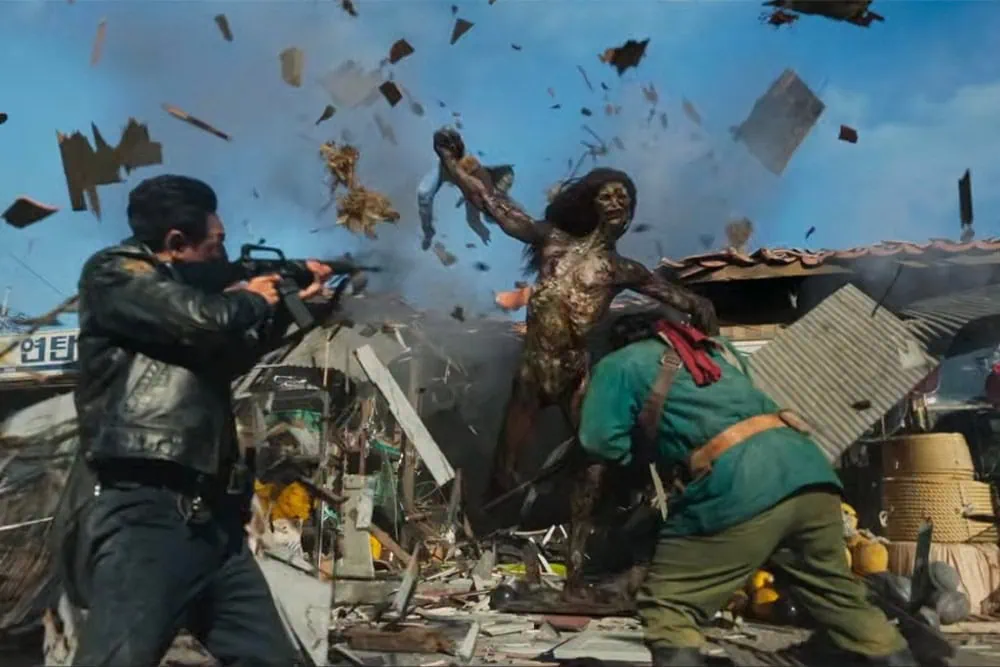
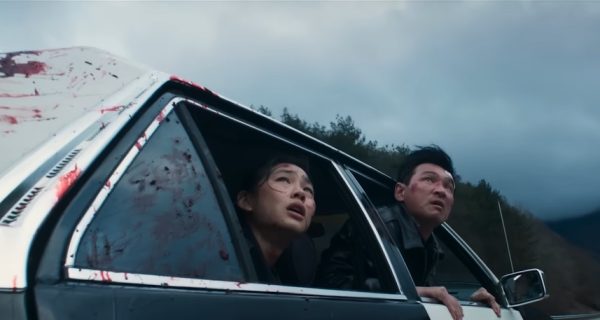
Following a mix of police officers and hunters in a small Korean mining town, a violently destructive threat quickly enters the fray but not fully into the frame for a long time (you will have to read the interview portion to find out exactly how long). Nevertheless, there is spectacular carnage throughout, with a focus on particle effects and stuntwork, even though the creatures themselves are all CGI. It’s high-octane fun that at times looked dangerous to shoot, which Na Hong-jin acknowledges when discussing safety.
Having been a huge admirer of Na Hong-jin’s work, most notably The Wailing, one of the best horror films of the 2010s, I found it a great privilege to speak to him. I also want to give a shout-out to his translator, who was incredibly efficient and speedy at relaying his straight-to-the-point answers, allowing me to make the most of the time. Enjoy the interview below:
Robert Kojder: This movie is awesome. I loved it.
Na Hong-jin: [appreciative]
Did you have any idea what the aliens would look like when you were beginning the script?
What I imagined when I was first writing this script was an alien with a lot more realism, that’s more grotesque. As pre-production and planning for the character design progressed, we moved in a more retro direction, making some changes to the creatures’ design.
Some of your movies follow police officers who are either disgraced or incompetent. What draws you towards centering them in some of your movies?
[laughs] Yeah, that’s really true, I do. I think it’s gotten a lot better, but they actually used to be like that back in the day. They have guns, but they’re not allowed to shoot, and they actually didn’t even have taser guns back in the day, so Korean cops would carry around baseball bats, so it really did feel like they weren’t very effective at their job.

The film features elaborate, intense stunt work throughout, but it’s also heavily reliant on CGI for its large aliens. So talk about the challenges of blending those.
I would say you understood the film’s main focus exactly. One had to compromise between the intricate stunt work and the CGI creatures. I favored focusing a little more on the meticulous stunt work in that process. It’s definitely difficult because, even in the script phase, we see that the camera is constantly in motion, and even if it’s rigged or stabilized, the frame still shakes from the movement. So I would say I definitely kind of took the side of the in-camera action over the CGI we would have to deal with later.
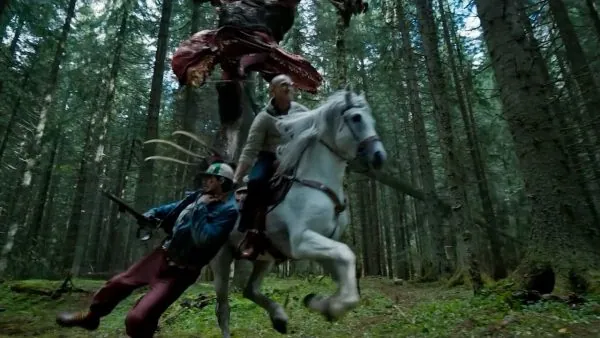
That final chase sequence is one of the most insane and propulsive sequences I’ve seen in a while. What was the hardest part of pulling that off?
[appreciative] My biggest concern was safety. We had to find this incredibly long road, and we found it by coincidence. It was actually a road that had been closed to create a new one, so we were able to use that space. Also, the bridge that you see is one of the highest bridges over a body of water in Korea. It was really scary even to just stand on that bridge. The length was about six kilometers, and if it was scary just to stand on, I could imagine that being on top of a horse on the bridge was even scarier. So safety was definitely our biggest concern. Despite the concerns, I would say the shooting of the scene itself actually went really smoothly.
Jaws and other classic films certainly come to mind while watching this in the aspect of hiding the threat off screen for a long time, but do video games also play a part in your inspiration because at times it reminds me of one?
I would say that we weren’t necessarily trying to emulate the camera work or the movement in a video game, but rather I was inspired by a lot of animations from Japan. And we knew that we really wanted this film to play in special theaters like 4DX. So considering the spatiality and how the movement would read in these theaters was something that we thought about in production.
Can you talk to me about the process of deciding when you should reveal the first creature on screen?
Ha, it would be a lie to say that I knew exactly that it would appear in 52 minutes. I would say the anticipation of the creature’s appearance is much shorter in traditional movies, and I requested this during the editing process as well. However, Hope goes through many genre changes throughout its runtime, and we wanted to do something atypical. I do feel that 50 minutes was necessary to establish the narrative before the creature appears. We really wanted those early 50 minutes to feel expansive, with a great sense of density in the action and narrative. And we do this with both visuals and sound. We feel that the creature is getting closer and closer, and we can begin to approximate what it might look like. So I would say that this amount of time was necessary to build that tension.
I agree. And speaking of genre changes, I also love how darkly funny this film is. I’ve barely scratched the surface of what I like about it
Thank you.
We’re out of time, but again, I loved it, and I love The Wailing. You’re a great filmmaker.
Thank you so much.
Thank you to Na Hong-jin for taking the time for this interview. You can read our review of Hope here.
Robert Kojder