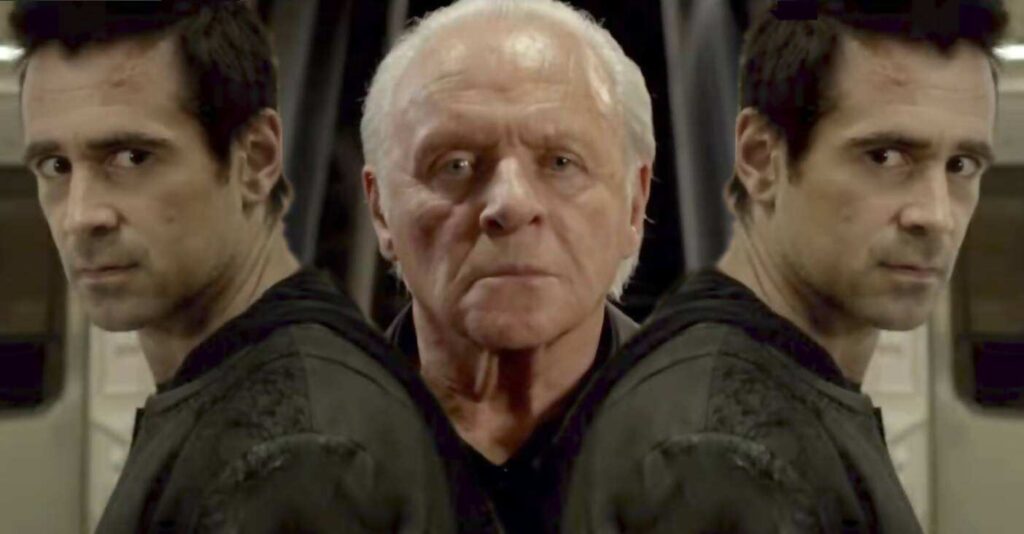

Anthony Hopkins led the cast in 2015’s Solace – an ill-conceived serial killer thriller that still bears the hallmarks of its origins as a Seven sequel.
David Fincher’s Seven, without spoiling things, ends with a pretty decisive bang. A self-contained thriller laced with a bitter streak of worldly despair, it was an unexpectedly sizable hit in 1995. Fincher’s grimdark visual stylings and sustained note of dread informed other serial killer yarns for years afterwards.
Itself inspired by Silence Of The Lambs, Seven saw two detectives – the seasoned, jaded Somerset (Morgan Freeman) and the fresh-faced, impulsive Mills (Brad Pitt) – on the trail of a serial killer inspired by the Seven Deadly Sins. Each day brings with it another horrific crime scene, and small clues that nudge them closer to understanding the maniac’s arcane motivations.
Two up-and-coming screenwriters who undoubtedly saw Seven were Sean Bailey and Ted Griffin. After seeing Fincher’s film (written with lean intensity by Andrew Kevin Walker), Bailey and Griffin began work on Solace – a thriller about an FBI agent and a psychic to tracking down a killer who’s offing a seemingly unconnected string of people.
“The initial idea of a clairvoyant brought in to catch a serial killer was Sean Bailey’s,” Griffin told Bloody Disgusting in 2021. “He wrote a first draft, then together we rewrote it considerably. This was way back in 1996, so Se7en had just come out and was (and is) a conspicuous influence on the script.”
With Seven-esque thrillers being the height of Hollywood fashion in the mid-90s, Solace was soon snapped up by Fox 2000, with Variety reporting in 1998 that 20th Century Fox’s indie arm had acquired the script for a six-figure sum.
Three years later, something rather strange happened: the script passed over to New Line Cinema, the production company behind Seven. For a few months or so, there were plans to retrofit the script to make it into a direct sequel to the film inspired by it. There was even a rumour that it was going to be called Ei8ht.
According to Griffin, there was talk about rewriting the story so that the FBI agent in the film, Joe Merriwether, became Morgan Freeman’s William Somerset.
“I think Sean and I had one meeting with the New Line execs where we discussed how to pitch it to Morgan Freeman, but that meeting never came about,” Griffin said. “There was a rumour that David Fincher had called Freeman and talked him out of pursuing it, but David has never confirmed or denied that to me. I think Sean and I felt at the time that the movie would at the very least get critically lambasted if it was presented as a sequel to Se7en, but it was New Line’s dime.”
Quantum
The idea of turning Solace into a Seven sequel was short-lived, but the screenplay itself remained strangely resilient. For years, there were stories of big-name directors being attached, including Paul Verhoeven and, according to Griffin, The Cell director Tarsem Singh. At one stage, Bruce Willis was set to star as Dr John Clancy, the psychic on the killer’s case.
Directed by Brazil’s Afonso Poyart as his first English-language feature, Solace finally went before cameras in 2013 before dribbling into cinemas two years later. It made around $22m at the box office – not much more than its production budget. By 2015, interest in serial killers had waned, at least among cinema-goers – perhaps because so many TV shows had co-opted the staples of Seven and other Thomas Harris-inspired yarns that they’d begun to feel rote.
Just over a decade on, Solace lingers on streaming services like Prime Video as a weird little footnote in history. And viewed today, it feels like a particularly strange artefact: its subject matter and attitudes rooted in the 1990s, while its flatly digital look make it resemble the huge number of other thrillers that have appeared on streaming services since.
Coincidentally, Solace came out the same year as Netflix’s first original film, the much better-looking Beasts Of No Nation; yet it’s Solace, which was intended for cinemas, that uncannily captures the plastic-y ‘Netflix look’ – years before viewers began to notice it.
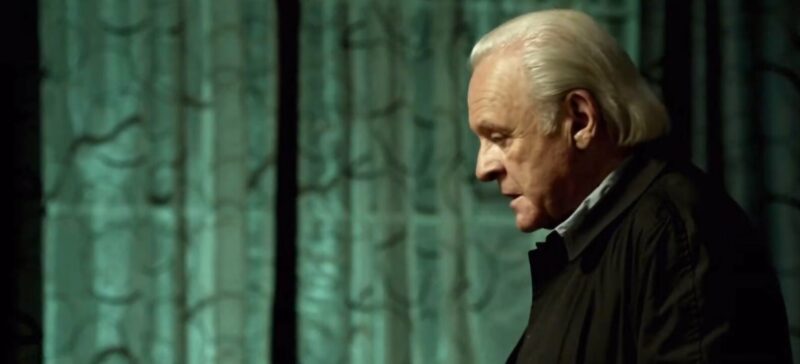
In what could be regarded as a distracting bit of stunt casting, Hannibal Lecter himself, Anthony Hopkins, now plays the psychic Dr John Clancy – requiring a slight rewrite of the script, since Clancy’s described as being a widower in his 30s in the original spec script. At the time of filming, Hopkins was in his late 70s.
Rewrites
The reworked screenplay (possibly by James Vanderbilt or Peter Morgan) instead pitches Clancy as a former professional who’s retreated from the world following the death of his daughter from leukemia. (In the earlier draft, Clancy lives with his blind, elderly father; a plot point that has no bearing on anything, other than to require the writers to explain who’s looking after the poor chap while Clancy goes off killer-hunting.)
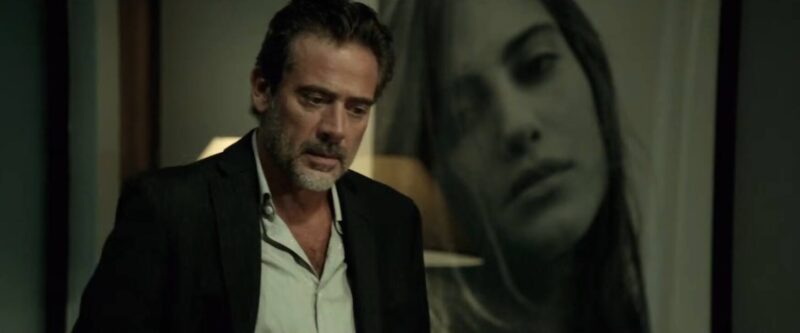
This is far from the only character change from the 1998 spec, however. As written by Bailey and Griffin, agent Joe Merriwether is written as a 40-something African American. In the final movie, he’s played by Jeffrey Dean Morgan – a race switch that would probably (and rightly) generate negative headlines today. It also meant that conversations about the topic of race had to be edited out of the script by later hands; given the horrendously cloth-eared joke about penis sizes in the spec, this is probably just as well.
Otherwise, the finished film remains remarkably close to what was written years earlier. This is quite surprising, given that at least two screenwriters took a pass at it; certain details have changed, but the central plot and major beats are broadly identical. Large chunks of dialogue are largely untouched, too.
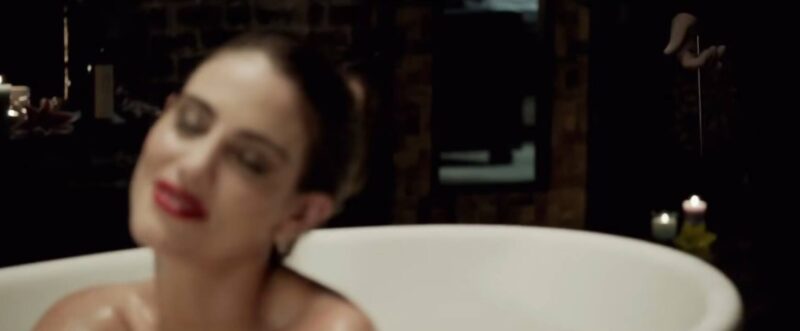
What Poyart does add, though, is more violent, Tarsem Singh-esque imagery designed to illustrate Clancy’s visions. The script barely describes these, with his moments of psychic inspiration largely discussed rather than visualised. The film borrows from the likes of The Dead Zone or the 2007 Nic Cage thriller Next with its slippery images of bloodied faces and flashes of murder victims. In some instances, Clancy is able to see potential futures and change tactics to avoid them, just as Cage did in Next.
In some instances, the visions serve as cheesy titilation, such as a moment where a woman is ogled as she clambers into a freestanding bath. In others, they simply feel ill-conceived: the visions of Clancy’s deceased adult daughter look so much like a soft-focus perfume commercial that it half implies that he had the hots for her. (In a curious technical touch, it turns out that glimpses of the future look uncannily like ungraded digital camera footage.)
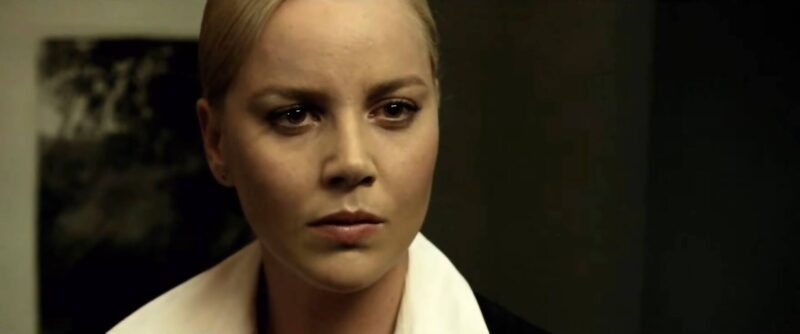
At any rate, Clancy and Merriwether are joined on their hunt by Dr Katherine Cowles (Abbie Cornish), a criminal psychologist who’s initially skeptical about Clancy’s abilities. The pair soon set their differences aside as they investigate the seemingly unconnected victims, who’ve all been stabbed in the back of the head with a five-inch surgical knife.
As the killer remains one step ahead of the law, and leaves notes that seem to anticipate their moves, Clancy begins to wonder: is the villain also psychic?
Cheese
It’s all thoroughly daft, and everyone involved seems to know they’re in a bit of a clunker. Hopkins uses his own accent and plays his part with a kind of rueful casualness; Jeffrey Dean Morgan is blandly charismatic, like a handsome dad in a soap opera; Abbie Cornish plays Cowles as irrationally frustrated to the point of anger. All are good or great actors; none deliver their best work here.
What’s glaring about Solace is just how similar it is to Seven, in its plot points if not the strength of its execution. Clancy and the killer, Ambrose (played by a barely-seen, singularly bored-seeming Colin Farrell) share similar outlooks on life, much as Somerset and John Doe (Kevin Spacey) did in Fincher’s film. The investigations of elaborately-presented crime scenes, the interviews with witnesses, and the killer’s similarly byzantine schemes all feel very Seven-ish, which only serves to underline just how much Fincher’s controlled direction did to lift his film’s plot. He could create an air of unease with an underlit shot of an apartment door; even with its gore and graphic autopsy scenes, Solace has all the oppressive verve of a Hallmark Christmas film.
Solace isn’t, in short, some forgotten classic. But it is fascinating to watch, partly for some of the bad-taste writing (a scene that involves a closeted murder suspect and the avoidance of bath water is horrifying for the wrong reasons), and partly to see how a script that probably would have fit right into one decade’s cinematic landscape can look all wrong when released some 15 years too late.
History is filled with scripts that have been stuck in development hell or have simply languished in a drawer, unfilmed. Occasionally, these scripts do finally emerge and turn out to be reasonably okay, like The Little Things – writer-director John Lee Hancock’s serial killer thriller which was penned in the 1990s but didn’t get made until 2021. But then there are oddities like Solace, which suggest that some screenplays really do have a sell-by date.
Solace is streaming on Prime Video in the UK now – if you dare.