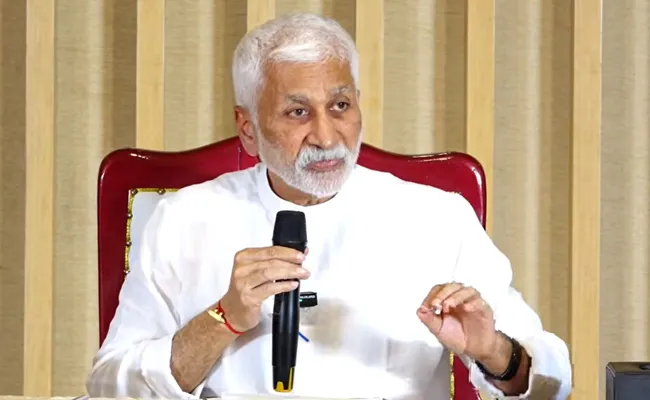

Former YSR Congress Party leader and ex-Rajya Sabha MP V Vijaya Sai Reddy has launched a sharp attack on Andhra Pradesh Chief Minister N Chandrababu Naidu’s call for families to have three children, arguing that appeals and incentives alone are unlikely to persuade people to have larger families.
Sai Reddy, who has indicated that he is preparing to launch a new political party in Andhra Pradesh after Dasara, has increasingly been targeting the NDA coalition government on policy issues.
His latest comments were directed at Naidu’s repeated appeal to people to consider having three children in view of concerns over declining fertility rates and demographic changes.
The Andhra Pradesh government has already indicated that it wants to encourage larger families and has discussed possible incentives for parents who choose to have three children. Naidu has also repeatedly raised the issue in his public speeches.
Vijaya Sai Reddy, however, argued that a Chief Minister’s appeal alone would not persuade people to change such personal decisions.
In a social media post, he questioned the logic of asking people to have more children when, according to him, Naidu himself has one child and his son also has one child.
He wrote: “Andhra Pradesh Chief Minister Chandrababu Naidu urging people to have more children when he himself has one child, and his son also has one child, is ironic. People will not have more children simply because the Chief Minister asks them to.”
Sai Reddy further said that decisions about family size depend on whether people can afford good housing, healthcare, childcare and education, and whether parents can balance work and family life.
“If the government is serious about reversing declining fertility, the answer is not merely an appeal. It is to make raising children easier and more affordable,” he said.
The debate comes against the backdrop of wider concerns over India’s changing demographic profile, including declining fertility rates in several states.
Sai Reddy’s argument is that if the government wants families to have more children, it may have to focus more on reducing the financial and social burden of raising them rather than relying mainly on public appeals.