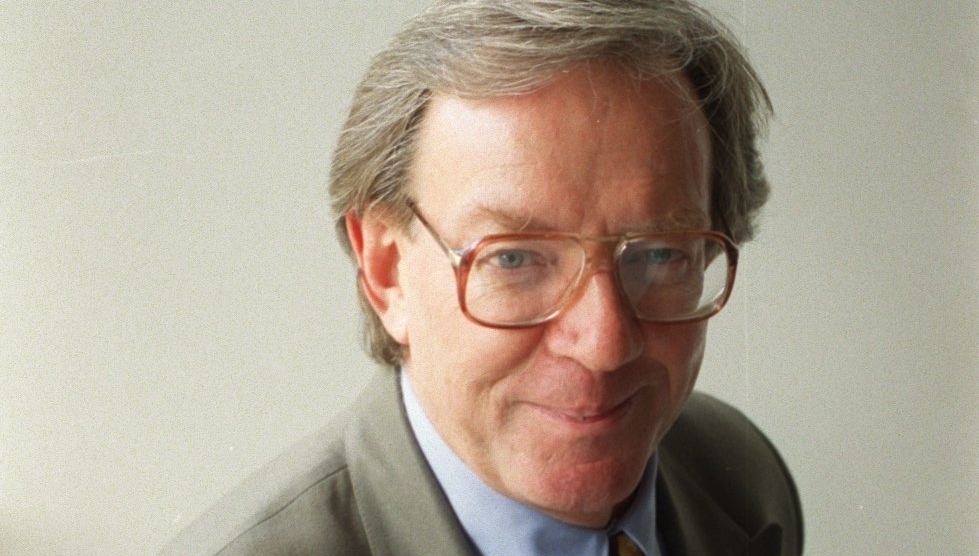

TP O’Mahony spent much of his working life as a religious correspondent with the Irish Press and later the Irish Examiner.
He has written several books on the religious theme including Why the Catholic Church needs Vatican III and Has God Logged Off?.
Now in his 80s, TP’s longevity and his years of covering many of the major religious events and synods, means he is ideally placed to write his latest book, Forbidden Ireland: Church and State 1951 to the present day.
It could well be described as an insightful and erudite view of the changes in Church/State relations over the last 75 years.
The book does not question the faith of Catholics; instead it highlights the mechanisms and man-made rules which the hierarchy used to govern the lives of its faithful; as well as those of other faiths and none.
O’Mahony’s life began in the era of the Latin Mass and Monday confraternity.
He lives now in an Ireland where the control which the Church once held over the State and its population, has been loosened by laws which are designed to make Ireland a fairer and more pluralist society.
There has been a plethora of unholy rows between the Catholic Church and the State throughout O’Mahony’s lifetime, and he has had a ringside seat for most of them.
O’Mahony chooses not to begin at the beginning; health minister Dr Noel Browne’s attempt to introduce the Mother and Child Healthcare Act of 1951.
He opts for the bizarre cancelling of Jayne Mansfield’s cabaret act at the Mount Brandon Hotel in Tralee in 1967.
The bishop of Kerry, Denis Moynihan, wrote a missive which was read at all Masses that instructed the people of Kerry not to attend the event. The organisers buckled and cancelled the show.
Archbishop McQuaid and Dr Noel Browne
The book then cleverly reverts back to the 1951 clash of Archbishop John Charles McQuaid and Dr Browne.
O’Mahony maintains, and goes on to clearly outline, that while McQuaid clearly won the battle, because Noel Browne resigned, it was a pyrrhic victory that would eventually lead to the Church losing its considerable grip on the country.
According to TP, the real significance of the Mother and Child crisis was that Dr Browne released much of the correspondence which the department had received from the Archbishop.
This exposed McQuaid’s subterfuge methods and revealed to the public the glass ceiling that restrained the progress of social justice and equality in Ireland.
The book outlines the long series of issues and their outcomes between the Church and the State.
It delves into major scandals within the Church, from the Bishop Casey affair, through the covered-up sexual abuse cases, to the mother and baby homes scandals that have scarred its reputation.
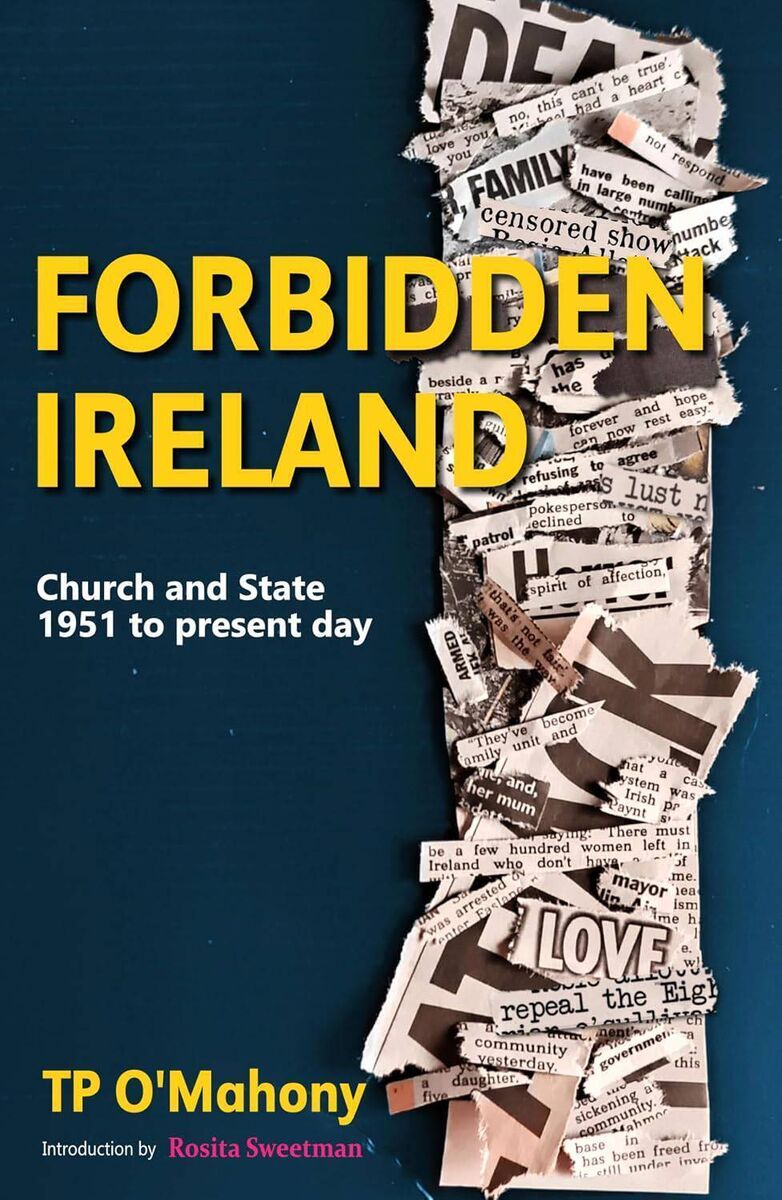
O’Mahony convincingly points out that the primary driving forces for change in Ireland were the international rise of the women’s movement, the progress in contraception methods, and the advances in abortion laws and procedures.
These forces served to highlight the second class status and victimisation of women by the Church and the State.
O’Mahony’s list of highlights is long. It includes the contraceptive train to Belfast of 1971, the McGee case of 1972, and the visit of John Paul II in 1979.
These were followed by the very divisive pro-life referendum of 1983, the divorce referenda, Sinead O’Connor’s ripping up an image of the Pope on Saturday Night Live, Ann Lovett’s death, gay rights, and the right to same sex marriage.
Each event is well researched by O’Mahony. He includes a vast array of quotes from across the world, and across history, to reinforce his points.
His years of writing reports also means each topic, while covered in depth, is concise and succinct.
Forbidden Ireland is a fascinating account of change in healthcare, women’s rights, and gay rights over the past 75 years.
It is a book that probably would not have been allowed see the light of day in the 20th century.
But that was then and this is now; two different worlds. As a result, in O’Mahony’s book, we have a valuable and thought-provoking account of our changing nation.