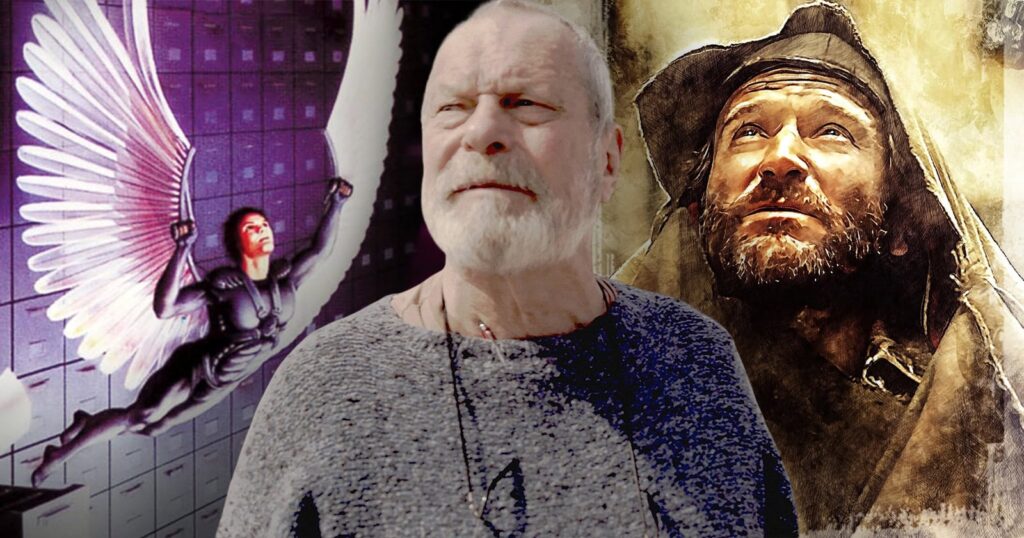

Simon Thompson takes a look at the fantastical career of Terry Gilliam…
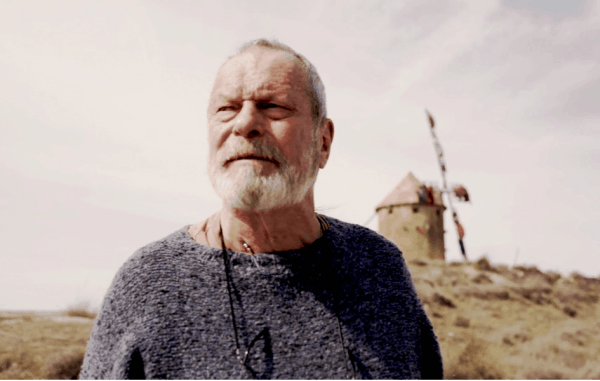
Terry Gilliam is a brilliant fantasist, whose work often returns to the theme of juxtaposing the soul crushing mundanity of everyday life with the surrealistic dreamscapes of one’s own imagination. In a Hollywood of bean counters and abacus pushers, Gilliam is a true auteur who has had to fight tooth and nail to realise his ideas upon the big screen.
Born in 1940, in Minneapolis, Minnesota to a housewife mother, and a Folgers Coffee travelling salesman turned carpenter father, Gilliam spent the first twelve years of his life in the Midwest, before the family moved to Los Angeles in 1952. Being an avid reader of Harvey Kurtzman’s seminal satirical magazine Mad, Gilliam developed a darkly subversive sense of humour and gained a serious interest in cartooning.
After graduating from Occidental College in 1962 with a degree in political science (he had bounced around majoring in physics and fine arts as he had no specific career path in mind), Gilliam started his career in the arts as a cartoonist rather than a filmmaker. Gilliam’s first professional gig was for his childhood hero Harvey Kurtzman’s short lived but extremely influential magazine Help! a sophisticated and adult publication which, to cut a long story short, ushered in the Underground Comixs movement in the United States.
It was through working for Help!, that Gilliam met future collaborator John Cleese, when Cleese was the subject of a photographic comic strip that Gilliam wrote. Sadly, Help! collapsed in 1965 as it was chronically underfunded. Motivated by the loss of a steady employer and the prospect of being drafted into the Vietnam War, Gilliam left America for Europe, settling in Britain.
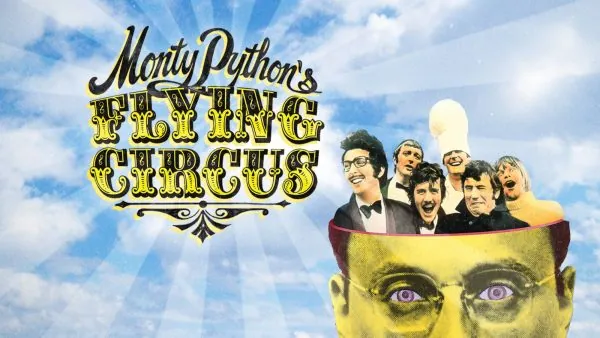
When Gilliam arrived on the other side of the Atlantic he quickly got a job doing illustrations for the anarchic children’s variety cult TV show Do Not Adjust Your Set (a show decades ahead of its time that also helped to launch David Jason and Neil Innes’s careers). It was through his work on Do Not Adjust Your Set that he met budding comedians Terry Jones, Eric Idle, and Michael Palin. Together with those three, as well as John Cleese and Graham Chapman (who were both keen devotees of Do Not Adjust Your Set) the six of them made the sketch comedy Monty Python’s Flying Circus, for the BBC .
To put it simply, Monty Python inspired a sea change in British comedy in the same vein as their chief influences The Goon Show, as well as others including Peter Cook and Dudley Moore. Monty Python’s Flying Circus’ brand of incredibly sophisticated verbal comedy, contrasted with anarchic surrealism/slapstick has inspired generations of comedians in the English speaking world.
Gilliam’s role was that of illustrator linking the various sketches with animations that were crucial in helping to establish the strange tone of the series. Gilliam very rarely performed while in Monty Python, and if he did perform would largely have only a line of dialogue if any at all, but he did write and conceive of the animation sequences. Gilliam was given free reign creatively, using an experimental style that included collage, mixing old photos, and cutting out photos of old master paintings. He also made the ridiculous sound affects either himself or using recordings from the BBC sound library.
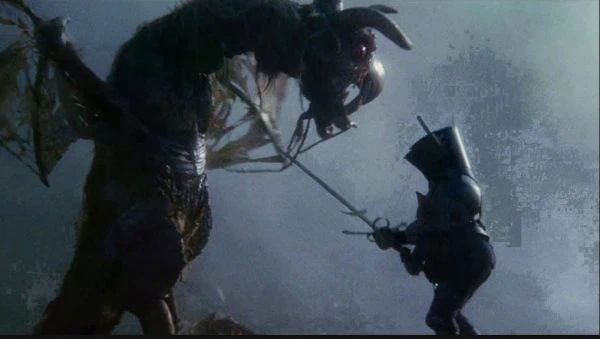
Gilliam’s first job behind the camera was sharing directing duties on Monty Python And The Holy Grail with Terry Jones, being responsible for the movie’s photography. Through doing this Gilliam caught the directing bug and got to work on his debut feature, Jabberwocky (1977) the title of which was taken from Python inspiration Lewis Carroll’s famous nonsense poem. A comedy set in medieval England about an idiotic son of a cooper (Michael Palin), who, through consistent bad luck is forced into the position of saving the kingdom from a terrifying bloodthirsty dragon, Jabberwocky displays all of the various hallmarks that have come to define much of Gilliam’s work.
Gilliam’s love of slapstick comedy, the contrast between fantasy and reality, the soul crushing ineptitude of bureaucracy, narrative twists (either comedic or dramatic), and use of wide angle lenses and unconventional camera angles can all be seen in his debut.
Jabberwocky debuted to mediocre box office (grossing $479,219 from a $587,668 budget) and largely negative reviews, with the likes of Gene Siskel being especially scathing, calling its humour simplistic and crude and unfavourably comparing it to Monty Python and The Holy Grail. Gilliam, already displaying early signs of his rhino-hide like resilience, unperturbed by Jabberwocky’s poor reception still put his live action directing career on hold, so that he could work on the follow up to The Holy Grail, Monty Python’s Life of Brian, as art director.
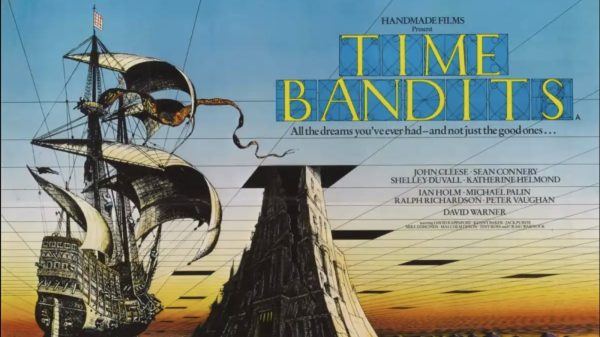
Gilliam’s follow up to Jabberwocky, Time Bandits (1981) put him on the map as a director and helped to define him as an individual artist outside the confines of being a member of Monty Python. The first film in a thematic tetralogy that Gilliam refers to as The Trilogy Of Imagination (three films about protagonists escaping rigid order through imagination), Time Bandits focuses on Kevin (Craig Warnock) a history obsessed child bored with his humdrum suburban existence.
Kevin’s world is completely upended when a group of time travelling dwarf bandits whisk him away on an adventure through time and space. Through a stolen map, Kevin and the dwarves encounter everyone from Agamemnon, to Robin Hood, to Napoleon as they plunder historic artefacts and keep one step ahead of Evil (David Warner) who is keeping tabs on their every move.
In contrast to Jabberwocky four years earlier, Time Bandits debuted to positive reviews and strong box office ($42.4 million from a $5 million budget). Much tighter structurally than his debut, Time Bandits is a strange yet witty fantasy-adventure-comedy that both children and adults can enjoy at the same time. Time Bandits functions as Gilliam’s love letter to his obsessions with historical figures, myths, and technology but filtered through the Monty Python comedic lens due in large part to Michael Palin co-writing the script and a cameo appearance by John Cleese.

The success of Time Bandits put Gilliam on the map, and led to his being wooed by various prominent Hollywood studios who were desperate to capitalise on his unique artistic sensibilities. Around the mid 1980s several titles which Gilliam was interested in developing fell through, including a Greek mythology film Theseus And The Minotaur (an idea he had before he started work on Time Bandits but wanted to return to once filming was completed), Monty Python’s World War III (which eventually became The Meaning of Life), and an adaptation of Mervyn Peake’s surrealist gothic fantasy/comedy of manners series Gormenghast, a perfect meshing of director and source material if ever there was one.
Sadly none of these potential movies made it past the development stage, with Gilliam instead turning his attention to an original script that he was working on in conjunction with Tom Stoppard and Charles McKeown originally titled 1984 ½ yet later changed to Brazil (1985).
Brazil is a dazzling mixture of film noir, Orwellian dystopia, German expressionism, science fiction, fantasy, and conspiracy thriller, underlined by a biting and darkly cynical comedic tone. Set in a cramped, polluted, totalitarian, bureaucratic superstate, the movie tells the story of miserable office worker Sam Lowry (Jonathan Pryce) who escapes the mind-numbing tedium of his job by daydreaming about himself as some kind of flying Arthurian knight rescuing a damsel in distress. When Sam is tasked with correcting an administrative error, he sees a woman (Kim Greist) who is a dead ringer for the one that keeps appearing in his dreams. Sam is obsessed with finding out her identity, to the extent that he dives headfirst into the Kafkaesque nightmarish bureaucracy to do so.
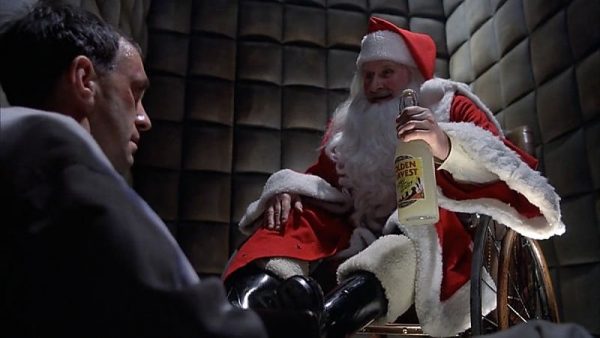
Working with a big Hollywood studio in Universal, Brazil was Gilliam’s first foray into Hollywood filmmaking, and the headaches which come with it. After Gilliam failed to secure any of his top choices (Jamie Lee Curtis, Joanna Pacula, Ellen Barkin, and Kelly McGillis) as the female lead, he was forced to cast Kim Greist whose performance he found to be far below his expectations (something that anybody with a working brain after seeing Brazil would agree with). As a result Gilliam significantly cut down Greist’s screen time, featuring her for the bare minimum needed to make narrative sense.
This was nothing compared to the battles he subsequently found himself in with the movie’s American distributor Universal and producer Sid Sheinberg. Gilliam’s 142 minute original cut of Brazil was distributed in Europe and other international markets by 20th Century Fox, but in the US it was overseen to its detriment by Universal. The problem was that Universal ran a series of executive test screenings and the gaggle of asinine morons they assembled didn’t take to the movie’s unhappy ending. Without Gilliam’s knowledge or consent Sheinberg commissioned two editing teams, one to keep it intact for the most part, and the other to hack Brazil to bits for its American distribution run. When Gilliam got wind of the latter he took out a full page ad in Variety urging Sheinberg not to release the happy ending cut.
In a power play, Gilliam set up a series of private screenings behind Universal’s back for film schools and critics. The Los Angeles Film Critics Association, after seeing Gilliam’s cut awarded it with best picture, screenplay, and a best director for Gilliam – which bullied Universal into renegotiating with Gilliam to release a 132 minute cut for American audiences personally supervised by him.
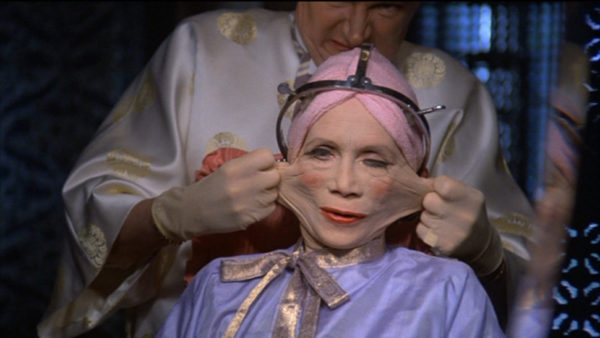
Since its release in 1985, the movie has been widely recognised as a science fiction masterpiece, with its aesthetics influencing everything from Jean Pierre Jeunet’s Delicatessen, the Coens’ Hudsucker Proxy, to Tim Burton’s depiction of Gotham City in Batman (1989). What makes it such a timeless movie is how its carefully curated retro-futurist visuals, a mixture of 1930s-40s art deco for the bureaucracy and Moebius-esque futuristic style, were employed by Gilliam to make sure its vision of the future wouldn’t date.
The sizeable success of Time Bandits’ box office and the rapidly growing cult status of Brazil earmarked Gilliam as a director that big Hollywood studios were keen to work with. It was to be Columbia that acquired Gilliam’s services, with the studio taking on his follow up to Brazil, The Adventures of Baron Munchausen (1988). If dealing with Sheinberg was a sneak preview of just how soul crushing big studio politics and commercial disputes could be, then Munchausen’s production was the main event.
Based on the 1785 collection of tall tales by author Rudolf Erich Raspe, The Adventures of Baron Munchausen is centred around its eponymous protagonist (John Neville, who many will probably know from playing The Well-Manicured Man in The X-Files) an eccentric aristocrat recounting the tales of his exploits across 18th century Europe with his band of misfits and adventurers. With an all-star supporting cast including Robin Williams, Eric Idle, a young pre-fame Uma Thurman, Oliver Reed, Jonathan Pryce, and Alison Steadman, this is a movie stuffed to the gills with beautiful surreal imagery straight out of an illustrated storybook, a madcap sense of humour, and genuine originality.
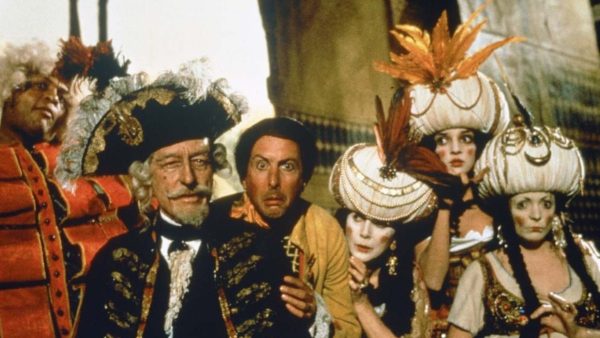
Thematically it represents the culmination of Gilliam’s Trilogy of Imagination. If Time Bandits represents youth, Brazil represents adulthood, then Baron Munchausen represents old age, yet all of them are tied together by their protagonists seeking some form of escape.
Production on Baron Munchausen was an absolute nightmare for Gilliam and everyone else involved. The film ran grossly over budget, starting out a rough $23.5 million and ballooning to $46 million. While there were numerous logistical hiccups such as the extensive stable of horses being unable to travel to the film’s shooting location in Spain due to a horse fever outbreak in Italy were they were being trained; Oliver Reed being barely sober enough to realise what day it was; communication problems between the mixed English and Italian speaking crews; and numerous postponements that put the film already $2 million over budget before a single scene had been shot.
What really did for Munchausen though was the changeover at Columbia Pictures, the movie’s studio and worldwide distributor. When studio boss and Gilliam supporter David Puttnam was fired and replaced by Dawn Steel, the new regime pettily sought to undo all the previous verbal agreements that Puttnam had made with Gilliam out of her need to show the previous Columbia figureheads who was now in charge.
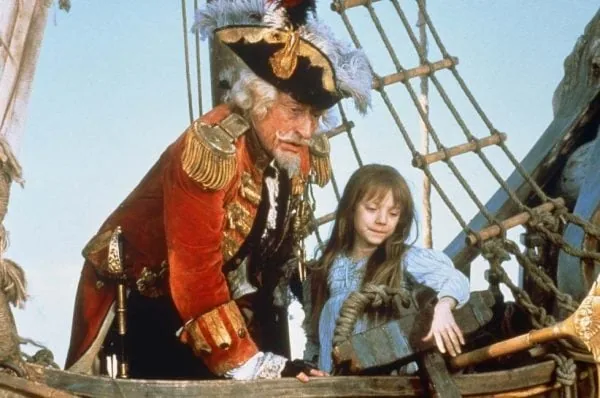
Kent Houston, who oversaw the special effects, recounts a story where, under Puttnam’s leadership, he and his team would be given a bonus if they finished their work in time, but when Steel took charge the same executive refused to honour the original deal because they didn’t want to be seen as doing anything to benefit Terry Gilliam.
Columbia botched the movies American release on purpose, making a far smaller than average series of prints and giving it a severely limited distribution run. Gilliam remarked that;
“ The joke is, if you look back, we got the best reviews and we were doing the best business in the opening weeks of any film they had released since The Last Emperor. We actually opened well in the big cities…Columbia was spending their whole time looking at exit polls to prove the film would not work in the suburbs, and so it would be pointless to make any more prints.”
While the movie did respectable numbers in the European market, particularly in West Germany its purposely sabotaged distribution run caused it to gross only $8 million in the United States. Despite positive critical reception even at the time, with the likes of Hal Hinson labelling it as “ a wondrous feat of imagination” and Roger Ebert declaring its ‘wit and spectacle to be considerable achievements’, Gilliam was now tarnished as the maker of a box office bomb, joining illustrious company such as William Friedkin, Francis Ford Coppola, John Carpenter, and Michael Cimino.
Towards the end of the 1980s and into the early 1990s, Gilliam found himself, as a pariah, unable to get any movie beyond the development stage. Attempts to adapt Alan Moore’s seminal comic book Watchmen for producer Joel Silver fell through in 1989 (despite Gilliam apparently being Moore’s preferred choice) and Phillip K Dick’s novel A Scanner Darkly also fell through and Gilliam found himself on the periphery of an industry that had chewed him up and spat him out. This rejection motivated his follow up to Munchausen, The Fisher King (1991).
In contrast to the fantastical stories of his previous three movies, The Fisher King is a story that is much more focused on realism. Working with screenwriter Richard LaGravenese, this was the first time Gilliam had directed a project without being involved in the screenplay, and his first not to feature any connection to his time as a part of Monty Python. While Gilliam wanted to work on a smaller scale after his experiences shooting Baron Munchausen, The Fisher King still has a core of fantasy and surrealism running through it that is unmistakably characteristic of his style.
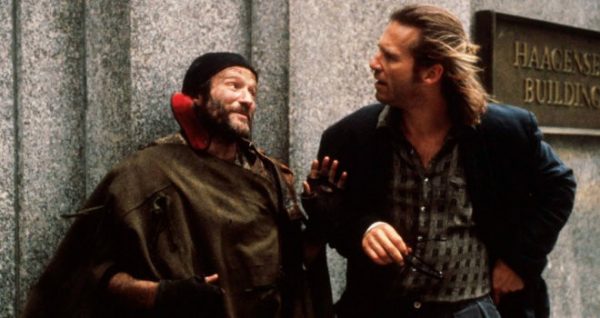
Set in New York, The Fisher King follows Jack Lucas (Jeff Bridges) a Howard Stern style shock jock who inadvertently provokes a mentally unstable man into a killing spree in a Manhattan bar. Having now sunk to rock bottom in an alcohol induced haze, Jack seriously contemplates taking his own life. It’s while he is in this state that Jack ends up meeting Parry (Robin Williams), an eccentric homeless man whose wife was killed due to Jack’s mistake. In Parry’s head he’s a knight on a quest to find the holy grail, and due to his feelings of guilt and responsibility towards him, Jack agrees to help him out.
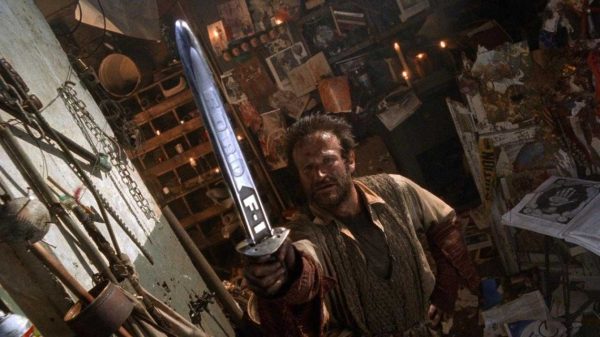
A fantasy/comedy-drama, The Fisher King is funny, poignant, and bizarre all in equal measure. Bridges and Williams’ screen chemistry together is a joy to watch, with the two actors both giving career high performances in their respective parts. Bridges’ shock jock self-destructive misanthrope and Williams’ traumatised fantasist making for such a clever pairing because through their own damage they help one another discover who they truly are.
As sweet a movie as The Fisher King can be there is still plenty of the black comedy and fantasy that is a recurring thread in Gilliam’s work. In particular Parry being haunted by constant visions of the Red Knight of Arthurian legend is an unmistakably Gilliam touch.
The Fisher King single-handedly erased Gilliam’s pariah status within Hollywood overnight. Grossing $72 million from a $24 million budget (an excellent return for an offbeat adult drama), the film was nominated for five Oscars and four Golden Globes. Gilliam’s professional directing career was in its healthiest state since Brazil six years earlier. For the first time in a long time Gilliam felt optimistic that the rest of the 1990s would be more prolific than the 80s had been, having only made three films in that entire decade.
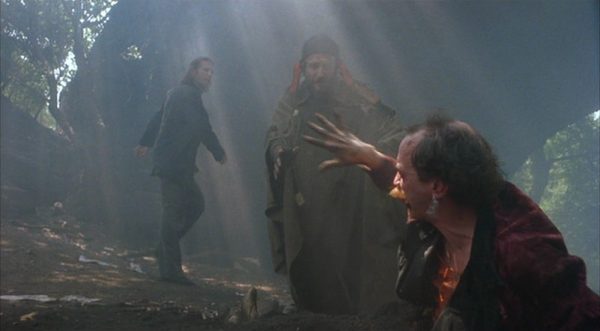
Gilliam’s intended follow up to The Fisher King was another collaboration with Richard LaGravenese entitled The Defective Detective. The plot is centred around a hard-boiled Phillip Marlowe style detective in New York, who is on the edge of a nervous breakdown. When he is called to investigate the whereabouts of a missing child, he ends up in an Oz-like fantasyland born of the child’s imagination, consisting of floating trees, knights on horseback, and gigantic filing cabinets.
Gilliam saw the script as a way of distilling all of the ideas that he had cut out of his previous work into one movie, comparing it to Bergman’s Fanny And Alexander in its scope. When the project fell through due to a breakdown in negotiations between Gilliam and Paramount over the budget, he turned his hand to trying to adapt Charles Dickens’ A Tale of Two Cities with Mel Gibson as the lead (that fell through when Gibson moved onto Braveheart and Gilliam tried but failed to get the movie off the ground with Liam Neeson instead), and an adaptation of Mark Twain’s A Connecticut Yankee In King Arthur’s Court, both to no avail.
By this point Gilliam had become sick of the snail’s pace of Hollywood production, until a science fiction script by David Webb Peoples fell into his lap, entitled 12 Monkeys.
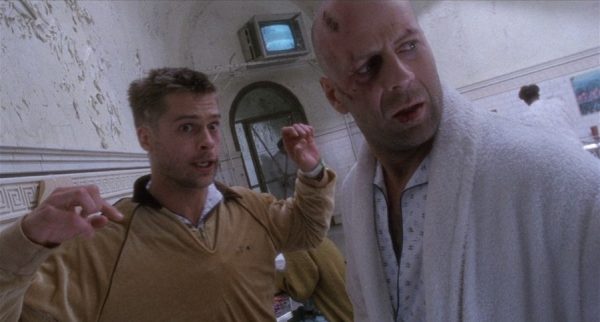
Set in a post-apocalyptic 2035 destroyed by disease, 12 Monkeys is centred around James Cole (Bruce Willis), a convict sent back in time to the 1990s to research the origins of the man-made virus that destroyed the earth’s population so that a cure may be developed in the present. Once he arrives in the 1990s, he’s arrested and ends up committed to a mental hospital on the recommendation of a psychiatrist (Madeleine Stowe). Inside he meets fellow patient Jeffrey Goines (Brad Pitt) whose anti-establishment world views suit Cole’s needs.
Gilliam was at first sceptical about whether he would be able to translate the script’s complexity and non-linear narrative to the screen, but found himself so intrigued with the material that the challenge proved too exciting for him to pass up.
Initially there were disputes over casting the lead roles, with Gilliam wanting Jeff Bridges as Jeffrey Goines and Nick Nolte as James Cole, and rejecting Universal’s suggestions of Tom Cruise and Nicolas Cage. Realising he needed a movie star level name to speed up development, Gilliam brought Bruce Willis into the fold as Cole and convinced him to take far less than his usual going rate, recognising that despite being a household name as a blockbuster action star Willis was an actor who was always willing to take on offbeat material where he could play against type.

Although Gilliam was at first sceptical of casting director Margery Simkin’s suggestion of Brad Pitt as Jeffrey Goines, Simkin managed to convince Gilliam and because Pitt hadn’t hit A-list status before production, they were able to secure his involvement for peanuts compared to what he could command after the movie’s release, when thanks to Se7en and Legends of The Fall the actor had become a megastar with the salary demands attached.
12 Monkeys is a perfect synergy between director, writer, and cast. Although the shoot was described as tough by production designer Jeffrey Beecroft due to time and money restrictions, the latter of which Gilliam took note of as much as possible, still scarred by his experiences on Baron Munchausen.
Luckily for Gilliam 12 Monkeys was a massive commercial success owing to having two star names attached, grossing $168 million from a $29 million budget. 12 Monkeys represented Gilliam stepping out of his comfort zone even more than he did with The Fisher King four years earlier, showing Hollywood at large that he could work on schedule and on a tight budget.
With the success of both The Fisher King and 12 Monkeys, Gilliam tried to no avail to redevelop The Defective Detective but despite star names such as Nicolas Cage, Cameron Diaz, Bruce Willis, Danny De Vito, and Sean Connery all being attached at various points he couldn’t convince Paramount, resulting in the script being placed in turnaround by early 1997.
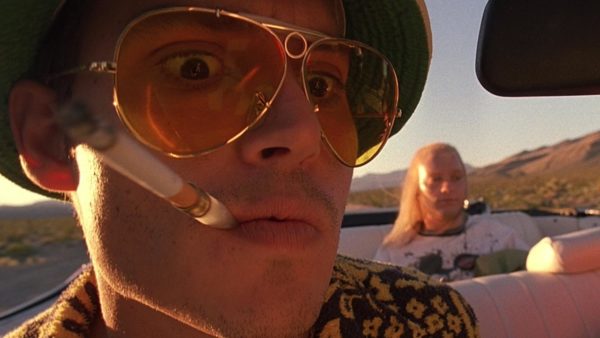
Gilliam’s next project was an adaptation of Hunter S. Thompson’s cult gonzo journalism novel Fear and Loathing In Las Vegas. A film adaptation of this book had been in development hell for years, going all the way back to the novel’s initial publication in the 1970s. Ralph Bakshi, Martin Scorsese, and Oliver Stone had all tried to adapt Thompson’s book, yet each was unsuccessful. Eventually Repo Man director Alex Cox began his own attempt in the 1990s.
In keeping with the years of failed projects, this particular production seemed dead in the water when Cox was fired because of falling out with the movie’s producer Laila Nabulsi and Hunter S. Thompson’s disapproval of the script. Gilliam was brought in as Cox’s replacement at the last minute, and worked on a tight schedule to salvage a chaotic production.
Fear and Loathing In Las Vegas tells the story of journalist Raoul Duke (Johnny Depp) and his lawyer Dr Gonzo (Benicio Del Toro) on their way to Las Vegas to cover the Mint 400 Motorcycle Race. Loaded to the gills on almost every substance known to mankind their trip quickly dissolves into a strange, depraved, psychedelic odyssey through the American dream and the death of 1960s optimism.
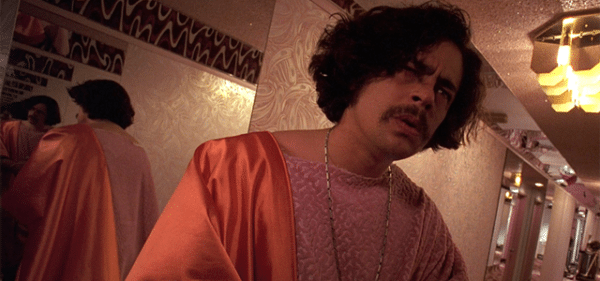
Gilliam completely captures the nightmarish imagery and biting satire of Thompson’s novel, going out of his way to replicate Ralph Steadman’s hallucinatory illustrations that visualised Thompson’s humour and sensibility so well. Gilliam’s use of tight close ups, frantic cutting, and skewed camera angles go a long way to retaining the sweaty paranoid atmosphere of the book.
Fear and Loathing In Las Vegas at the time polarised critics and failed to break even at the box office. It received mostly negative reviews, but in the years since its release in the late 1990s has garnered a new found reputation as a cult classic, and is now considered a beloved chapter in Gilliam’s filmography and some of Johnny Depp and Benicio Del Toro’s finest acting work.
Although his position was nowhere near as precarious as it had been in the 80s Gilliam entered the new millennium frustrated that he’d only been able to make three films in the previous decade. Short of The Defective Detective, Gilliam wanted to begin the 2000s by directing an adaptation of Miguel de Cervantes’ 17th century novel Don Quixote.
The book tells the story of a La Mancha nobleman who becomes so wrapped up in the chivalric romances that he obsessively reads that he takes on a quest to revive chivalry and serve Spain as the knight Don Quixote de la Mancha, together with his travelling companion/squire Sancho Panza, a lowly farmer, who in contrast brings a sense of crushing, grounded reality to Quixote’s flights of fancy.
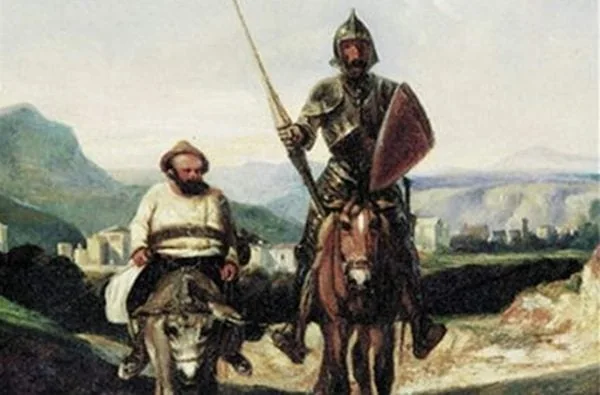
In a strange case of art imitating life Gilliam had tried before to make Don Quixote in the early 1990s, having read the novel and been fully convinced of its potential as a film adaptation, and how its themes of dreams vs reality and the outcast vs mainstream society are what the bulk of his work explores already. Gilliam wanted British actor Nigel Hawthorne in the title role (best known for playing Sir Humphrey in the political BBC sitcom Yes Minister) and Danny DeVito to play Sancho Panza. After disputes with Phoenix Pictures over budget, he quit to try and make The Defective Detective instead.
Throughout the 1990s Gilliam hoped to be able to return to Quixote at some point. Thankfully, in 1997 Phoenix Picture’s attempted production collapsed, giving Gilliam a second chance to realise Quixote on the big screen, a second chance that would turn out to be the biggest poisoned chalice of his career.
The first bump in the road for the production was a dispute between Gilliam and the movie’s European financiers over the sheer cost (totalling almost $40 million and scaled back down to $32 million) as Gilliam wanted to avoid American financing as much as possible. After the budget disputes were sorted out Gilliam recruited an all-star ensemble cast including Jean Rochefort, Johnny Depp, Vanessa Paradis, Miranda Richardson, Jonathan Pryce, Rossy De Palma, and Christopher Eccleston.

Once shooting began Murphy’s law kicked into gear. During the first day, an f16 aircraft flew over the set in Navarre, Spain, as the barren location Gilliam had chosen turned out to be next to a NATO aircraft base. The f16 flyovers ruined the audio completely, which meant that extensive and costly post-production was going to be needed. When aircraft weren’t flying over, the set experienced a gigantic flash flood which destroyed a large amount of filming equipment and completely changed the landscape and the colour of the cliffs, making previously shot footage unworkable due to continuity issues.
The next few days were dedicated to recovering supplies but to no avail, as the production wasn’t insured against the flood. When Jean Rochefort began to have serious health issues, including a double herniated disk, the shoot became unworkable with the loss of its lead actor and Gilliam abandoned Quixote in late 2000.
In the last two decades Gilliam’s career has stayed on the same course. The Brothers Grimm (2005) served as yet another painful experience of Hollywood studio filmmaking. Tideland (2006) was largely reviled upon its release but has since developed a dedicated cult following thanks to DVD and the internet. Despite the death of its star Heath Ledger during production, The Imaginarium of Dr. Parnassus (2009) was his most positively received film since 12 Monkeys over a decade before it. The Zero Theorem (2013) was a sci-fi black comedy in the vein of Brazil that although polarising critics has steadily gained a cult following.
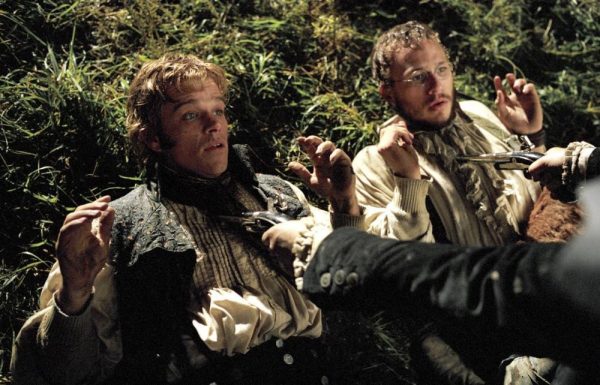
The true triumph of Gilliam’s late career, however is that after the failed production in the late 90s-early 00s, and multiple protracted rights disputes he finally made his Don Quixote – a testament to the man’s sheer perseverance and bloody mindedness. Like David Lynch and Stanley Kubrick, Gilliam’s career is underlined by the sad paradox that despite his influence on the following generations of artists (such as Guillermo del Toro, Jean Pierre Jeunet, Matt Stone and Trey Parker) he’s only been able to make a relatively small number of films despite his longevity.
Even though he turned 85 last year he’s showing no signs of slowing down, and he’s trying to make The Defective Detective before it’s too late. If he can get Don Quixote made after everything that happened, then we might just see The Defective Detective on the big screen after all.
Simon Thompson