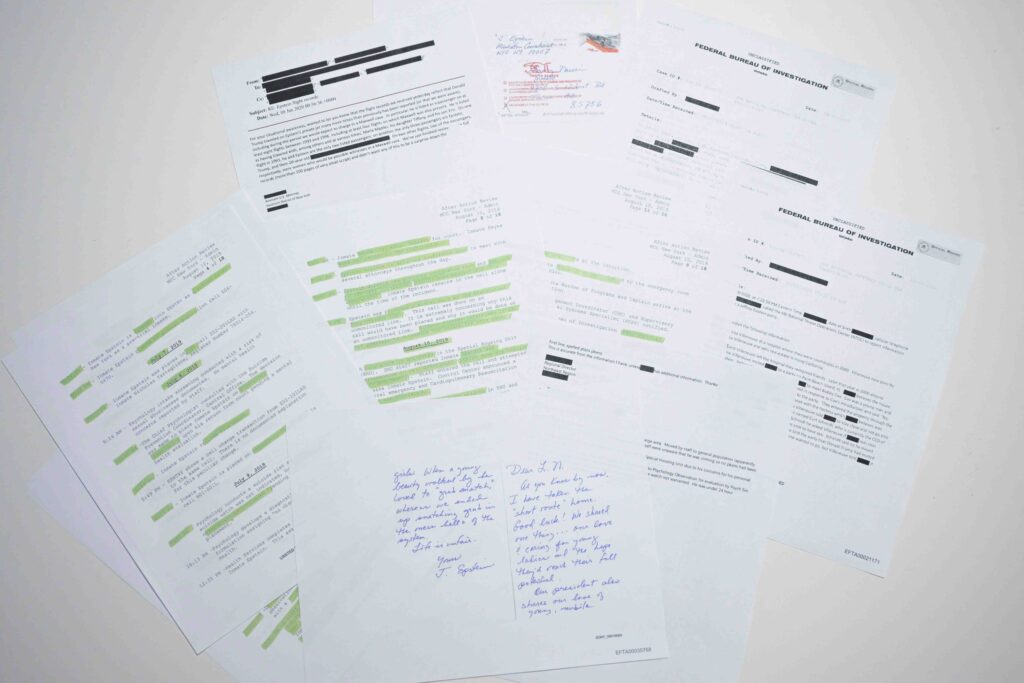

Millions of pages from the Epstein files DOJ released under the 2025 Transparency Act have not answered the questions that keep surfacing on Capitol Hill, cable news, and survivor networks. The core hope remains simple. People want the names of anyone who helped Epstein run his trafficking operation and the proof that would finally let investigators move past Ghislaine Maxwell alone.
Legislative push behind the files
Reps. Thomas Massie and Ro Khanna steered the Epstein Files Transparency Act through Congress with bipartisan support. The law ordered the DOJ to turn over nearly every unclassified record tied to Epstein, Maxwell, and the investigations that followed.
December 2025 and January 2026 brought more than three million pages, thousands of videos, and a flood of flight logs and black-book entries. Critics quickly noted that millions of additional files still sat behind redactions or had never been produced at all.
Massie and others argue the partial release only sharpened public interest instead of closing the case. They point to the gap between the DOJ’s claim of full compliance and the documents that remain locked away.
Search for co-conspirators
A draft Southern District of Florida indictment from the mid-2000s listed three unnamed facilitators who scheduled appointments with underage girls. Those names stayed redacted in the new releases, leaving advocates convinced the evidence still exists.
The DOJ’s own July 2025 memo states there is no single “client list” inside its databases. Released materials instead show scattered references to powerful names, most of them uncorroborated tips rather than evidence of criminal conduct.
Without new indictments, the files have become a ledger of social proximity rather than proof of participation. That distinction keeps pressure on federal prosecutors to explain why no one else has faced charges.
Survivor access and privacy
Some documents named victims outright, prompting immediate complaints that the DOJ had failed to protect identities. Portions were later withdrawn after reports of harassment and threats tied to the disclosures.
Survivors now back Epstein Files Transparency Act II, which would let them sue for their own unredacted records and allow state attorneys general to challenge federal withholdings. The discharge petition needs 218 signatures and sits at 106 so far.
Advocates say the current system forces victims to rely on secondhand leaks instead of official files that could support civil suits or state-level probes. They want direct access, not filtered summaries.
European requests still pending
Investigators in Poland, Latvia, Norway, and the United Kingdom filed mutual legal assistance requests for unredacted materials. None have received full responses, according to recent reporting.
Those countries are tracing Epstein-linked travel and financial activity that crossed borders. Delays from the DOJ have slowed their timelines and left open questions about whether American files will ever reach foreign courts.
The standoff adds another layer to the transparency debate. Domestic critics already question redactions; now international partners are adding their own pressure.
Internal communications missing
FOIA releases from the Democracy Defenders Fund turned up high-level FBI and DOJ emails that never appeared in the Transparency Act production. The gap suggests selective filtering before the mandated release.
Judge Emmet Sullivan ordered the department in June 2026 to justify continued withholding of certain names and sender-recipient data. The DOJ appealed and asked for more time, extending the fight into the fall.
Each new court order or FOIA batch keeps the story alive. Observers treat every withheld page as potential evidence that someone inside the system still controls the narrative.
Political reactions in real time
Texas AG Ken Paxton faces calls from state lawmakers to sue the DOJ over handling of victim records. The request ties into broader 2026 election-year scrutiny of federal transparency promises.
Both parties have members pushing for the second act of legislation, though the discharge petition still needs significant Republican signatures to advance. The issue has not split cleanly along partisan lines.
Public attention has shifted from the initial document dump to the slower fight over what remains hidden. That shift keeps the Epstein files DOJ in headlines months after the formal release date.
Media and social amplification
Early coverage focused on celebrity names in the logs. Later reporting zeroed in on redactions and the absence of new charges, reframing the story around institutional failure rather than scandal alone.
Social platforms show recurring threads asking why the “client list” never materialized. The DOJ’s memo on that point circulates widely, yet skepticism persists because the underlying evidence stays sealed.
Podcasts and newsletters now treat the files as an ongoing beat rather than a one-time disclosure. Each new court filing or foreign request restarts the cycle of coverage.
Next legal and legislative steps
Act II would create a private right of action for survivors and state officials. Sponsors say it closes loopholes that let the DOJ decide which pages count as compliant.
Judge Sullivan’s order remains on appeal. A ruling against the department could force additional releases before year-end, while an affirmance would likely push the issue into 2027 dockets.
State attorneys general are watching both tracks. Several have signaled willingness to litigate if Congress does not move first.
What remains at stake
The Epstein files DOJ hold more than old flight logs. They represent a test of whether federal agencies will release complete records when powerful interests are named, even without a tidy client list. The next moves in court and on Capitol Hill will decide whether that test produces answers or simply more redactions.