
Despite the fact that the code completely outlawed “any licentious or suggestive nudity—in fact or in silhouette,” the movies produced under the Hays Code’s enforcement, from 1934 to 1954, count among some of Hollywood’s sexiest entries. Men leered at ankles, women winked at the camera, and directors cut to trains going through tunnels or exploding fireworks to ensure that audiences understood just what the characters were doing. The way that Lauren Bacall coos instructions for whistling (“just put your lips together and blow”) to Humphrey Bogart in 1944’s To Have and Have Not bristles with more sexual energy than you’d find in most pornographic films.
After the Fall of Hays
When the code came to an end in the 1950s, new genres and technologies brought sex back to the screen: exploitation and Mondo films, art movies from around the world, and the American New Hollywood movement regularly included scenes of nudity and sex. To be sure, audiences responded favorably to these films. The X-Rated (a precursor rating to today’s NC-17) Midnight Cowboy (1969) won an Academy Award, and academics and socialites even went to see the 1972 pornographic film Deep Throat.
In the late 1980s and early 1990s in particular, sexuality on screen had a renaissance, especially in the erotic drama and thriller genre. Fatal Attraction (1987), Basic Instinct (1992), and Indecent Proposal (1993) all made big money at the box office and became topics of mainstream conversation. Moreover, sexuality was common to other genres. You couldn’t watch an action movie without seeing Sylvester Stallone or Jean-Claude Van Damme getting it on with his leading lady, and matinée stars Mel Gibson and Kevin Costner often showed their tushes on screen.
Yet, these movies were part of a larger tapestry, and movie-going audiences also went to see Disney features like The Little Mermaid (1989) and The Lion King (1994), family movies like Home Alone (1990) and Apollo 13 (1995), alongside countless legal thrillers, chaste rom-coms, and utterly sexless Steven Spielberg entries. Despite what Snyder seems to be saying in his conversation with Variety, erotic thrillers weren’t the biggest thing at the movies, even when they were at their height.
Sex and Sensibilities
Snyder’s right about one thing: for a time, sex did seem to vanish from cinemas. However, he and others at the time (including, to be fair, this writer) confused correlation with causation on this point. Throughout the mid-2000s and the 2010s, superhero movies dominated the box office. However, no one would say that their popularity stemmed from the fact that they largely lacked sexual content. Instead, it’s more accurate to say that sex disappeared from movies because, basically, everything but superheroes disappeared from the screen, and superheroes didn’t have sex.
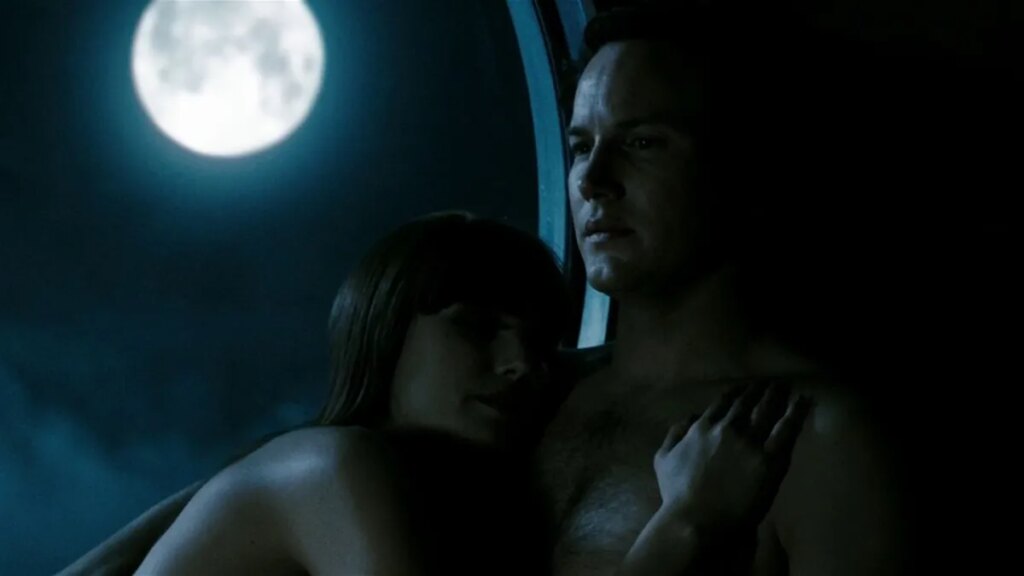
At this point, we have to note that not only did Zack Snyder rise to prominence during the superhero boom, but that he did indeed mix sex with tights and capes. However, no one would use the word “erotic” to describe the “Hallelujah” sequence from Watchmen or the scene from Batman v. Superman: Dawn of Justice in which a fully-clothed Clark Kent jumps into the tub with Lois Lane. Those were sex scenes, yes, but poorly done sex scenes.