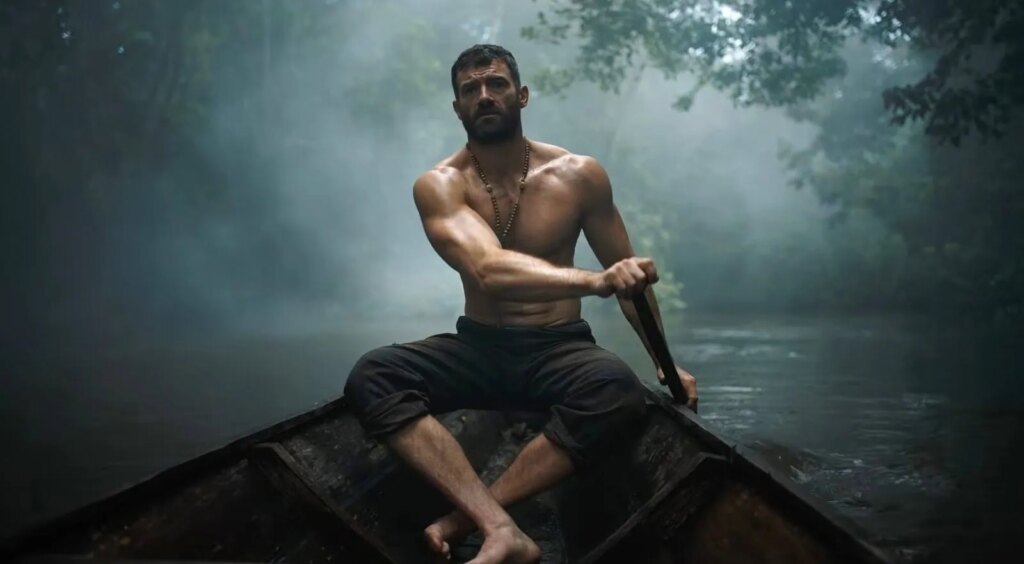

The Last Photograph, 2026.
Directed by Zack Snyder.
Starring Stuart Martin, Fra Fee, Jackie Kay, Sergio Herrera, Marlon Moreno, Costanza Andrade, Ed Hughes, Carolina Henao, and Gustavo Angarita Jr.
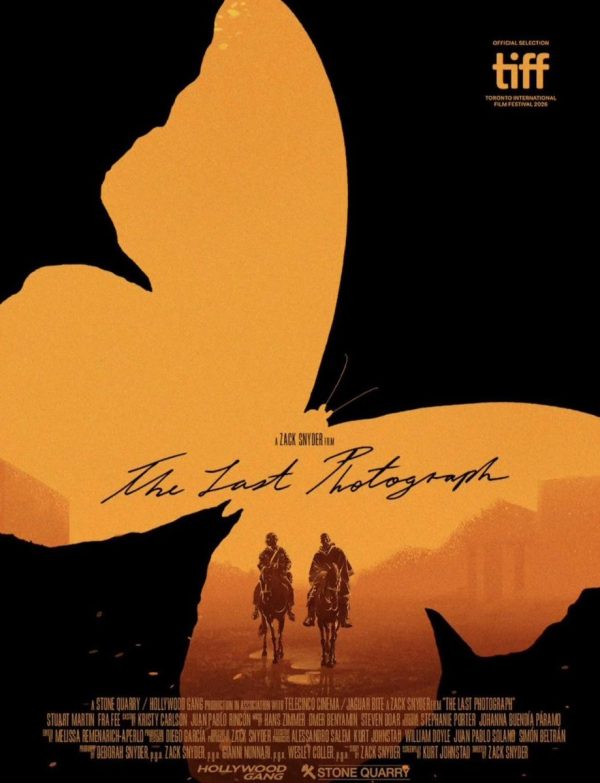
SYNOPSIS:
An ex-DEA agent searches South American mountains for his murdered diplomat siblings’ children, aided by a junkie photographer who saw the killers, confronting past demons as reality blurs in remote wilderness.
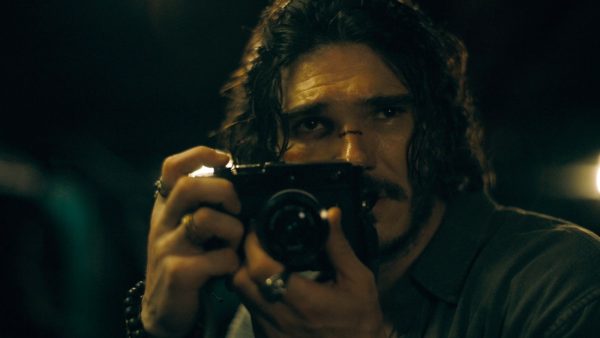
For a film obsessed with photographs, The Last Photograph is a failure. It spends a lot of time looking at the world without conveying any clear meaning. Its worldview and setting are generic (although it was shot in Colombia which does look beautiful in some shots). The more I think about it, the less I like it.
The film opens with a butterfly on a light before revealing the protagonist Wallace (Fra Fee) having sex with a half-naked woman while he remains mostly covered (this happens a lot in the film). She thinks he is taking a photo of her, but when she realizes he is not she asks what he is doing, and after pausing for dramatic effect he reveals he is trying to capture a butterfly. That is the depth of dialogue in this film.
Few scenes in this film are convincing due to a combination of Fra Fee’s bad acting, Snyder’s confused direction, and Kurt Johnstad’s awful script. Upon hearing gunshots in the hallway, Wallace’s instinct is to walk out into the middle of the room where armed men are executing everyone on sight and photograph the mother who hired him while she gets executed. A bad guy inevitably notices him standing in the middle behind nothing and raises their gun at him. He responds by raising the camera to photograph. The bad guy pulls the trigger. This is the most believable human act in the film. Unfortunately for the audience… he survives, as looking through the camera saved him (wow).
A few scenes later, Wallace tells the executed woman’s lover and baby daddy, Ethan (Stuart Martin), who has tracked him down, how badly he wants to keep living, and promptly tells the grieving man looking for his lost child to get lost unless he’s willing to heavily financially compensate Wallace for information on where the killers are. Unfortunately for the audience, insulting a man who just lost the love of his life, asking for clues to find his missing child, does not get Wallace killed.
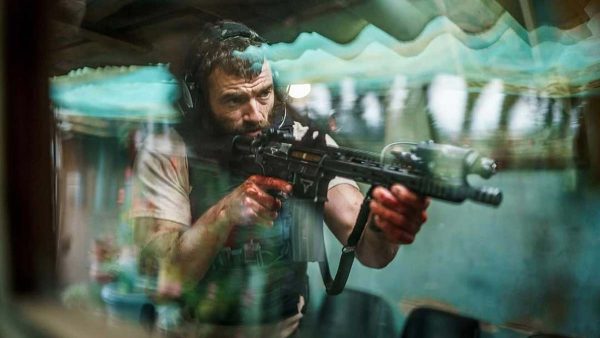
Wallace, if you haven’t gathered, is a repulsive, hypocritical pervert. He is also the film’s moral centre. Photographing everyone and everything, not doing the job he was hired for or doing anything meaningful with the images he captures, is what makes him the perfect stand-in for director Zack Snyder. A man who believes that the image itself is the ultimate form of expression and whose career has trended downward by ignoring every authority but his own ego.
I knew based on his previous work that the film would likely be a self-indulgent mess, but after failing to get into his former colleague’s film The Debut after waiting in line for 4 hours, I dashed across several city blocks in Toronto traffic in 5 minutes to jump into this special one-time showing. This privately funded passion project is currently awaiting distribution. And judging by the online and critical reactions, he’s going to have to wait a little longer or, hopefully, listen for once and make some cuts.
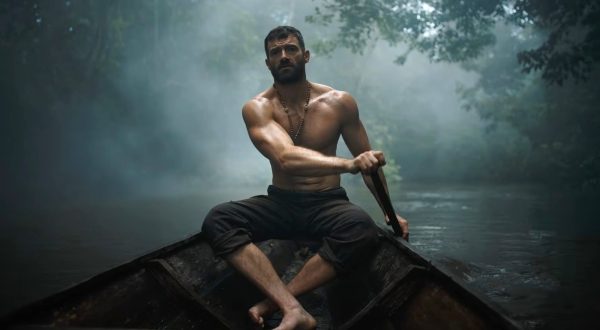
Had Wallace died taking the last photograph of this woman and it was published for her lover to see and seek answers, this movie would make sense. Conveying how dangerous images captured in art have meaning and power to connect people and the title would make sense, but that’s not the film Snyder made. Gathering from the Q&A, I do not think Snyder even knew what film he made. Wallace takes many more photographs throughout the film, none of which are impressive and never once considers getting a zoom lens to stay out of danger. The incident grants him no epiphany or higher calling, and he remains unchanged from the experience aside from a bruised cheek and a possibly broken nose. This movie is boring.
The Last Photograph flirts with total nihilism that could make the film’s tone work but Snyder isn’t up to it as the thin and boring characters remain flailingly self-righteous and self-serving.
Ethan murders most men he sees, establishing a world where violence is the only answer (complete with cheap CGI blood squibs). Will Wallace be forced to participate in such a world? Will Ethan’s violent journey be rendered as pointless? It seems Snyder wants to make a film about grief, but can’t connect the feelings with the characters we care enough about or believe. These are stupid, vain, rude, and uncompassionate creatures.
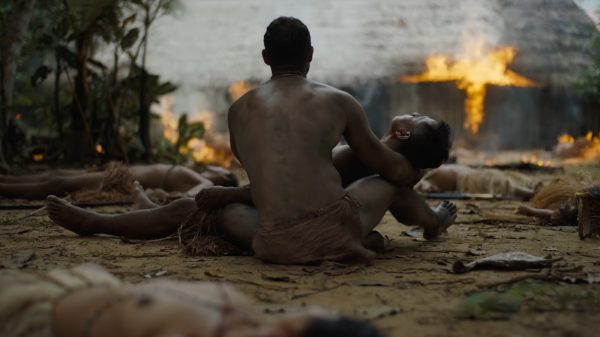
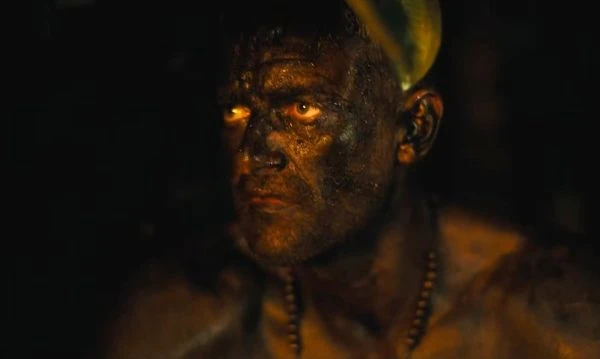
The plot apes Apocalypse Now if you thought Colonel Kurtz was cool. Ethan appears in one scene covered in tribal war paint, muscular, a rosary hanging around his neck, and then slaughters a group of men. Snyder has faced arguments about fascism before, but the most disturbing thing here is how little counterweight there is to it. Ethan kills everyone with guns as the movie presents most of them as anonymously guilty. Wallace’s counterargument barely pays lip service.
None of this violence builds character or story. Apocalypse Now was episodic but had Willard grow more disillusioned after witnessing spectacular horrors. He is afraid of Kurtz, fascinated, and feeling increasingly implicated by the violence as it changes him. The characters here are flat and thin, and the plot builds on nothing, instead opting to recontextualize Ethan’s weightless relationship to his dead family. The movie creates a broken world and doesn’t give its characters the tools to change it or identify with any hope to hold onto; it also is at least 30 minutes long.
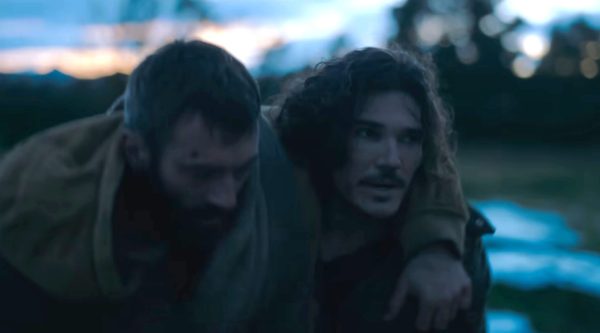
Wallace takes hundreds of photos, yet the one photograph that would give his journey meaning is the one he refuses to take. The decision is presented as an awakening, but the audience by then will be asleep. One could eliminate him from the story after the opening sequence, and it would make little difference.
During the Q&A for this film, a woman fought to ask Snyder about what it was like to shoot such intense material. Snyder could not bring himself to mention the sexual assaults depicted because it doesn’t add anything to the plot and they are unnecessary. If the assaults are intended to communicate the brutality of this world, the film has already done that with plenty of other violence. If Snyder himself or the film’s script cannot comment on it, then it has no place in the story. But at least for now, this story has no place in distribution.
Flickering Myth Rating – Film: ★ ★ / Movie: ★
Will Hume
https://www.youtube.com/watch?v=embed/playlist