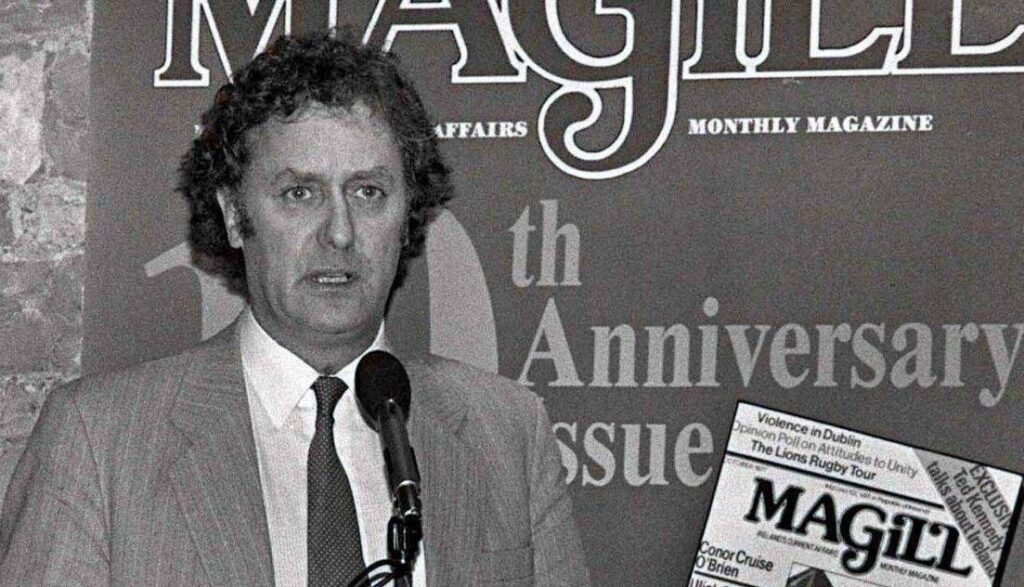

In the early stages of reading this book, I wondered would there be any mention of a relatively innocuous piece I came across in Magill in the late 1980s which has stayed with me through the decades.
The piece was written by poet Paul Durcan and involved exploring themes common to the respective works of Van Morrison and Patrick Kavanagh. I was a fan of Durcan’s and a devotee of Morrison’s work.
The writing, the content, the sheer verve of the thesis presented by Durcan blew me away. I read it in the Common Room in UCC, and went back a few times to read it again and again.
This was not the kind of journalism I had ever come across before.
And there it was in this comprehensive history of the magazine, popping up on page 246, taking me back to a time when everything was possible.
“No other Irish poets,” Durcan wrote, “— writing in either verse or music — have come within a Honda’s roar of Patrick Kavanagh and Van Morrison.”
OK, Seamus Heaney was only revving up at that stage but you get the picture.
Magill was that kind of magazine, redefining journalism as it was practiced at the time.
Its editors and writers viewed the world through a lens that was off beam and in the process produced some amazing results during the 1980s.
As the State was struggling to be born again out of the quasi theocracy that had existed up until then, Magill documented what was going on beneath the surface.
Whether it was in-depth examinations of the Church, exposés of police brutality, attempting to examine the thinking behind the Provos campaign, or walking in the shoes of those afflicted with Aids, the magazine was looking under the national bonnet.
The writing was frequently first class and it was a stable for many top scribes like Colm Tóibín, Fintan O’Toole, Olivia O’Leary, Nell McCafferty, and Gene Kerrigan.
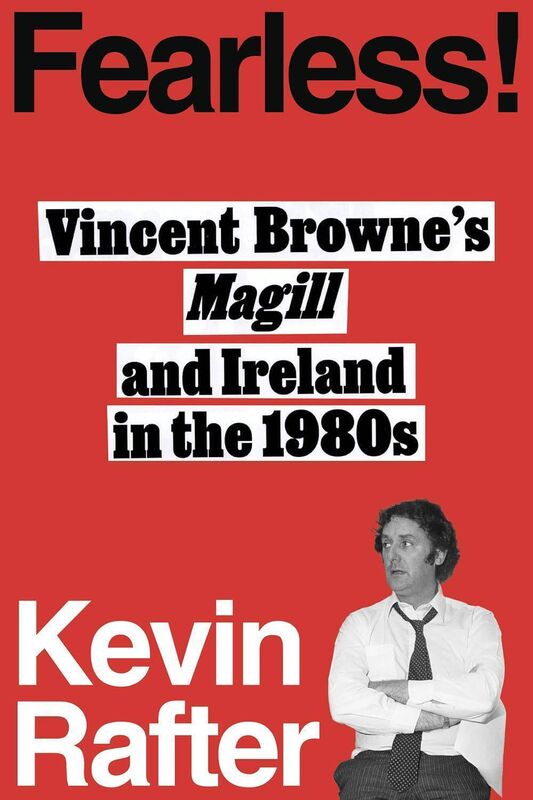
Kevin Rafter’s in-depth study of the phenomenon is a story that will be compelling for anybody interested in late 20th-century history, journalism, or the legend that is Vincent Browne.
Browne, of course, dominates the whole story. A journalist of rare ability and boundless energy, his personal attributes saw him drive the magazine he created to rare heights, and drive those who followed him completely around the bend.
Magill wouldn’t have happened without Browne but it might well have gone on to a longer, productive life if he had walked away when his complete focus was no longer on it.
Phone line tapped by gardaí
When he first set up the magazine in 1978 there wasn’t even a telephone in the office. Browne got onto the minister for post and telegraphs Albert Reynolds and succeeded in getting a connection.
“One of the new phone lines installed in Browne’s office was among those later revealed to have been tapped by the gardaí,” the author reveals.
The two ends of the phone line summed up Browne’s relationship with the establishment.
He was, his immediate successor at Magill, Colm Tóibín, told the author “very much a member of the establishment with huge anti-establishment feelings as well”.
From the off Magill combined in-depth writing of the highest quality with scoops and deep investigative work.
An early scoop was the story behind the Arms Crisis which had happened a decade before.
Browne was fascinated by Charlie Haughey, one of the main players in the crisis, retaining personal affection for him.
He was also obsessed by where Haughey got his money. This was a constant theme in editorial meetings and for long after he officially relinquished the editor’s role.
Biography of Charles Haughey
Rafter recounts that Browne wanted “to write a biography of the new taoiseach in 1980”. As it happens, he finally has completed such a work 45 years down the line and it’s due out in the coming months.
In 1982, Browne officially left as editor to set up the Sunday Tribune, fulfilling his ambition to edit a Sunday newspaper. Yet he never let go.
His immediate successor Tóibín recounts here that Browne would make “raids” on the magazine’s office from his own base up the street in the Tribune.
Stand up rows were common. He was wont at times to leaf through the most recent edition and declare on each page: “Shite … shite … shite.”
He told Tóibín: “The problem with the magazine is not that it’s bad, it’s that you don’t know how bad it is.”
Fintan O’Toole succeeded Tóibín and received the same treatment.
“Being editor was not easy because you had Vincent glowering over your shoulder, because he wouldn’t get involved on the one hand but he wouldn’t let go on the other,” O’Toole recounts.
Then there was O’Toole’s successor John Waters who characterised Browne thus: “I was baffled by him, fascinated by him, scared of him, in awe of him.”
Through it all the magazine continued to expose, create, and analyse with precision and style all that was going on in the country.
One high point was the coverage of the Kerry Babies tribunal by Gene Kerrigan, who was a mainstay at Magill through the decade.
He disputed the findings of the tribunal to an extent that the judge, Kevin Lynch wrote a reply which was hand delivered to the magazine.
This was pure gold for Magill. Yet Kerrigan replied to the reply, setting out in tidy, precise prose faithful to the evidence how Lynch had got it wrong. There was no more from the judge.
Whatever about the founder’s effect from afar on the magazine — both positive and infuriating for his editorial successors — the end, as recounted here had much to do with Browne’s notions of building a stable of publications.
“The drive to further expand his range of publications ultimately contributed to the weakening of Magill and was partly responsible for the magazine’s demise in 1990.”
This is accurate as far as it goes, but even if finances had not become a problem, Browne’s inability to simply remove himself completely from the editorial content once he migrated to the Tribune smothered the efforts of those who followed him.
Colm Tóibín a better editor
Browne told the author that he should have let Tóibín alone to do the work, as he was a better editor.
He also noted that both the novelist as he was to become, and Fintan O’Toole, Tóibín’s successor who suffered similarly, were “both great journalists. They are national treasures now.”
The author concludes this impressive book by paying homage to a publication that did what was required to hold power to account at a time of major change.
“Wrongdoing and injustices still need to be called out,” Rafter writes, “but that job is for other media outlets now.”
Gone Magill is, but it will not be forgotten.