
Some movie trilogies have a third installment that makes you wonder if the studio should have stopped while it was ahead. Sam Raimi’s Spider-Man trilogy is a good example. The first two movies gave us a beloved superhero origin story and one of the genre’s most memorable villains. Then Spider-Man 3 arrived with too many subplots, too many villains, and a dance sequence that still refuses to leave the internet alone. The Godfather has a similar problem, although its third movie at least has the excuse of following two genuine masterpieces.
So, yes, making one great movie is difficult. Making three in a row without somebody dropping the ball is a cinematic miracle. For this list, I only included trilogies that actually ended after three films. No legacy sequels, no fourth chapters dragged out decades later, and no franchises that eventually expanded beyond their original three movies. I also refused to grade on a curve. If one film is poor, I couldn’t include the trilogy. What’s left is a short, stubborn list of movie trilogies where every film is a masterpiece.
Why You Should Trust Me: I’ve spent nearly four years writing about movies and TV shows for MovieWeb, writing about everything from major franchises and blockbuster thrillers to classic cinema, comedies, and international gems. I’ve also written more than 1,700 lists, which means I’ve spent an unreasonable amount of time thinking about what makes a movie or TV show worth recommending.
Honorable Mentions
The Original Star Wars Trilogy (A New Hope, The Empire Strikes Back, Return of the Jedi): Ideally, this would rank near the top of the list based on quality alone. All three movies hit a home run, helped redefine blockbuster filmmaking, gave us some of the most influential characters of all time, and remain ridiculously rewatchable decades later. The problem is that Star Wars expanded into a gigantic franchise, complete with prequels, sequels, spin-offs, and more.
The Original Indiana Jones Trilogy (Raiders of the Lost Ark, Temple of Doom, The Last Crusade): The same goes for Indiana Jones. The three movies are a phenomenal run of adventure filmmaking. Spielberg and Lucas renewed interest in archaeological treasure hunting. However, Indy went on more adventures, and because this list is specifically about trilogies, I couldn’t include it on the main list.
The Cornetto Trilogy
Three Movies, One Ice Cream Cone

Edgar Wright’s Cornetto Trilogy is perhaps the funniest example of how loosely the word “trilogy” can be used. Shaun of the Dead, Hot Fuzz, and The World’s End don’t tell a continuous story, and they aren’t even in the same genre. Wright, Simon Pegg, and Nick Frost never even pretended that these three movies were connected by plot. However, they are linked by ice cream flavors and a shared sense of humor. Somehow, the varying degrees of catastrophic British nonsense keep the trilogy fresh.
Shaun of the Dead reinvented zombie comedy; Hot Fuzz turned a sleepy English village into an action-movie playground; and The World’s End ended things with a midlife-crisis sci-fi bender that becomes more hilarious every time I rewatch it. What makes the trilogy special isn’t the jokes but the detail Wright packs into every frame. He edits comedy like an action thriller, and every cut and camera angle is important. Also, Pegg and Frost’s chemistry never overstays its welcome. It’s the loosest trilogy on the list in terms of story, but the tightest in terms of execution.
|
Movie Name |
Release Year |
Rotten Tomatoes |
IMDb Rating |
|
Shaun of the Dead |
2004 |
92% |
7.9/10 |
|
Hot Fuzz |
2007 |
91% |
7.8/10 |
|
The World’s End |
2013 |
89% |
7.0/10 |
Back to the Future Trilogy
Time Travel Done Right

I’ll be honest, I included this one mostly because of Part I, which is easily the most flawless script Hollywood has ever produced. Every joke pays off later, every prop matters, and every time-travel logic actually holds up if you think about it for five seconds. But what I love about the trilogy is that the sequels understand what made the first movie work. Instead of simply repeating the formula, Robert Zemeckis and Bob Gale keep finding new ways to play with the same characters.
Part II is the weirdest and probably the most ambitious of the three movies. It sends Marty through multiple versions of the same timeline and turns the original movie’s events into its own story. Part III takes things in a different direction with a Western setting and gives Doc Brown an emotional arc. While the sequels don’t reach the same level, they’re both imaginative, funny, visually stunning, and packed with ideas.
|
Movie Name |
Release Year |
Rotten Tomatoes |
IMDb Rating |
|
Back to the Future |
1985 |
96% |
8.5/10 |
|
Back to the Future Part II |
1989 |
63% |
7.8/10 |
|
Back to the Future Part III |
1990 |
78% |
7.4/10 |
The Dollars Trilogy
The Spaghetti Western at Its Peak
-
 Constantin Film
 -
 United Artists
 -
 United Artists
Sergio Leone’s Dollars Trilogy taught Hollywood how much personality you could squeeze out of a Western if you stopped worrying about being subtle. A Fistful of Dollars, For a Few Dollars More, and The Good, the Bad and the Ugly turned Clint Eastwood into an international icon while giving the genre a new visual and musical language.
The trilogy also improves with each movie. A Fistful of Dollars established the template, For a Few Dollars More expanded the character dynamics, and The Good, the Bad and the Ugly went completely bonkers with its tension. Leone’s extreme close-ups, wide landscapes, Morricone’s music, and sudden bursts of violence are recognizable even for those not quite as familiar with his work. Basically, even if you’ve never seen the trilogy, you’ve seen its influence.
|
Movie Name |
Release Year |
Rotten Tomatoes |
IMDb Rating |
|
A Fistful of Dollars |
1964 |
92% |
7.9/10 |
|
For a Few Dollars More |
1965 |
92% |
8.0/10 |
|
The Good, the Bad and the Ugly |
1966 |
97% |
8.8/10 |
The Dark Knight Trilogy
Batman Gets the Nolan Treatment

After watching many superhero trilogies, I’ve realized that they rarely end on their own terms, which is why Christopher Nolan’s Batman trilogy stands out. Batman Begins, The Dark Knight, and The Dark Knight Rises tell one complete story, and each movie has a distinct idea of what Batman should represent. The first movie does the unglamorous work of making Bruce Wayne’s origin feel psychologically real.
The second one uses that foundation to deliver one of the best villain performances of the 21st century in Heath Ledger’s Joker. Then The Dark Knight Rises takes the story toward its inevitable conclusion and focuses on legacy, sacrifice, and whether Bruce Wayne can leave Batman behind. Yes, people argue about this movie, but as a closing chapter, it commits to its themes and is a satisfying ending.
|
Movie Name |
Release Year |
Rotten Tomatoes |
IMDb Rating |
|
Batman Begins |
2005 |
84% |
8.2/10 |
|
The Dark Knight |
2008 |
94% |
9.0/10 |
|
The Dark Knight Rises |
2012 |
87% |
8.4/10 |
The Before Trilogy
Romance Without the Sugarcoating

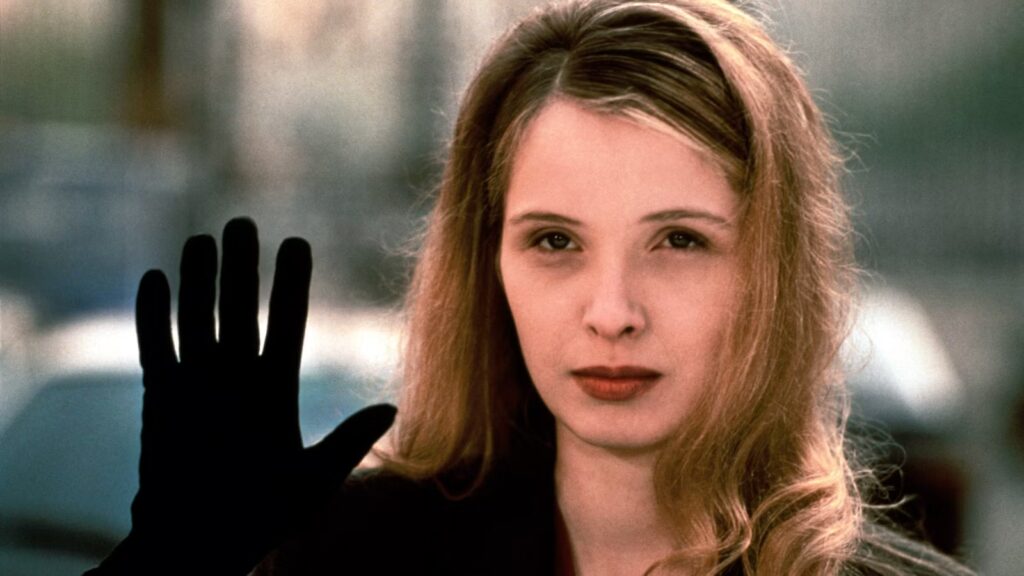
Richard Linklater’s Before trilogy proves that you can build a beautiful, unmatched cinematic experience around two people simply talking to each other. Linklater, Ethan Hawke, and Julie Delpy checked in on the same couple every nine years, giving us one of the most honest portraits of a relationship. Before Sunrise is pure romantic idealism; Before Sunset is a soul-crushing reunion; and Before Midnight lets the fantasy collide with the reality of a marriage.
The genius is how naturally the movies evolve. They change from curious and fuzzy, to wistful and complicated, to the less exciting reality of an adult relationship. Since Hawke and Delpy infuse so much authenticity and accumulated history into every conversation, by the third movie, every throwaway comment carries more emotional weight than any grand gesture in romantic movies. I’ve watched plenty of movies about great romances, but few feel this real.
|
Movie Name |
Release Year |
Rotten Tomatoes |
IMDb Rating |
|
Before Sunrise |
1995 |
100% |
8.1/10 |
|
Before Sunset |
2004 |
95% |
8.1/10 |
|
Before Midnight |
2013 |
98% |
7.9/10 |
Three Colors Trilogy
Kieślowski at His Most Thoughtful

Directed by Krzysztof Kieślowski, the Three Colors trilogy is the most socially and intellectually ambitious entry here. But if you haven’t watched any of the films yet, don’t let that intimidate you. Blue, White, and Red use the colors of the French flag and the ideas of liberty, equality, and fraternity as loose themes, but each movie works wonderfully well on its own.
The trilogy is extraordinary because Kieślowski approaches each story differently. Every frame is composed with intention, and the visual motifs prove that. Blue is intimate and emotionally devastating, while White is the most playful and darkly funny of the three. Red is my favorite and brings the trilogy together in a magical way. What I particularly love about these movies is how much they understand human contradictions. People can be selfish and generous, cruel and compassionate, lonely and deeply connected to strangers. Kieślowski never reduces those contradictions to quirks. He lets them stay as they are.
|
Movie Name |
Release Year |
Rotten Tomatoes |
IMDb Rating |
|
Three Colors: Blue |
1993 |
98% |
7.9/10 |
|
Three Colors: White |
1994 |
87% |
7.7/10 |
|
Three Colors: Red |
1994 |
97% |
8.1/10 |
The Apu Trilogy
A Landmark in Indian Cinema

Satyajit Ray made this trilogy on a shoestring budget with a cast mostly made up of non-professionals, and it remains one of the great achievements in global cinema. Pather Panchali, the first film in the trilogy, follows Apu’s childhood poverty with unflinching honesty. Aparajito tracks his coming of age and the choice between ambition and family, and The World of Apu ends the story with a mature look at loss and fatherhood.
Despite being underrated, the Apu trilogy ranks so high on this list because of how patient the movies are. Ray trusts you to sit with a character, notice a change in expression, listen to a piece of music, or watch life happen. There is no need to rush an emotion or manufacture drama when the ordinary progression of life already has enough joy and heartbreak.
|
Movie Name |
Release Year |
Rotten Tomatoes |
IMDb Rating |
|
Pather Panchali |
1955 |
100% |
8.3/10 |
|
Aparajito |
1956 |
100% |
8.2/10 |
|
The World of Apu |
1959 |
100% |
8.5/10 |
The Lord of the Rings Trilogy
Fantasy Filmmaking at Its Finest
The only reason that I put the Apu Trilogy in second place is that The Lord of the Rings exists. It’s difficult to think of another trilogy that had to accomplish as much as Peter Jackson’s. These weren’t just three fantasy movies sharing the same characters. Jackson and his team built an entire world, populated it with dozens of memorable characters, created languages, cultures, histories, armies, and locations, and made sure none of it was confusing.
I think it’s impressive that each movie has its own identity while still functioning as one continuous story. The Fellowship of the Ring has the wonder of entering Middle-earth for the first time. The Two Towers becomes a sprawling war movie without losing the smaller character stories. And The Return of the King famously sticks the landing. It’s the only trilogy where each entry got nominated for Best Picture, and Return of the King swept the Oscars with 11 wins.
|
Movie Name |
Release Year |
Rotten Tomatoes |
IMDb Rating |
|
The Fellowship of the Ring |
2001 |
91% |
8.9/10 |
|
The Two Towers |
2002 |
95% |
8.8/10 |
|
The Return of the King |
2003 |
93% |
9.0/10 |