
Zach Cregger’s Resident Evil may have sparked a pre-release backlash among some fans, but it works precisely because it doesn’t adapt familiar videogame beats. Spoilers ahead.
NB: The following contains spoilers for Resident Evil (2026).
Paul WS Anderson, Johannes Roberts, even the grandfather of zombie apocalypses, George A Romero, are among the various filmmakers who’ve attempted to turn the Resident Evil franchise into a movie.
Certainly, those earlier attempts have their fans (aside from Romero’s, which never happened). Anderson’s string of movies, all starring Milla Jovovich, were entertaining enough as action flicks. But none have quite captured the survival horror tension of the franchise’s most intense entries.
As we mentioned in our earlier, spoiler-free review, Zach Cregger’s film delivers on the suspense front – while also engaging with the goofiness that also marks out Capcom’s 30 year-old videogame series. The way Cregger has gone about this has caused something of a backlash among some Resident Evil fans, however.
The Barbarian and Weapons filmmaker, together with co-writer Shay Hatten (Ballerina) has essentially created a sidestory which takes place outside what you might call the usual Resi canon: the protagonist here isn’t Chris or Claire Redfield, or Leon Kennedy, or anyone familiar from the games; there’s no Albert Wexler, and no Spencer mansion.
Instead, we get an ordinary delivery worker, fighting to get to Raccoon City Hospital as a deadly virus breaks out. When internet-dwelling fans got wind of this, there was some criticism that Cregger wasn’t engaging with the existing stories and characters they loved.
Rather than ignore it, Cregger rather boldly tackled it head on.
“I think I was naive,” the filmmaker told IGN in early September. “I thought fans of these games, like me, would be thrilled that somebody was coming along and turning Resident Evil into a survival horror movie. I was like, ‘That’s great.’ I did not really appreciate the sentiment that, ‘We’ve been waiting forever for Leon’s story.’ And I appreciate that, and I’m sorry that’s not the story I’m bringing.”
Elsewhere in that interview, though, Cregger – intentionally, in all likelihood – hits on a problem that previous Resident Evil film adaptations have faced, and which he’s managed to avoid.
“My only hope is that they’ll see the movie regardless of their skepticism or their disappointment that I’m not telling some of the stories that the games tell so well.”
The emphasis there is mine, because it’s an important point: those characters and stories already exist in the broader Resident Evil universe. If Cregger, or anyone else, were to transliterate them from a videogame to a film, there’s little room left for creativity on the filmmakers’ part – or even surprise for the franchise’s own dedicated audience. Those stories have already been told.
Earlier Resident Evil films have often brought in familiar faces or situations from the games, but the broad consensus was that the results paled in comparison to the source. Or worse, that the filmmakers behind those movies didn’t really ‘get’ what the Resident Evil franchise was about.

Nor is this unique to Resident Evil: the pitfall most filmmakers have fallen into is that adapting a videogame isn’t like adapting a book or even an old TV show. When a filmmaker takes a novel or a cop series, they have the opportunity to add and build on what already exists. In adapting a videogame, you’re taking something away: videogames are an interactive medium, and movies are passive.
Cregger sidesteps all of this in a way that, at least in the context of a piece of mainstream popcorn entertainment, is quite artful. Resident Evil doesn’t even try to re-create what happens in the games, like a conventional adaptation of a story; instead, it attempts to create in its viewer the feeling of being trapped in a survival horror situation.
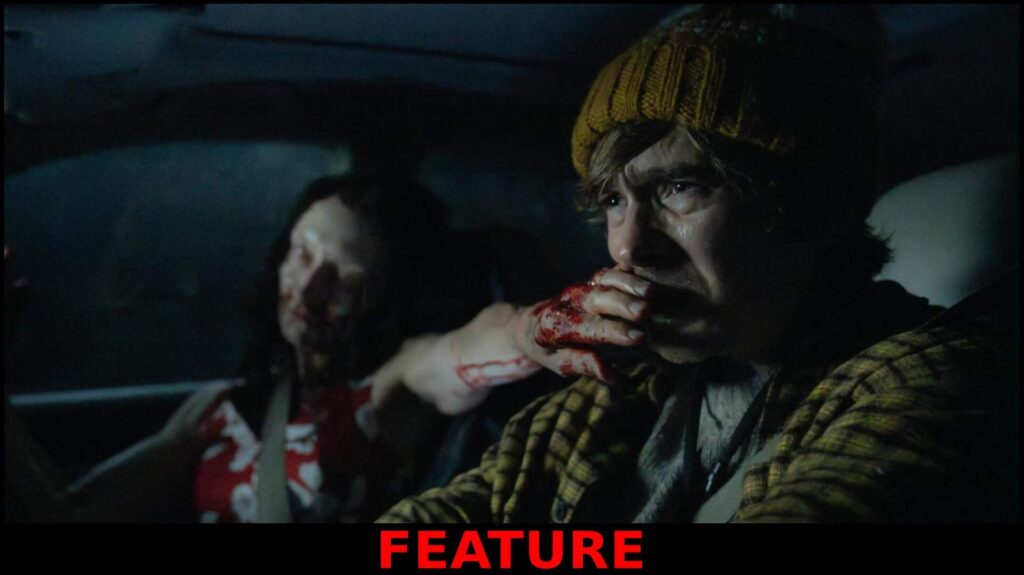
Hapless courier Bryan (Austin Abrams) serves as the audience’s eyes and ears. But in a striking reversal of Milla Jovovich’s Alice from Anderson Resi films, Bryan is marked out by his staggering unpreparedness.
If Bryan were a player at the helm of a videogame, he’d suck: fumbling at the controls, baffled by how guns operate. He doesn’t walk around with post-modern awareness of horror movies and videogames. When he runs a woman over on a snowy road late one night, he takes the situation at face value. The woman lies on the ground, limbs twisted and twitching, and he assumes that she’s in this state because she’s been struck by Bryan’s car. He doesn’t assume that the woman’s about to turn into some sort of zombie-adjacent nightmare.
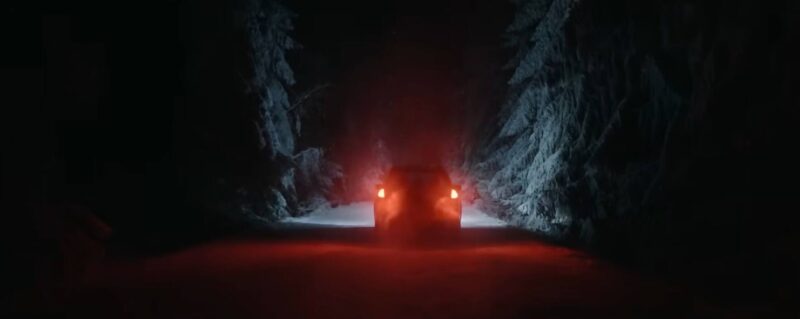
Bryan also sucks at solving environmental puzzles. There’s a sequence where he’s stuck in a barn with a barking, angry mutt (a clear nod to the canines from the Resi videogames). Taking refuge in a hay-strewn loft, he spots a wooden ladder and cannily uses it to shut the door behind the dog, trapping it inside the building.
Then Bryan does the latest stupid thing in a string of stupid things: he lobs the ladder at the dog, presumably hoping it’ll hold the beast at bay or knock it out. Then Bryan turns and realises, too late, that he could have used the ladder to climb down from the window sitting right behind him.
In less capable hands, Bryan’s ineptitude could come across as annoying. But thanks to Abrams’ instantly likeable performance, he simply comes across as ordinary rather than merely dim-witted. He’s trying to do his best with the meagre skills he has; it’s hardly Bryan’s fault that he’s not an ex-soldier or versed in operating firearms. His human frailties also mean we’re constantly worrying for his safety; Jovovich was good value in her Resi films, but there were seldom points where we thought she might be in genuine danger.
When Bryan first fires a pistol, Cregger emphasies the power of the recoil. When he first successfully hits the zombified woman (the screenplay simply calls her The Pedestrian), we’re given at least an inkling of what it must feel like to aim a gun at another human being.
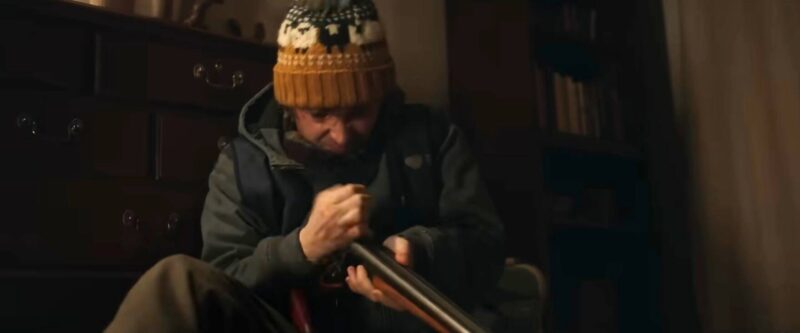
Later, Bryan finds a shotgun in a farmhouse, and again Cregger underlines the weapon’s power – the din of the thing is deafening, the bloody aftermath startlingly messy.
In this regard, Resident Evil escalates much like a videogame: Bryan equipping himself with weapons of increasing power, and gradually growing in experience as he survives each encounter. (He doesn’t pick up any herbs, though there is a glimpse of a typewriter – one of a handful of nods that had some people in the cinema I attended clap in recognition.)
Elsewhere, Cregger and Hatten have fun playing around with the expectations set by decades of action movies and videogames. Padlocks flatly refuse to be shot off; locked gates don’t magically ping open when you drive at them.
At times, maybe the goofiness gets away from the filmmakers a bit – Paul Walter Hauser’s performance as a cowardly Umbrella Corporation scientist is perhaps a touch too broad. The final stretch – a non-stop fountain of blood, acid and bursting globules might also mark the moment where suspense gives way to repetitive, CGI-drenched excess.
Overall, though, Resident Evil works so well because it doesn’t cravenly try to give fans what they think they want, or attempt to win them over with nagging references to familiar things. Instead, it’s Cregger’s interpretation of the dangerous, chaotic, monster-filled world that the games depict.

Even the strange, Umbrella-spawned threat echoes the games, but isn’t exactly like any of them. The outbreak isn’t named, but it has similarities to the T-Virus, the Uroboros virus, as well as the Nyx – an amorphous, tentacular bioweapon which absorbs organic matter. It’s possible that it’s this creature that we see the luckless Bryan evolve into at the end of the movie.
Cregger has previously said that his film takes place around the same time as the events depicted in the 1998 videogame, Resident Evil 2. In retrospect, it’s easy to see how a sequel to Cregger’s movie could tie the two together: Raccoon City is now overrun by the virus, there are monsters everywhere, and we finally meet Leon S Kennedy and Claire Redfield, both attempting to survive the outbreak.
A great number of fans would probably be pleased about that kind of development. But doing so would risk a return to something less engaging: rather than something original or even personal, we’d get just another piece of IP. Fortunately, Cregger has made positive noises about making a sequel himself; “I can’t help thinking about other places this could go,” he told The Playlist. “I want to talk about the ending of this movie so badly, because there is a big aspect of it that’s worth discussing.”
The new Resident Evil won’t please everyone, but one thing it assuredly isn’t is a cynical cash-grab. It’s the work of a filmmaker who clearly cares about what he makes, and has affection for the videogame world from which it originates. Too much affection, in fact, to make some kind of down-the-middle, studio-approved product that replays scenes we’ve seen or played through before.
As Cregger put it to Deadline earlier in September, “I want to write whatever I want to write. I don’t want to write something where I have to make sure I’m tagging different data points to satisfy X. I just want to satisfy me… I’m making the Resident Evil movie that I wish existed.”
Resident Evil is in cinemas now.