
The ultimate marker of status in Donald Trump’s Washington is a custom Rolex, which is curious because Rolex no longer offers custom watches. These exclusive timepieces—so exclusive that barely anyone knows they exist—were purchased and then modified by a bespoke operation in London. There are two options: a gold Day-Date Presidential and a GMT Pepsi, both with blue faces and the gold seal of the president on the dial. At the 45- and 47-second markers sits a star. On the back, there’s an engraving of the White House.
These watches—known to a select few as “the White House Rolex”—are gossiped about with no shortage of envy, as they were made only for White House staff. Specifically, the White House staff who could afford to pay for them. “There’s no one fucking rich enough in the West Wing to actually buy the watch!” one insider joked. In Trump’s White House, this is not strictly true, but it does limit the clientele.
Steve Witkoff, Trump’s billionaire peace envoy; Susie Wiles, his chief of staff; and Will Scharf, the White House counsel, all own one of these models, as do several members of Vice President JD Vance’s operation, including chief of staff Nick Luna and national security adviser Cliff Sims. Outside the West Wing, 2024 campaign maestro Chris LaCivita and Trump’s longtime pollster Tony Fabrizio are part of a very small circle in possession of one. The White House declined to comment.
These timepieces are part of a time-honored Washington tradition. Every four years, a new flock of strivers swoop in for the status hunt, collecting the symbols that demonstrate their positions in the pecking order. It’s always been this way. In 1962, Tom Wolfe wrote a story that was never published. The drafts sit in a box at the New York Public Library, and they trace the markers of social rank in John F. Kennedy’s Washington: A row house in Georgetown. An invitation to a cocktail party at the French Embassy—or, better yet, the Iranian ambassador’s compound, where you were received by his wife, a princess and the sister of the shah, in a lush garden covered wall to wall with Oriental rugs. Or a helicopter, which, per Wolfe, liberates one “from the grime and clutter of the American masses.” What else is money for?
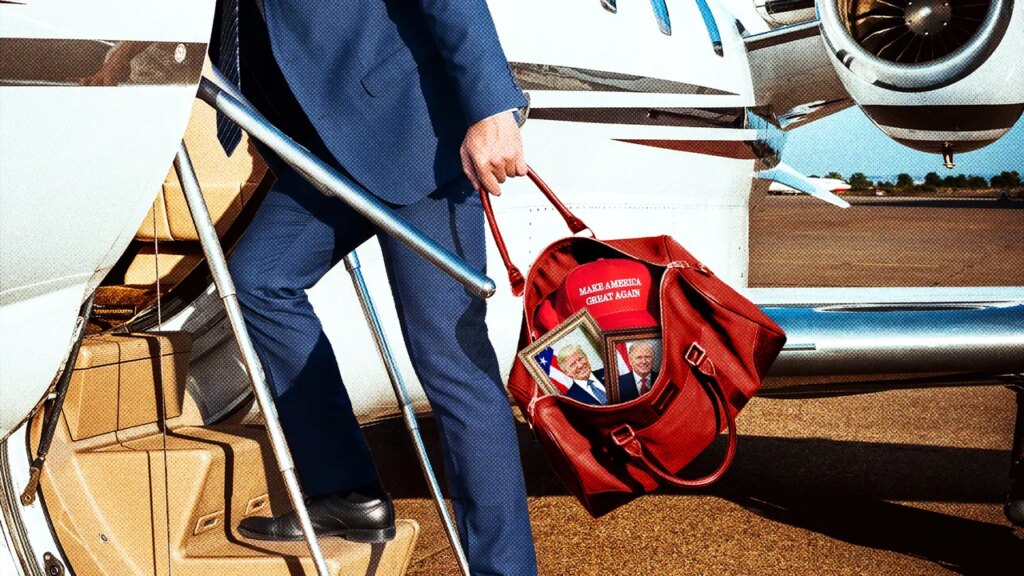
Washington is, more than ever, a town flush with cash and starved of humility. The Trump administration is the richest in history, and a towering tolerance for profiteering has ensured a lobbying boom. Even small-time players can rake in the cash in exchange for the specter of proximity to Trump. That’s fueled a climate wherein the flaunting of station is seen not as gauche, but as the ultimate demonstration of success. And it has spawned a new set of status symbols coveted by the newly rich lobbyists, donors, and administration officials enjoying, with flash and impunity, the spoils of a second Trump presidency.
The Clubs