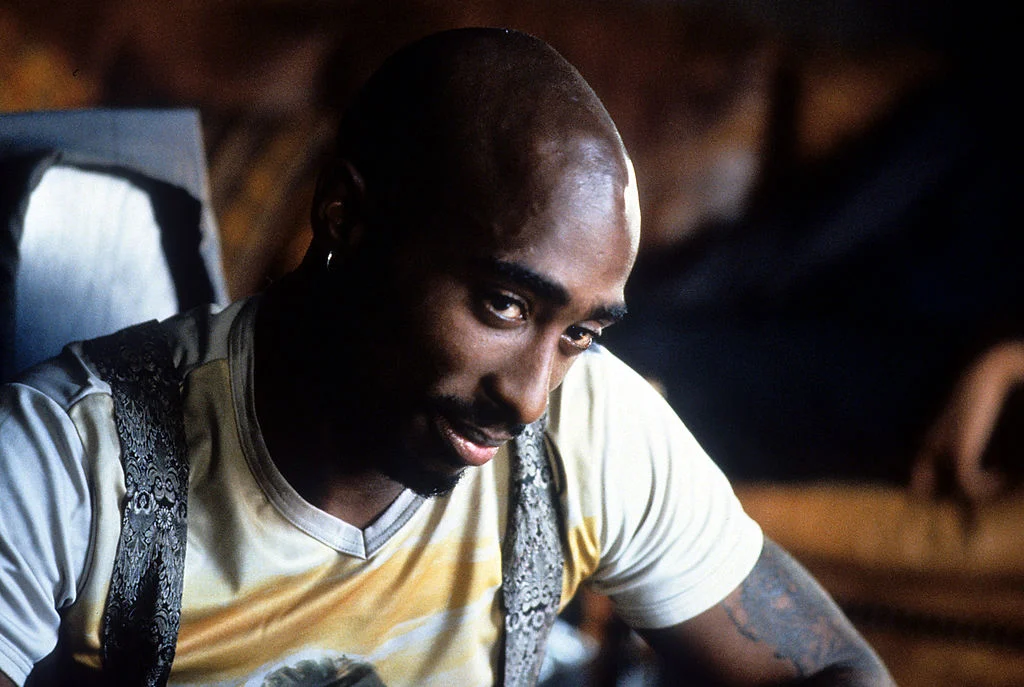

On September 13, 1996, Tupac Shakur died at a Las Vegas hospital six days after being shot while riding in a BMW driven by Death Row Records founder Suge Knight. He was just 25 years old, but Tupac was already one of the biggest musicians in the world.
His double album “All Eyez on Me” had debuted at #1 earlier that year. “California Love” and “How Do U Want It” were enormous hits. Tupac was starring in movies, wearing expensive jewelry, riding in luxury cars, staying in five-star hotels, and traveling with an entourage and security detail. Contemporary reporting estimated that his albums generated more than $60 million in retail sales in 1996 alone.
So how rich was Tupac when he died? Shockingly, not very rich at all.
Tupac owned no real estate. He owned no stocks or bonds. He had no retirement account. He didn’t even own the large Woodland Hills home where he had been living. His identifiable personal assets consisted primarily of two cars and roughly $150,000 in a bank account.
And then there was the really strange part: Death Row Records claimed Tupac actually owed the company millions of dollars.
Within months of his death, Tupac’s mother would examine the same financial relationship and argue that the exact opposite was true. According to his estate, Death Row didn’t have millions coming from Tupac. Death Row owed millions to Tupac.
What followed was an extraordinary battle over advances, royalties, bail money, houses, cars, jewelry, a $300,000 hotel bill, hundreds of unreleased songs, and one of the strangest recording contracts in music history.
Tupac Was Already Running Out Of Money Before Death Row
Tupac’s financial problems did not begin with Death Row. By the mid-1990s, friends and associates described him as financially supporting a large network of relatives, friends, and members of his entourage. One person close to him told The New Yorker that roughly 20 people depended on him financially.
Then came the lawyers. Tupac spent the first half of the 1990s dealing with criminal cases, civil lawsuits, arrests, and court appearances in several states. His legal bills were enormous, and his spending could also be spectacularly impulsive.
According to a 1997 Vanity Fair account, Suge Knight once paid Tupac $200,000 to record a song before he had formally joined Death Row. Tupac reportedly used some of the money to buy a Mercedes, totaled it within a day, bought another Mercedes, and later gave the replacement car to a friend.
By the time Tupac went to prison in early 1995 following his conviction on sexual-abuse charges, his finances were deteriorating. Interscope reportedly advanced him around $600,000 during his incarceration, but between legal bills, dependents, and other expenses, the money disappeared.
Ironically, his career was exploding at exactly the same moment. While Tupac was incarcerated, “Me Against the World” debuted at #1.
That was when Suge Knight arrived with a solution.
The Three-Page Prison Contract
Tupac needed approximately $1.4 million in bail to get out of prison while his conviction was being appealed. The legend that developed afterward was simple: Suge Knight put up $1.4 million, freed Tupac, and Tupac signed with Death Row in exchange.
The actual arrangement was more complicated.
According to a lawsuit Tupac’s estate later filed, the bail package consisted of an $850,000 corporate guarantee from Atlantic Records, $250,000 from Interscope, and a $300,000 bail bond. The estate alleged that those components were ultimately secured against Tupac’s future royalties. In other words, Tupac’s future earning power was helping secure his own freedom.
While Tupac was still incarcerated, Knight and attorney David Kenner presented him with an unusual handwritten agreement. Unlike a conventional recording contract that might run dozens of pages, Tupac’s Death Row deal was reportedly just three handwritten pages.
The terms included a $1 million advance for his first album, $125,000 to purchase a car, a $120,000 annual expense allowance, and a $250,000 legal fund. His royalty rate and future advances could also increase based on album sales.
Tupac signed, was released in October 1995, and immediately began recording at a staggering pace.
“All Eyez On Me” Becomes A Monster
Less than four months later, Death Row released “All Eyez on Me.” The double album debuted at #1, produced hits including “California Love” and “How Do U Want It,” and eventually became one of the most successful rap albums ever released.
Tupac appeared to be living accordingly. There were luxury cars, jewelry, houses, hotel suites, security, limousines, and expensive furniture. To anyone watching from the outside, he looked extremely rich.
But much of the money financing that lifestyle was being treated by Death Row as advances and expenses charged against his artist account. Those advances generally had to be recouped from Tupac’s royalties before significant additional money would flow to him personally.
That distinction is the key to understanding how someone could sell millions of albums while having remarkably little actual wealth.
The $300,000 Hotel Bill
Death Row’s accounting showed huge amounts being spent on Tupac during his roughly 11 months with the label. The company said it advanced hundreds of thousands of dollars for cars and housing, including a home for his mother, Afeni Shakur. Lease payments on three residences were reportedly charged to Tupac’s account.
Death Row also paid for jewelry, furniture, security, limousine service, and other expenses. One of the most eye-popping entries was approximately $300,000 accumulated at the Peninsula Hotel in Beverly Hills. Tupac had also arranged for his mother to receive approximately $16,000 per month.
Then there were the costs of making his music. Death Row said it had advanced more than $2 million for recording sessions and music videos. From the label’s perspective, Tupac wasn’t merely spending money. He was accumulating a balance that had to be recouped from future earnings.
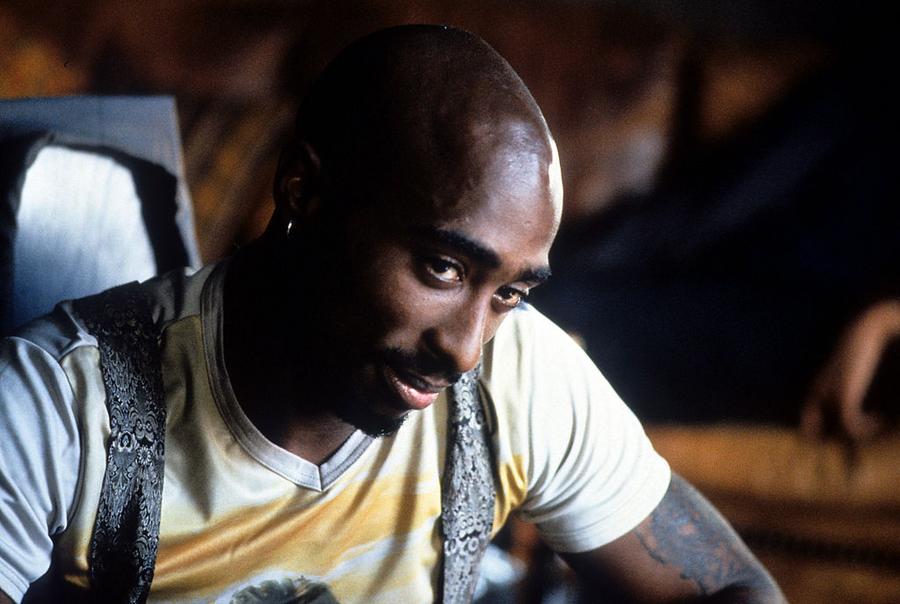
Gramercy Pictures/Getty Images
So What Was Tupac Actually Worth When He Died?
If you look strictly at conventional personal assets, Tupac had surprisingly little. Contemporary reporting indicated that he owned no real estate, stocks, or bonds. His principal bank account contained roughly $150,000. He owned two cars and had a relatively modest life-insurance policy benefiting his half-sister.
For one of the most successful entertainers in America, that is an astonishingly thin personal balance sheet.
But saying Tupac was simply “$4.9 million in debt” is also misleading because that number came from Death Row’s accounting. Shortly after his death, the label said his artist account was approximately $4.9 million in the red.
Death Row later filed an even larger claim against Tupac’s estate for approximately $7.1 million, representing advances and expenses it said had been paid on his behalf.
Afeni and Tupac’s estate did not accept that accounting.
Then Afeni Shakur Saw The Bill
Tupac died without a will, leaving Afeni in control of an enormous financial mess. She and estate attorney Richard Fischbein began trying to figure out how one of the best-selling musicians in America could have died with almost nothing to show for it.
Afeni’s team demanded a full accounting and eventually filed a federal lawsuit accusing Death Row, Suge Knight, and others of depriving Tupac of millions of dollars.
The estate challenged specific expenses allegedly charged to Tupac, including child-support payments for another Death Row artist and roughly $100,000 worth of jewelry. Its lawsuit also questioned Porsche repair bills even though Tupac allegedly did not own the Porsche, along with expenses associated with properties occupied by other people.
These were allegations, and Death Row denied wrongdoing. But they show why the company’s multimillion-dollar “debt” figure should not be treated as a clean calculation of Tupac’s actual net worth.
Afeni’s lawyers performed a completely different calculation. According to the estate’s lawsuit, even if more than $7 million in Death Row’s claimed expenses were accepted, the company still owed Tupac approximately $9.9 million in royalties and advances.
So Death Row’s books effectively said Tupac owed the label millions. Tupac’s estate looked at the same relationship and claimed the label owed Tupac nearly $10 million.
Neither figure ultimately became a definitive court-approved calculation of Tupac’s net worth. But that enormous discrepancy explains why his finances were so difficult to untangle.
Afeni Had One Extremely Powerful Weapon
Money wasn’t Tupac’s only valuable asset. He had also left behind an astonishing amount of unreleased music.
After his death, roughly 150 unreleased recordings became part of the larger battle with Death Row. Afeni realized those recordings gave her leverage and threatened to block the release of the posthumous album “The Don Killuminati: The 7 Day Theory” until her son’s financial situation was addressed.
Interscope, Death Row’s distributor, stepped in. The estate received an immediate $3 million nonrefundable advance, followed by another $2 million. Tupac’s royalty rate on previous releases was also increased from 12% to 18%.
Estate representatives said approximately half of Death Row’s initial $4.9 million claim was forgiven during the negotiations, although Death Row disputed that characterization. Jimmy Iovine played an important role in resolving the immediate dispute.
Death Row eventually turned over the master recordings to roughly 150 unreleased Tupac songs. Those recordings would become the foundation of a remarkable posthumous business.
Two Years Later, The Estate Had $8-$10 Million
The turnaround happened quickly. Tupac died in September 1996 with almost no conventional assets and millions of dollars in disputed claims hanging over his estate. By late 1998, after several major legal disputes and settlements, the estate was solvent.
Estate attorney Richard Fischbein estimated that approximately $8 million to $10 million would remain for Afeni.
Afeni created Amaru Entertainment and began releasing Tupac’s enormous archive. “R U Still Down? (Remember Me)” arrived in 1997, followed by “Greatest Hits” in 1998. More posthumous projects followed, including “Until the End of Time,” “Better Dayz,” and “Pac’s Life.”
“Until the End of Time” debuted at #1 in 2001 after selling roughly 427,000 copies in its first week. Millions of posthumous Tupac albums had already been sold by that point.
Tupac Became Richer In Death Than He Ever Was In Life
In 2002, Forbes estimated that Tupac’s estate had generated approximately $40 million since 1998. In just the 12 months between June 2001 and June 2002, Forbes estimated that the estate earned more than $7 million after legal and administrative expenses.
The irony is extraordinary. During his lifetime, Tupac generated tens of millions of dollars in retail record sales but died with roughly $150,000 in the bank, two cars, no real estate, and an accounting dispute in which his record company claimed he owed millions.
After his death, the same music—especially the enormous archive of material he had recorded but never released—became the foundation of a valuable estate. Afeni transformed what initially appeared to be a financial disaster into a business built around albums, publishing, merchandise, licensing, films, memorabilia, and Tupac’s name and likeness.