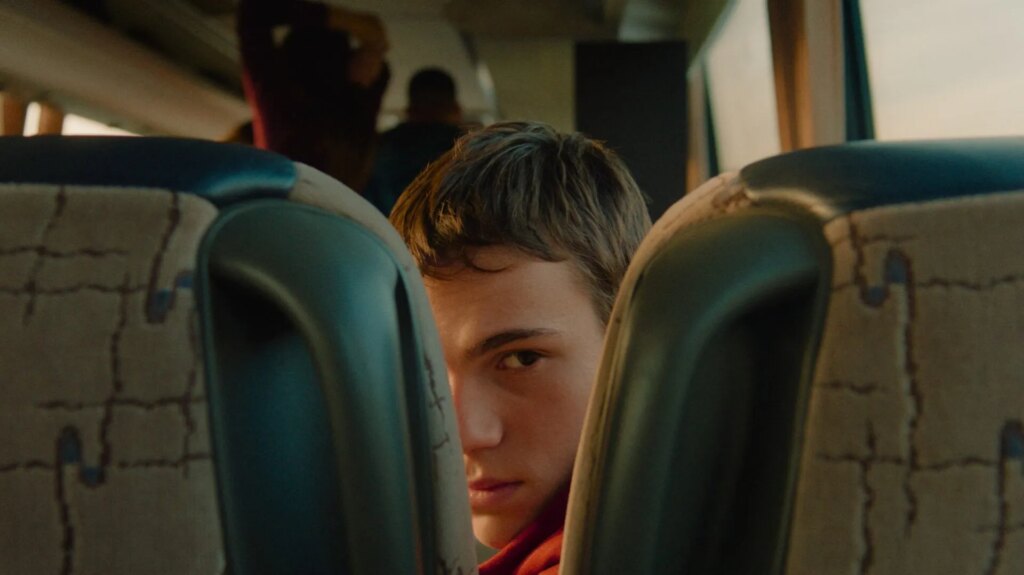

The hell of secondary school social dynamics and inescapable loneliness are at the heart of Miroslav Terzic’s 3 Weeks After.
Tzotza (Jovan Ginić), the protagonist, is on his own, and seems to prefer it that way. His best friend died by suicide about three weeks before a class trip to the Balkans. Everyone is surprised Tzotza decided to go on the trip after all, since they thought he wouldn’t come without his only friend. One girl, Darija (Andjela Alavirevic), tries to show him kindness, but he mostly pushes her away. When their bus gets stranded at a rural hotel, the kids take over and the teachers lose the little control they had over the group. All the while, Tzotza is being bullied and harassed about his deceased friend. After students reveal shocking information about the suicide, the social structure is threatened and kids turn on one another.
3 Weeks After is a film packed with social commentary and not hiding behind subtlety. It wants the audience to look at our youth while thinking about the future. If teenagers are willing to bully a peer until he is driven to suicide, what does that say about our hopes for humanity? However, haven’t bullies always been this way, so what makes it different in 2026? That’s what this film wants audiences to consider. Perhaps in 2026, there is a separation between bullies and who they bully because of the lens of a smartphone camera. And what responsibility do teachers have when a student is bullied to death? The two teachers in 3 Weeks After have strikingly different answers to that question. The film questions how much responsibility the adults need to take for teens’ actions.
The film’s setting is imperative for the impact of the film’s message. The nature of the Balkans is beautiful, but also dangerous. Sharp cliff drops and dark woods in which to get lost reflect the danger of high school social life. What seems wonderful and safe can quickly be pulled out from under you, if you lose your social standing. It also emphasizes how lonely and alone Tzotza is. During a scene in which he wanders into a cave system, he’s literally cut off from the world in the way he already was figuratively. There is no sunshine in the film, which reflects the lack of hope for Tzotza and the other impacted teens. Much of the violence takes place at twilight or dawn, when one has plausible deniability from what one might see, and it’s easy to turn away and say your eyes were playing tricks on you.
The title implies we are moving away from something that happened in the past, but the film feels like we are building toward something big that hasn’t happened yet. The ending is dark, but earned. 3 Weeks After is a disturbing but important film about the impact a community, or lack thereof, can have on a person. While it might be tempting to look away, the film insists you confront its challenges head-on.
3 Weeks After had its North American premiere at Fantastic Fest 2026 on Saturday, September 19