

Platform: Nintendo Switch 2
Fire Emblem games have always been disproportionately, almost deceptively big. Even back to its earliest roots as a Japan-only NES game, the series squeezed considerable depth and complexity out of its turn-based tactics gameplay and feudal fantasy storytelling. As the series grew in popularity, becoming a global fan-favourite, the games grew in size and scale – but they all pale into insignificance compared to Nintendo’s latest and, inarguably, greatest chapter yet.
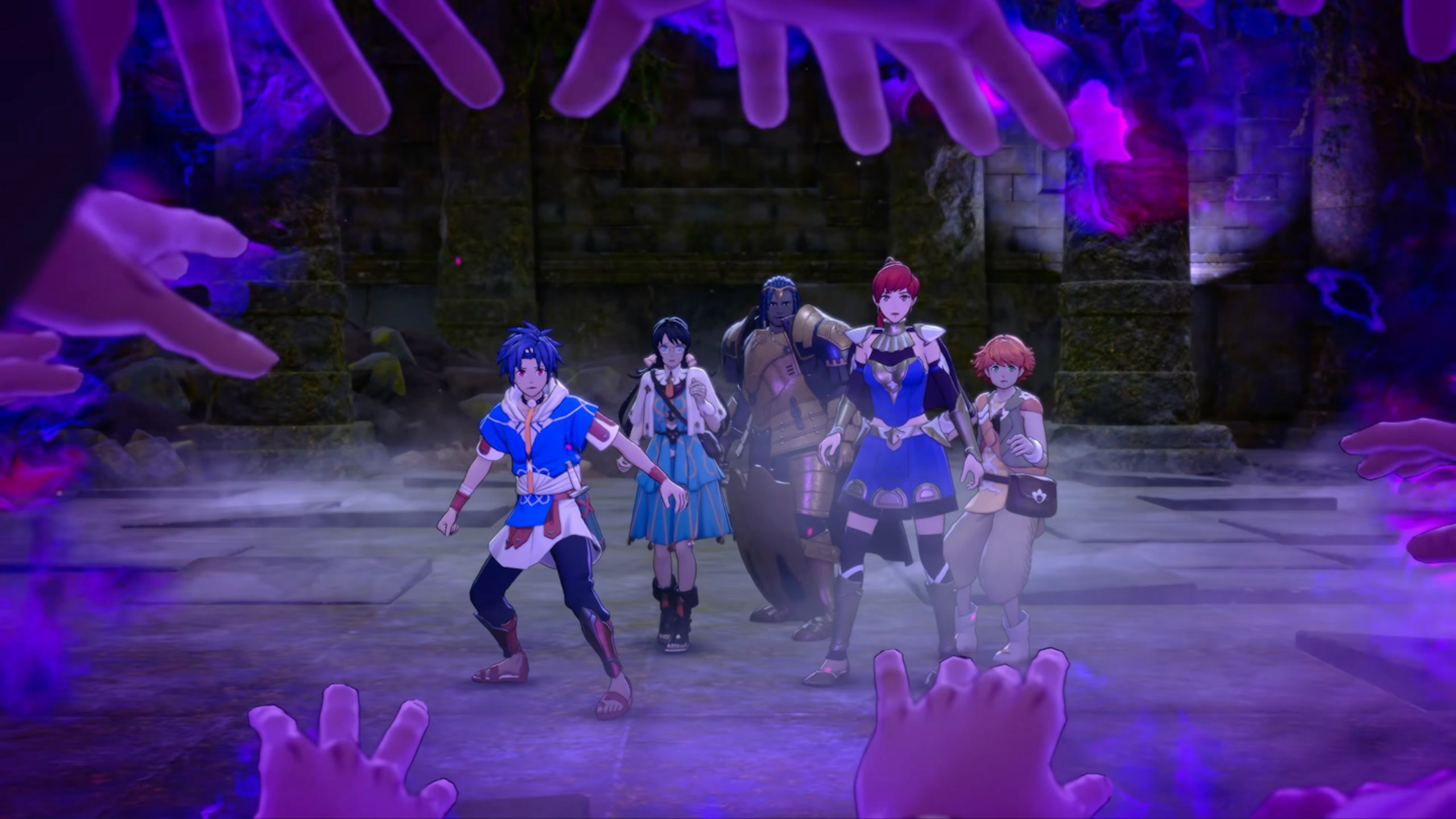
Fortune’s Weave is a game of almost unparalleled ambition, especially narratively. It may not appear so at first – its story, set in the same world as Fire Emblem: Three Houses but centuries later, is centred on a gladiatorial contest held in Dagsion, capital city of the Dagdan Empire. It’s a flashy but seemingly low-stakes ceremonial affair, aside from the prize being a boon from the literal god emperor who sits upon the throne.
You’ll play as one of four heroes, each drawn to compete for their own reasons. Farm boy Cai aims to save his father, sentenced to death by imperial forces for unknown crimes. Vainglorious swordsman Dietrich seeks the glory of noble competition, drawn to the contest after being shipwrecked. Theodora is the warrior queen of a nearby nation, fighting to restore her people’s pride. Finally, Leda is a travelling dancer – but secretly the surviving daughter of a murdered aristocrat, hunting his killer to exact bloody revenge.
They’re all compelling, rounded, often flawed characters, each blessed with unique arcs that are so well developed they could serve as the sole basis of a game in their own rights – but in Fortune’s Weave, even playing through all four heroes’ paths barely scratches the surface. Because the entire tournament takes place in flashback from five years in the future, where the awakening of the malign god Balor has doomed the world. Your real main character is Eshmel, the “white raven”, monitoring events in their relative past to try and change history, thereby averting calamity – a colossal strand of the game that takes up the second act, before leading into an all-encompassing finale.
All of which makes Fortune’s Weave an unspeakably deep time-sink. Playing through even one hero’s path in the tournament era of the game might eat up 50+ hours, and while you don’t have to complete all four to progress to the later chapters, the writing (not to mention the beautifully animated cutscenes and top-tier voice acting bringing it all to life) is so good that you probably will. Even intersecting moments, such as key battles where the four protagonists team up in different combos, feel wildly different when played from a different perspective.
Fortune’s Weave takes everything great about Fire Emblem’s battle system and polishes it to a series-best shine.
The only stumble, writing wise, is that if you’re playing through one strand in full before switching to another hero – you can also hop between all four at any time, within a single save file – you may end up with some mild spoilers for the others. For instance, if you’re playing as Cai, you’ll meet a character who is initially fully masked, then later encountered with their face revealed. That development is a key moment in another main storyline though, and somewhat ruined by seeing it “early”.Whichever route you take however, completionists should expect to pour literally hundreds of hours in to discover how everything pans out.
Thankfully, you’ll never be bored in all that time. Fortune’s Weave takes everything great about Fire Emblem’s battle system and polishes it to a series-best shine. Battles continue to take place on grid-based maps, with you issuing commands to each member of your army – or group of kids in Cai’s case, to start with – before weathering the storm of the opponent’s attacks in the following phase. It’s immediately accessible for newcomers and reassuringly familiar for returning fans, blossoming from a rock-paper-scissors system of “this weapon beats that one” into a wonderfully nuanced system of highly customisable warriors.
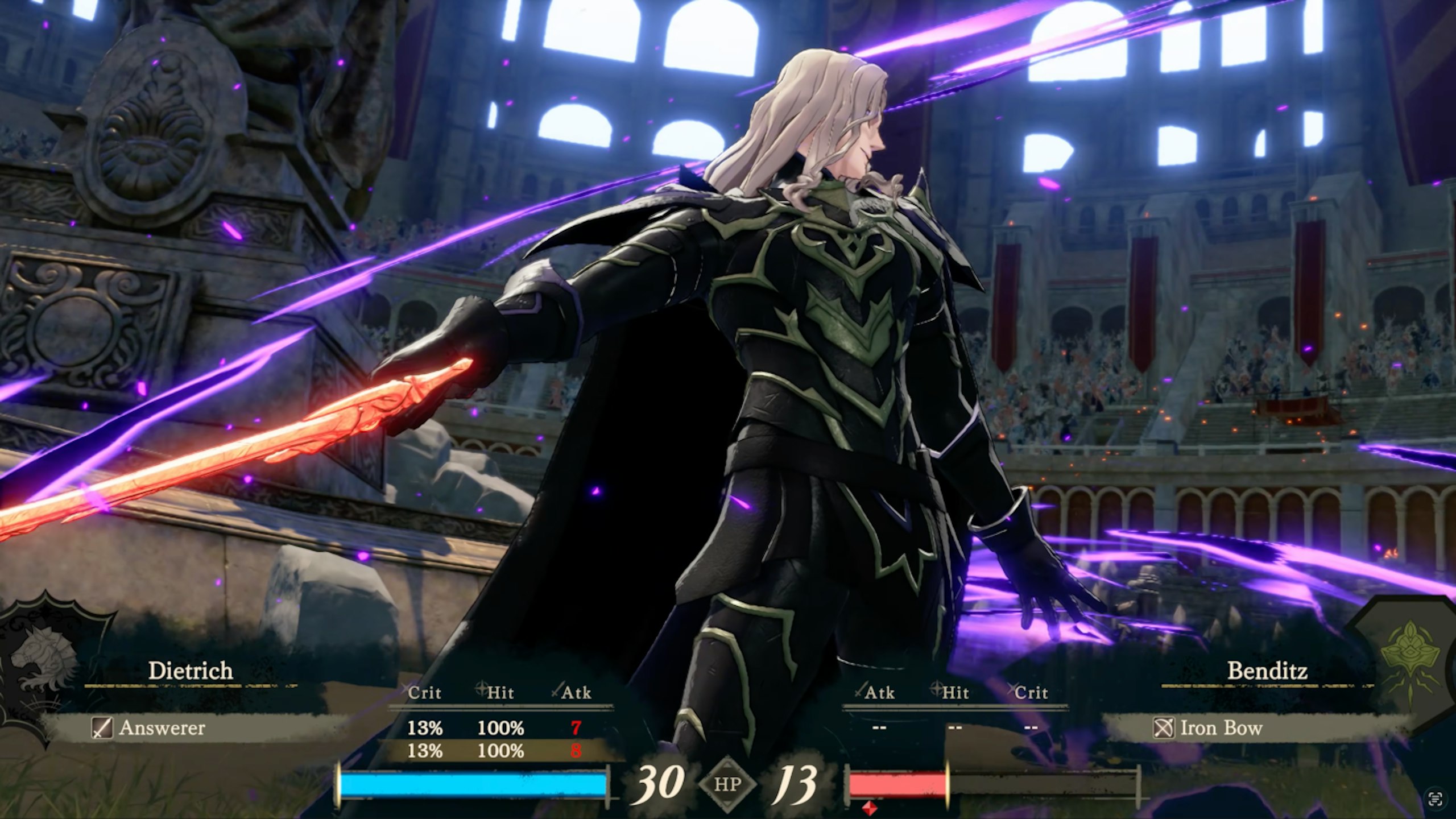
The big shift for battles in Fortune’s Weave is the introduction of powerful “Blaze Arts” moves for the core four (and some significant supporting characters). These are powerful abilities but more curse than blessing, draining their user’s health each time they’re deployed. While this can be mitigated by having a healer nearby or a stack of restorative items on hand, excessive use can temporarily halve their maximum health. They’re worth the risk, though – Cai’s ability to set the battlefield aflame, or Leda’s to perform bewitching songs to buff allies or ruin foes, let you create new obstacles or challenges for enemies, while Dietrich’s teleporting strikes and Theodora’s earth-tearing moves allow greater manipulation of the maps themselves.
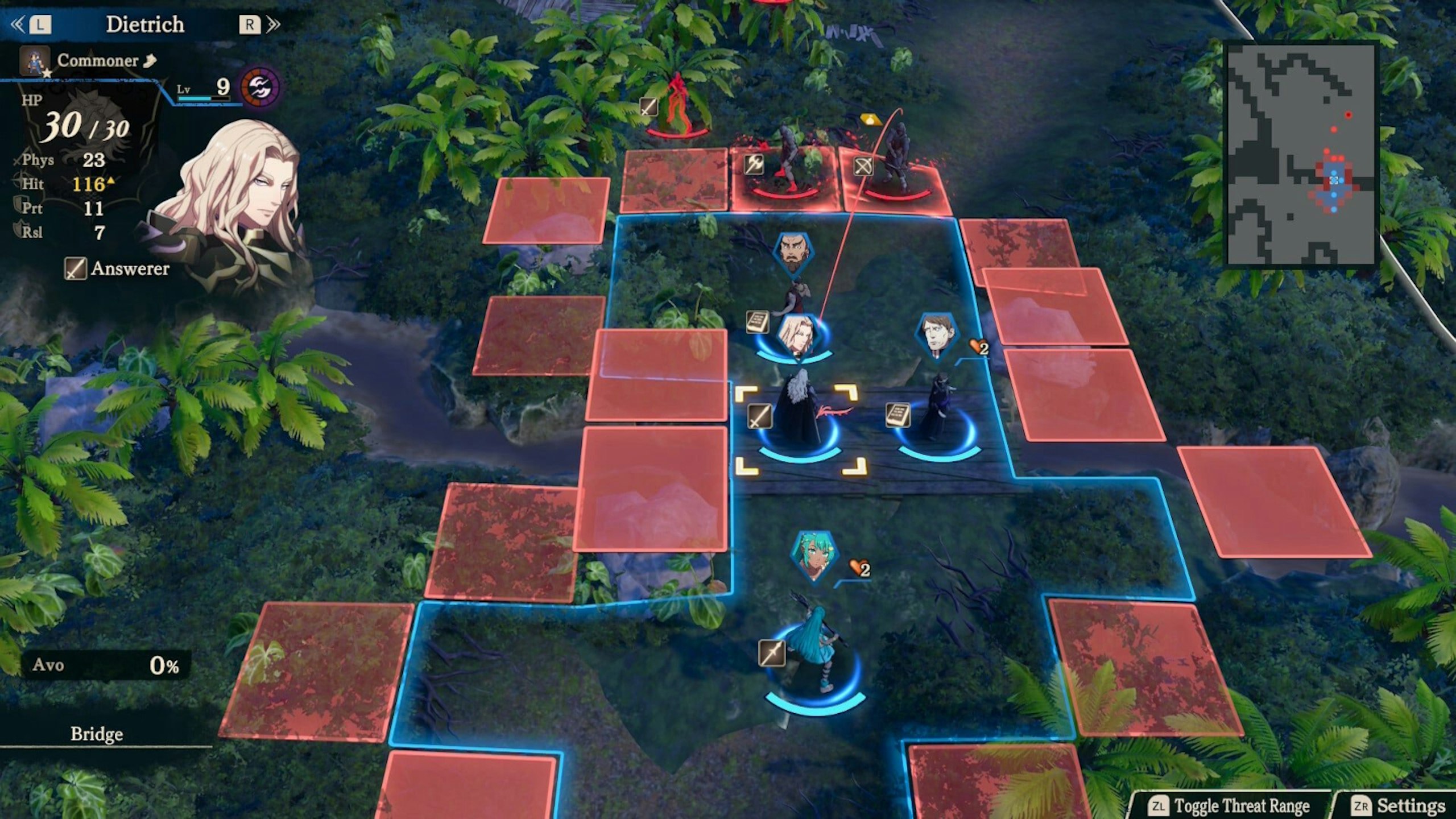
There’s also more flexibility and variety than ever in how all of your units, not just the main characters, can be developed and how that affects their role in battle. For instance, you can blur the lines between healing and offensive magic for mage classes, or arm characters with a mix of ranged and melee weapons to hybridise their roles. Experimentation is actively encouraged, not only with how you build your squads but also in how you approach each encounter, thanks to the divine ability to rewind time and try out new approaches if your well-thought-out strategy turned out to be a disaster. Even for purists who keep the permadeath option enabled – meaning recruited characters are gone for good if they fall in combat – that makes the temptation to go for a perfect playthrough where everyone lives into a compulsion.
Outside of battle, Fortune’s Weave leans hard into its RPG elements with a host of side activities and social interactions. Probably the biggest consideration is going to be recruiting new soldiers to your cause, a case of befriending various mercenaries who flood into Dagsion for the tournament by offering them gifts and pursuing the odd side quest. This is all bolstered by yet more great character work as you forge bonds with them, building connections that feed back into how well units cooperate. Your growing army can also be trained into different classes, or perform chores at temples to earn the blessings of the gods, or simply share meals together to improve their relationships, all leading to more advantages on the battlefield.
Exploration plays a huge part too, scouring the world map for resources or raiding dungeons, where the game switches to a more active style of turn-based combat. At a glance, this looks like Final Fantasy, allies and enemies lining up for one-on-one battles, but with a few twists. Each side shares a single pool of health, and you don’t target specific enemies, just the one that’s currently lined up to attack. It can take a bit of getting used to if you’re accustomed to more traditional turn-based RPGs, but once it clicks it’s a fun approach – and with experience points earned shared among all characters, a speedy way to level up between those main tactical encounters.
That’s Fortune’s Weave’s secret weapon – every single system beautifully feeds into character and army growth, without ever feeling like meaningless busywork. If anything, with rigid countdowns limiting how much you can do between major plot-relevant battles, you’ll end up wanting more time to delve into the countless diversions. That’s perhaps the best compliment that can be given to this latest Fire Emblem – for a game that’s already a somewhat daunting commitment, it will get its hooks into you so deeply, you’ll be wishing you could somehow give it even more of your time. An absolute masterpiece, and a must for fans of tactical RPGs.