
Anime has always offered something for virtually every mood. The latest slate is no exception: Science Saru’s The Ghost in the Shell reboot is on the way, along with the promising new adaptation Jaadugar: A Witch in Mongolia and Netflix’s Fool Night, whose first look is packed with intriguing visual symbolism. Crunchyroll remains the primary home for most new and returning anime, though Netflix and Amazon continue to expand their respective catalogs. HBO Max has a comparatively smaller anime selection, but it still offers plenty worth watching if you already have a subscription.
The first thing you’ll notice is that HBO Max’s anime catalog leans heavily toward movies. The service carries nearly every Studio Ghibli film, including Kiki’s Delivery Service — which is getting the live-action treatment — and Nausicaä of the Valley of the Wind. Several Makoto Shinkai movies are available as well, among them the deeply moving Your Name and the devastating 5 Centimeters Per Second. With all that in mind, here are nine of the best anime you can stream on HBO Max.
9
Angel’s Egg

Mamoru Oshii, best known for 1995’s Ghost in the Shell and Patlabor 2: The Movie, delivers an unforgettable and singular vision in Angel’s Egg. With sparse dialogue and a story told primarily through lush imagery, Angel’s Egg follows a young girl scavenging for survival in a strange, desolate land. She carries an enormous egg that she fiercely protects, believing it will eventually hatch into an angel. The contrast between the bleak, hollowed-out city and the fragile hope embodied by the egg lies at the center of Oshii’s masterwork, whose gorgeously moody art conveys as much as its story does. Angel’s Egg might initially seem like a simple parable about faith and the duality of existence, but its thematic complexity emerges once you surrender yourself to its dense symbolism.
8
Lazarus

Lazarus occasionally plays like a compilation of the greatest hits from Shinichirō Watanabe’s (Cowboy Bebop, Samurai Champloo) illustrious career, but this MAPPA anime still makes the most of its compelling premise. Set in 2052, Lazarus revolves around Hapna, a miracle drug that seemingly eliminates all physical and emotional pain. After more than half the population becomes dependent on the mass-produced drug, its creator, Dr. Skinner, makes an ominous announcement: Everyone who has ever taken Hapna will die. The Lazarus team is assembled in response, bringing together agents including Axel, an extraordinarily agile parkour expert. Axel shares the “whatever happens, happens” philosophy of Cowboy Bebop’s Spike Spiegel, although Lazarus sometimes works too hard to sell his stylized nonchalance. Even so, the 13-episode series develops into a gripping mystery propelled by kinetic fight choreography and increasingly dramatic stakes.
7
Perfect Blue

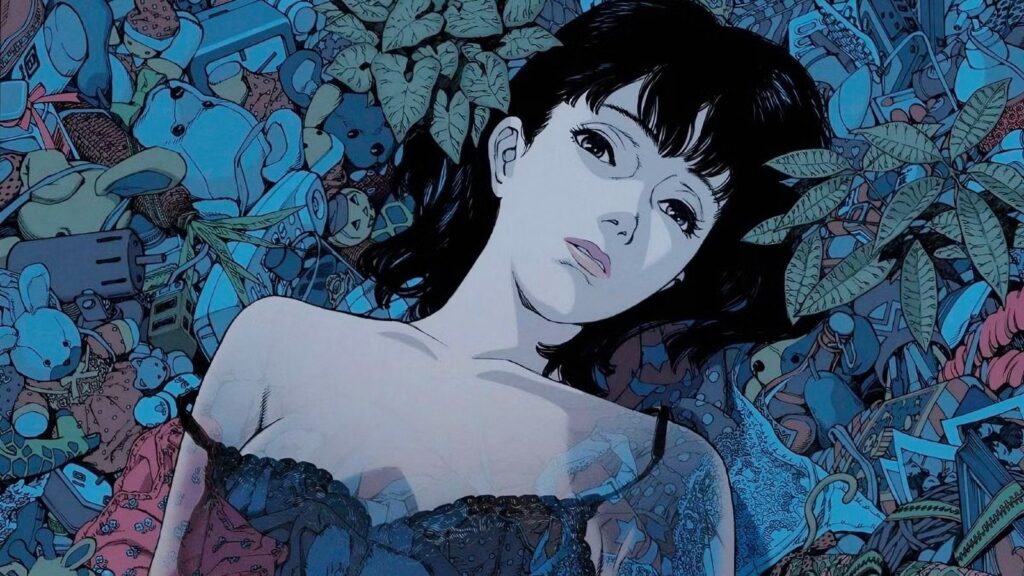
Satoshi Kon fascinated audiences with works like Millennium Actress, Paranoia Agent, and Paprika, each of which probes the psychological impulses that make humans tick. His acclaimed directorial debut, Perfect Blue, does the same by dissecting celebrity voyeurism and toxic idol culture with searing intensity. When former pop idol Mima decides to pursue acting, the career change destabilizes both her public image and her grip on objective reality. Kon manipulates the divide between dreams and reality to create a disorienting experience in which Mima suffers a harrowing loss of autonomy. The power of Perfect Blue comes from Kon’s command of animation, which allows him to deliver disturbing, thought-provoking imagery within a riveting psychological thriller.
6
Children Who Chase Lost Voices

If you enjoyed the tender magical realism of Makoto Shinkai’s Suzume, his 2011 fantasy film Children Who Chase Lost Voices might be right up your alley. The story follows a lonely young girl named Asuna, who spends her days listening to music through the radio her late father gave her. After a mythical creature attacks her, Asuna is rescued by a boy named Shun, who says he has traveled from another realm in search of something in her world. Shinkai explores grief and the pain of moving forward, themes he had previously tackled in 5 Centimeters Per Second and would return to in The Garden of Words and Weathering With You. No child should have to grapple with death or the anxieties surrounding it, but Children Who Chase Lost Voices remains hopeful that people like Asuna can find the strength to heal and continue living.
5
Ponyo

The full breadth of the Studio Ghibli experience only becomes apparent once you venture beyond its most famous films. Titles like Princess Mononoke and Grave of the Fireflies are seminal entry points, but comparatively overlooked releases like Pom Poko and The Secret World of Arrietty contain wonders of their own. Hayao Miyazaki’s Ponyo, however, occupies a curious middle ground. Despite its considerable box-office success, it doesn’t have quite the same cultural pull as Spirited Away or My Neighbor Totoro. Still, Ponyo is a magical film about the unlikely friendship between a 5-year-old boy named Sosuke and a goldfish named Ponyo. Miyazaki’s gift for poetic dynamism remains unparalleled, and Ponyo offers a wonderful example of a world brought to life through dreamlike imagination.
4
Wolf Children

Fairy-tale settings are often inherently magical, but the stories told within them can still be deeply heartbreaking. Mamoru Hosoda’s Wolf Children is a rewarding exploration of family and self-discovery centered on Hana, a college student who falls in love with a wolf man. After giving birth to two hybrid children named Ame and Yuki, Hana is forced to navigate a series of overwhelming challenges when her lover tragically dies. Wolf Children’s spellbinding animation helps elevate some of its more familiar storytelling, but Hosoda’s sincere perspective on parenthood gives the film its distinctive power. The emotional weight of Hana’s journey never falters, and the movie portrays the messiness of human feeling without restraint. The result is a bleak but beautifully crafted anime about the inevitability of change and the freedom that can come from embracing it.
3
The Colors Within

Science Saru’s The Colors Within is at once a tender coming-of-age story, a celebration of adolescent creativity, and a stirring musical. High school student Totsuko possesses the ability to perceive people as vibrant colors, an unusual perspective that helps her approach others with the emotional depth they deserve. She befriends her classmate Kimi and a boy named Rui, and the three form a band together. The Colors Within revels in the everyday intimacy of formative friendships as its central trio shares their dreams without fear of judgment or ridicule. Growing up can be especially difficult within restrictive environments, but the movie finds solace in discovering like-minded people who understand and believe in you.
2
The Girl Who Leapt Through Time

Another Mamoru Hosoda gem, The Girl Who Leapt Through Time takes an unconventional approach to the typical time-travel story. Teenager Makoto primarily uses her newfound powers to solve frivolous problems, whether that means retaking a test to improve her score or manipulating time to extend a karaoke session for hours. A persistent unease lurks beneath these carefree choices, however, because Makoto cannot simply time-travel her way around the difficulties of growing up. This is a story about the fleeting nature of youth and the fundamental irreversibility of time. Although Makoto can revisit moments she considers precious, her fixation on the past increasingly alienates her from the present. Accepting the consequences of her actions becomes an essential part of her growth. The Girl Who Leapt Through Time may be more of a slice-of-life story than a mystery thriller, but that doesn’t diminish its effective exploration of cause and effect.
1
The Tale of the Princess Kaguya

Isao Takahata’s The Tale of the Princess Kaguya is nothing short of an artistic triumph. A reinterpretation of a frequently adapted 10th-century Japanese literary tale might not seem especially novel, but Takahata reinvents the classic through a distinctly modern thematic lens. Alongside its dreamlike visual beauty, The Tale of the Princess Kaguya tells the moving story of a doll-like creature that transforms into a human baby after a bamboo cutter discovers her in the forest. The child, eventually named Kaguya, grows with alarming speed, but the joy surrounding her transformation is gradually overwhelmed by patriarchal expectations and the suffering they inflict. The Tale of the Princess Kaguya lays bare the dangers of well-intentioned ignorance and the restrictive power of regressive social conventions.