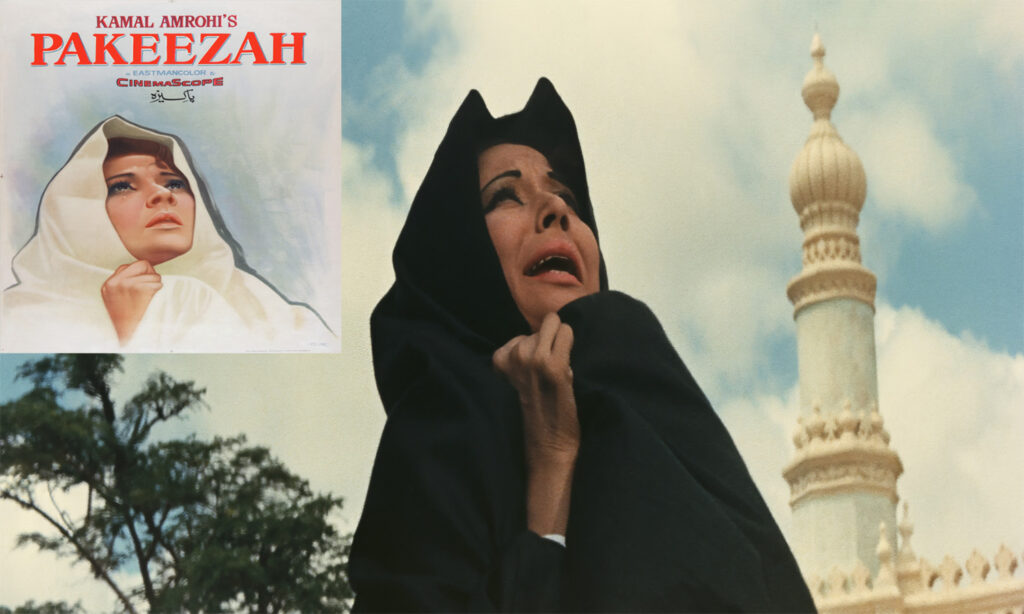

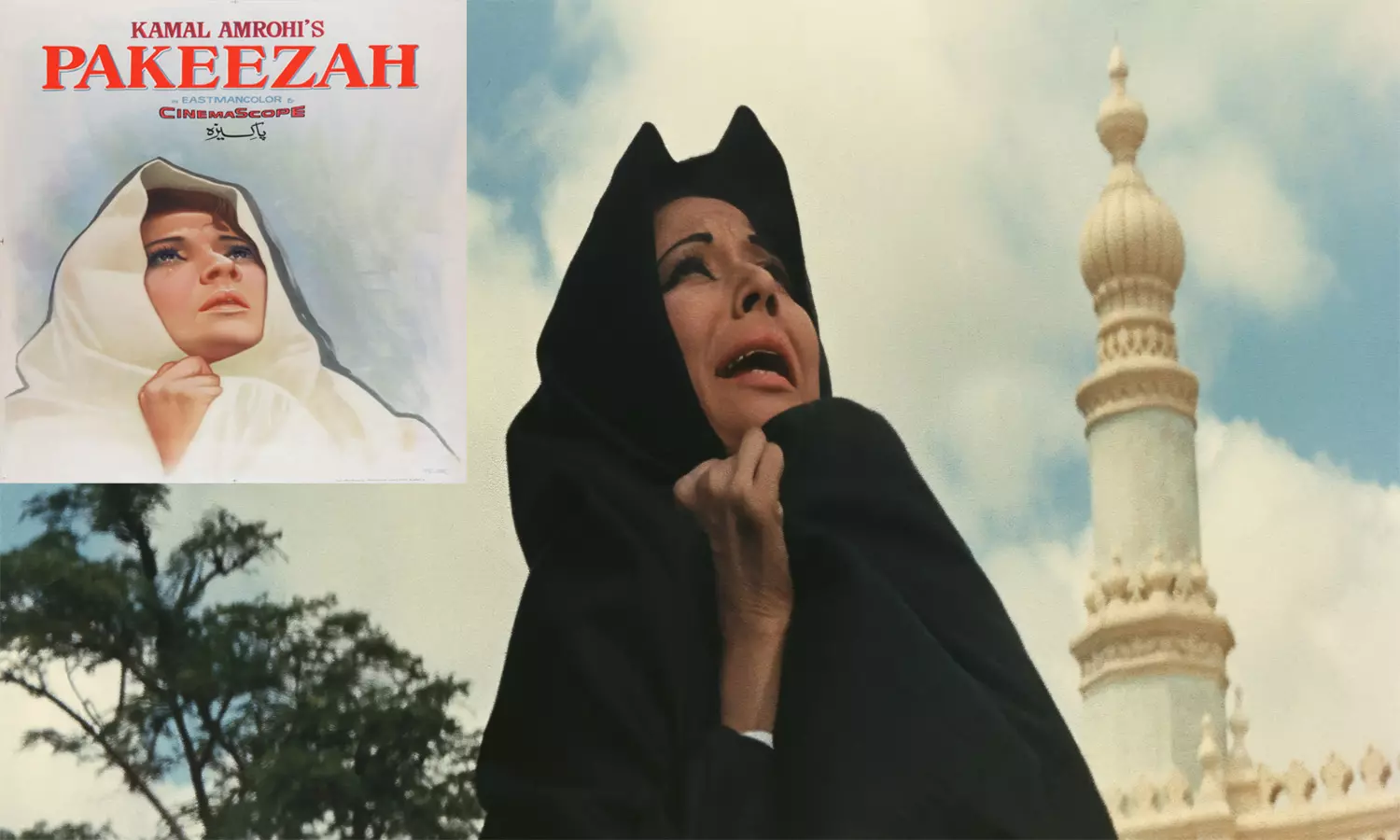
When the Film Heritage Foundation examined Meena Kumari’s Hindi classic, Pakeezah’s original camera negative in 2024, Shivendra Singh Dungarpur was confronted with the kind of discovery that can stop a restoration project before it begins.
The cans had almost melted. When the celluloid was examined, there was no image left on the strip.
For Dungarpur, founder and director of the Film Heritage Foundation, the condition of the 1972 Kamal Amrohi classic was heartbreaking, but it was also familiar territory. Since the Foundation was established in 2014, he has worked on films whose surviving materials have been damaged by time, neglect and India’s difficult climate.
Indian cinema, he points out, emerged largely in humid coastal cities such as Mumbai, Chennai and Kolkata, where film materials needed careful storage. For decades, that did not always happen. Even major films could end up with surviving prints and negatives in poor condition.
Pakeezah was one more reminder of what can disappear.
What made this particular loss especially painful was the film itself. Pakeezah is remembered not only for its story and performances, but for its extraordinary visual world, from its colours and textures to its elaborate sets and costumes. Recovering the film meant recovering something that could not simply be measured in pixels.
The original negative was beyond use, so the restoration team had to work with surviving generations of material and reconstruct the film through research and comparison. Archival photographs and memories from Kamal Amrohi’s children, Tajdar and Rukhsar Amrohi, also became part of the process.
The work took two years.
But Dungarpur is careful about what the word ‘restoration’ means. For him, the objective is not to make an old film resemble a contemporary digital production.
“Restoration is that you are dealing with a material which is celluloid,” he says. ‘Pakeezah’ was shot on Eastman colour Kodak film in 1972. Its colour saturation and grain were characteristics of the medium and of the period.
Those qualities therefore have to remain. “Grains are like the blood vessels in human beings,” Dungarpur says. Remove them in the pursuit of a cleaner image and you risk removing part of what made the original film look the way it did. His responsibility, he says, is to recover Kamal Amrohi’s vision rather than impose his own.
“You have got to bring it back to the vision of Kamal Amrohi, not the vision of yours or not the vision of a young generation.”
It is a distinction that sounds obvious until the technical possibilities of modern restoration enter the picture. Digital tools can sharpen, clean and enhance an image. But enhancement is not necessarily restoration.
Dungarpur makes the point by comparing the process to the restoration of the Taj Mahal. If a damaged piece of marble is replaced with something newer and shinier, the repair may technically be better material, but it can look completely out of place. The objective is to make the replacement indistinguishable from the original.
Film restoration demands the same restraint. “You are not catering to that generation,” he says of today’s audiences. “You are making the young generation see what beauty and grandeur Kamal Amrohi had created in 1972.”
That philosophy has grown out of years spent examining India’s cinema frame by frame. Dungarpur was a filmmaker before becoming a film preservationist, and says he had shot more than 1,500 commercials on celluloid. Working on restorations has allowed him to look at films he admired as a student with an intimacy he never had before.
“I was never able to see it in that close proximity, frame by frame,” he says. Each film brings a different lesson. Some have their negatives. Others, like ‘Pakeezah’ and ‘Sholay’, require the Foundation to work with later generations of material. In Sholay’s case, the search for surviving material even took the team to London, where they found the original ending.
The technical difficulties are only part of the story. There is also the question of whether audiences still want to see films made decades ago. Dungarpur’s answer comes from the screenings themselves.
Restored Indian classics have travelled to major international festivals and attracted audiences far beyond Indian communities. He recalls screenings where young viewers turned up in large numbers for films that predated them by decades.
The response has also changed the way Indian cinema is encountered internationally. Instead of Indian classics being shown primarily to overseas Indian audiences, films such as ‘Sholay’ have been discovered by audiences in Europe and America who had little previous exposure to that kind of Indian cinema. For Dungarpur, that is one of the most significant developments in the preservation movement.
The Foundation’s work this year has taken Indian films to festivals and institutions across the world, while its restoration slate continues to expand across languages and regions. Films by filmmakers including Shyam Benegal, Girish Karnad, Bimal Roy and Satyajit Ray are among the projects being worked upon.
That geographical breadth matters to Dungarpur. Preserving Indian cinema, he says, cannot mean preserving only the films of Bombay. The Foundation is also working on films from Kannada, Tamil, Manipuri and other cinematic traditions.
Ask him why do these old films continue to connect? Dungarpur says, the answer is partly in their specificity. He points to Pakeezah’s craftsmanship, its dialogue, music, performances, costumes and sets. He speaks about the depth of characters in films such as ‘Madhumati’ and ‘Devdas’, and the rootedness of films such as ‘Manthan’.
These films, he believes, reflected the culture around them.“They reflect each one of us,” he says.
He sees something different in much contemporary cinema, where he feels that sense of rootedness can sometimes be missing. The older films, by contrast, can offer younger viewers an encounter with a world that is both unfamiliar and recognisably connected to their own.
That may explain why people who could watch some of these films online still turn up for screenings. The technology makes the film accessible, but it does not necessarily recreate the experience of seeing it on a large screen.
And there is another reason. “Unless you know where you came from, you will not know where to go,” Dungarpur says. That is perhaps the simplest way to understand why restoring a film matters. Preservation is not an attempt to freeze cinema in the past. It is a way of ensuring that the past remains available for discovery.
Pakeezah’s journey back to the screen began with a negative that had almost disappeared. What survives now is not a newly modernised version of the film, but an attempt to let a new audience encounter Kamal Amrohi’s work on its own terms.
Perhaps that is the true measure of restoration: not how much has been changed, but how faithfully the original vision has been brought back into view. After all the research, repair and technical work, what the audience should encounter is not the restoration itself, but the enduring power of the film.
Film Heritage Foundation Video
The restored Pakeezah is set to have its world premiere at Festival Lumière in Lyon, followed by a gala screening at the BFI London Film Festival, marking another significant milestone in Film Heritage Foundation’s efforts to preserve India’s cinematic legacy on the global stage.
Images and Video Source: Film Heritage Foundation