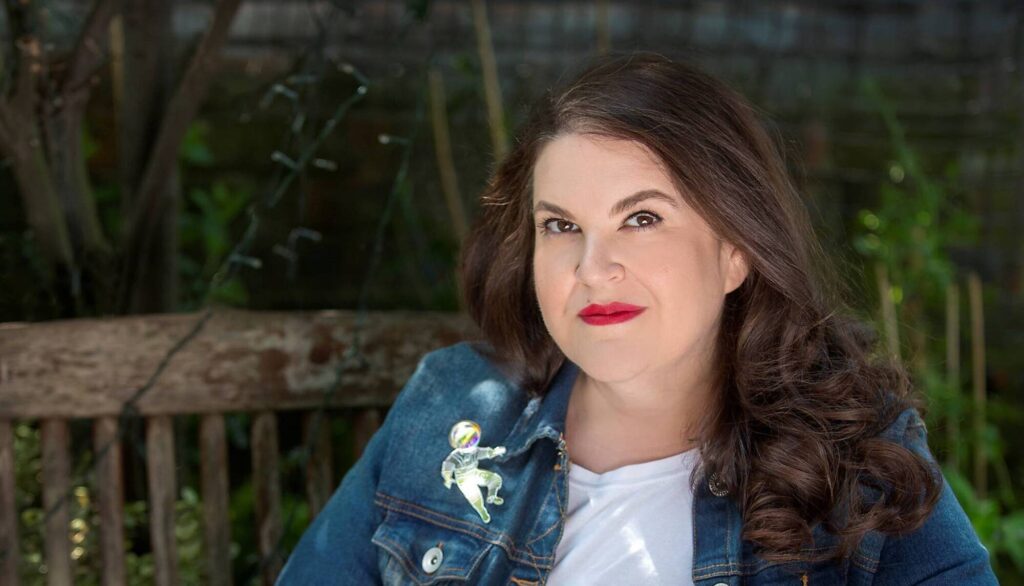

Midway through her novel The Strangers, author and narrator Naomi Alderman’s cites a shared love of stories where everything is the same but one thing is strange.
It’s a perfectly apt explanation of the type of story this is, which is perhaps best described as a sort of sci-fi memoir.
But what sits with you while reading it is the understanding that nothing is normal, and that the “one strange thing”, in this case a new species of animal that has started to populate urban environments, is just one more evasive thing to try make sense of.
Alderman has written something bold and uncompromising.
The Strangers confronts, rather than explores, the cruel illness that ate away her mother’s life in head-on, unsparing prose that does not shy away from the gruesome reality of a terminal bowel disease, and the grief that accompanies her passing, the ageing of the author’s father and years of failed pregnancies.
A complex but loving relationship with her late mother that fostered a lifetime of body-image issues. It seems the gamut of the human experience is present here, because the novel is also full of wonder.
Alderman is the first person in the world to capture footage of a new animal, one that resembles a badger with an elephants trunk, soon dubbed as “mimmoths”.
The arrival of the mimmoths create no small degree of conundrum. There are calls to cull, to preserve, to capture and study. However nobody is able to capture one.
Indeed they behave like no creature has before them. They are both tangible and ethereal in this respect.
A strange fungus that accompanies their arrival seems to be having all sorts of effects on the human population, but it is impossible to pin down how, or why, or to distinguish between correlation and causation.
Hysteria reminiscent of recent developments
The accompanying hysteria, a field day for social media and tabloids alike, is reminiscent of many recent developments. Migration, covid, climate change, AI.
There is no real point in pinning down what the mimmoths are meant to represent, and to try would be a great disservice to the journey this novel takes you on.
But for the reader, and Alderman, there is a sense of optimism to the mimmoths. Furry and precocious, they will appear on the page as incredibly charming to any animal lover.
As Alderman moves through a series of career moments in the wake of her mother’s death, she reckons with the nature of her grief, and on which side of the aisle her mother, in later years susceptible to tabloid induced moral panic, might have fallen.
Alderman weaves together the threads all of the curiosity, wisdom, intrigue, and pain of her inner and outer world.
Early in the book she is contacted by a stranger and becomes reluctantly embroiled in a conspiratorial investigation into the effects of the mimmoths on the human populace, one that strikes a nerve uncomfortably close to home, and here the fact and fiction of it all is married together beautifully.
This is a work of emotional magnitude that interrogates pain at the source without searching for a neat encapsulation.
“As I’ve got older,” Alderman admits in the novel, “I have become more interested in the areas of life where I don’t have a strong opinion.”
People picking this novel up expecting the science fiction intrigue to take centre stage might find themselves disappointed. This is a deeply personal story.
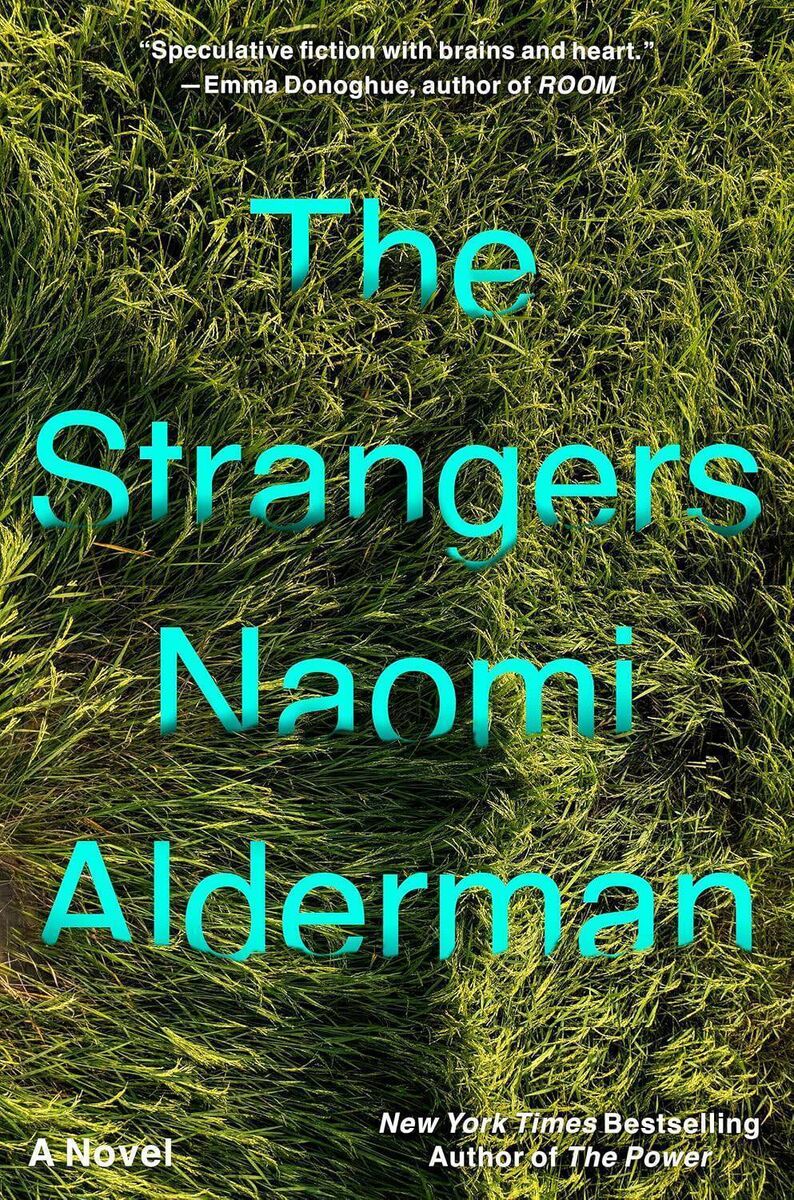
The mimmoths themselves remain unknowable, their purpose unclear, and quickly become part of the fabric of reality. That is arguably the brilliance of The Strangers.
The world of this novel is the same we occupy, a constant and rapidly changing one that demands us to come to terms with increasingly baffling developments where the spread of information, however accurate, is instantaneous, conflicting, and all consuming.
At the same time, life happens to our bodies and minds as it always has. To reconcile the internal with the external becomes a challenging ask.
And so Alderman’s connection with the mimmoths is personal but vague, and relies on an emotional impulse over an attempt to fully know.
When offered an opportunity to investigate their effects on the human population, a thread another, plottier version of this novel might have followed, she wants no part in it.
It’s possible readers of her previous works might feel shortchanged, and this books positioning as a novel (Alderman has strong feelings on the term ‘auto-fiction’) might aid in that.
These lines are intentionally blurry, and where would one shelve what this review earlier described as a “Sci-Fi Memoir” in a book shop?
One thing that is clear is that Alderman has uncompromisingly wrote the book that she wanted to write, and the result is something wonderful.