
Breakdown
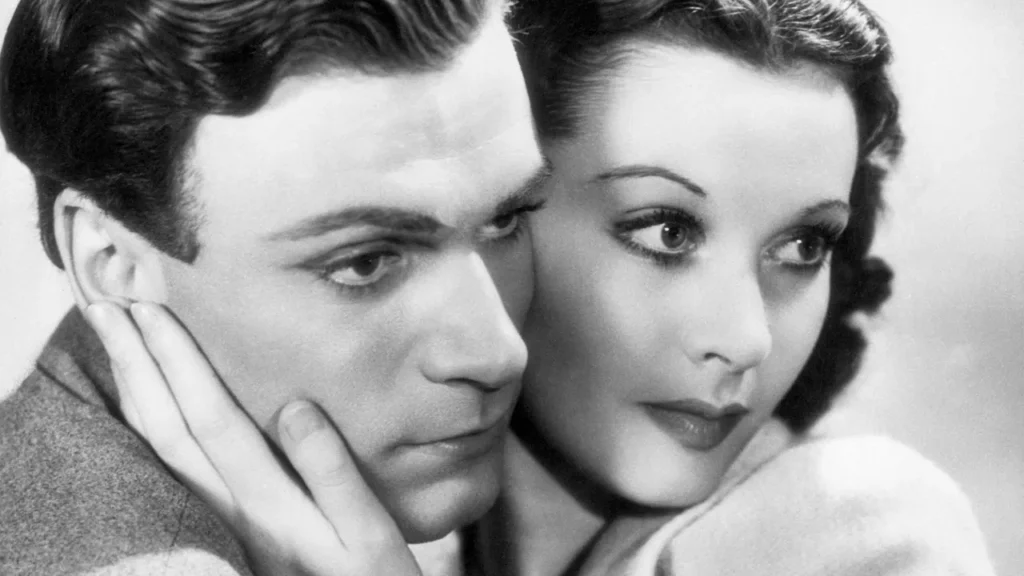
“That uncannily evil monster, manic depression,” Olivier writes of Leigh’s eventual diagnosis (now known as bipolar disorder), continued to destroy the couple.
While they continued to perform their public roles as elegant theatrical royalty and A-list artists, their family, friends, and coworkers could not ignore Leigh’s increasing turmoil. ‘Her mind began to wobble and her sense of self became vague,” Leigh’s Streetcar Named Desire costar Marlon Brando recalled. “Like Blanche”—Leigh’s character in Streetcar—“she slept with almost everybody and was beginning to dissolve mentally and to fray at the ends physically.” (Always a misogynist, Brando said he would have slept with her too if it were not for his respect for Olivier.)
Galloway goes into enormous, at times gratuitous detail mapping Leigh’s many breakdowns, while being empathetic about the lack of useful treatments and awareness that existed at the time. In 1953, things came to a head when she was sent home from India while filming Elephant Walk with her hard-drinking, enabling lover Peter Finch. After she was sent back to Los Angeles, Leigh suffered a psychotic break. She had to be restrained by Stewart Granger and David Niven (who writes about the incident sympathetically in his memoir, Bring on the Empty Horses) as she screamed, “Larry, Larry. I want Larry!” Beckoned to America, Olivier and his friend Danny Kaye managed to get Leigh onto a flight to London, while she screamed “appalling abuse at both of us,” wrote Olivier, “with particular attention to my erotic impulses.”
Leigh was hospitalized for three months in England, where she was treated with electroshock therapy. Olivier tortured himself over her condition, remorseful and exhausted.
And so the charade continued. The couple continued costarring in celebrated productions, while a watchful Olivier stayed up at nights with Leigh and she partied with whomever was available. At 5 a.m. she would be up again, frantically busying herself, while he felt himself slipping into madness. By the late 1950s their marriage was a farce, with infidelity on both sides. After a brutal fight in 1957, Olivier could give no more. “I realized with horror,” he writes, “that each of us was quite capable of murdering or causing death to the other.”
Immortal Beloved
That same year, Olivier embarked on a passionate affair with Joan Plowright, his costar in The Entertainer. In their letters to each other, they acknowledged Leigh’s perilous, perhaps life threatening, condition.
So a stalemate continued until 1960, when Leigh revealed to the press that Olivier was having an affair and that she was divorcing him. The story became an international scandal. Leigh and Olivier finally divorced that year; Olivier and Plowright married in 1961. But Leigh continued to hold out hope that her beloved would return, sounding much like Scarlett O’Hara. “Until her dying day,” one friend noted, “I don’t think Vivien believed Olivier was beyond recall.”
Unmoored, often ill with tuberculosis, and in and out of hospitals, Leigh valiantly continued to work, seemingly unconcerned about her precarious health. When she died in London on July 8, 1967, Olivier came to see her, bowed by grief. “I stood and prayed for forgiveness for all the evils that had sprung up between us,” he writes.