
Casey Chong with ten one-man cop characters who took on the system…
The crime and action-movie cinema encompasses a vast depiction of how these genres can be interpreted, among which is the familiar archetype of a one-man cop against the system. Actors who play such a character get to explore the emotional and psychological underpinnings, typically on their own with little-to-no backup, to expose internal corruption within the department or even a higher-up organization. Below is our curated list of ten essential one-man cop characters against the system…
Al Pacino as Frank Serpico in Serpico (1973)
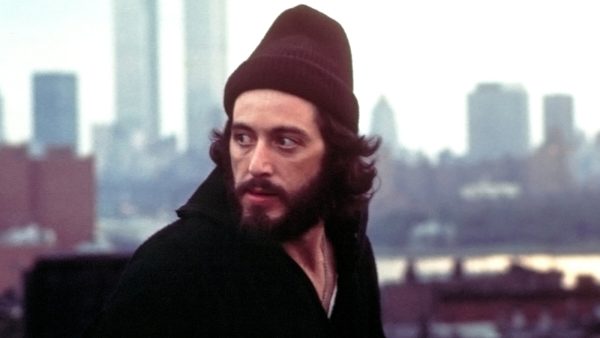
The quintessential one-man-cop-against-the-system movie with Al Pacino, fresh off his Godfather success, continues his career’s hot streak at the time as the titular real-life NYPD cop. Adapted from Peter Mass’s 1973 biography, Sidney Lumet’s Serpico begins with an injured Frank Serpico suffering from a gunshot wound while being transported to a hospital. The story then tracks from the start, first portraying him as a wide-eyed uniformed rookie who later discovers that being a police officer isn’t as idealistic as he imagined. As he works his way up to the rank of plainclothes detective, he soon receives a bribe in an envelope, marking the beginning of his investigation into suspected police corruption in his precinct.
Pacino is front and center in this movie, showcasing his versatility in a method acting style that he first demonstrated as a twitchy heroin addict in The Panic in Needle Park and the reluctant son of a mafia patriarch in The Godfather. In Serpico, he delves into the emotional vulnerability and psyche of his honest-to-goodness cop character, charting his bumpy journey in trying to expose the police force that’s been rotten to the core – a masterclass performance that earned Pacino a well-deserved Oscar nomination for Best Actor. Despite being positioned as one of the major frontrunners to win the coveted award, the Academy members chose the dark-horse candidate Jack Lemmon for the little-seen Save the Tiger.
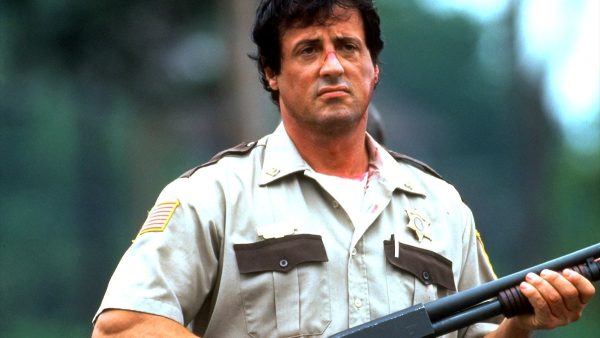
Sylvester Stallone as Sheriff Freddy Heflin in Cop Land (1997)
Stallone’s career from the 1990s onwards was best described as erratic, even though he still commanded positive box-office returns in Cliffhanger, Demolition Man and The Specialist. The same decade also saw the actor trying to shed his usual one-man army action persona for something radically different, like venturing into the comedy territory in Oscar and Stop! Or My Mom Will Shoot didn’t work out as expected.
Then comes Cop Land, marking a turning point for Stallone, at least for a brief time, as he went full Method by gaining 40 pounds to play Sheriff Freddy Heflin. The physical transformation isn’t a mere gimmick, but necessary to ground his character as a convincingly sluggish and vulnerable sheriff, far from the tough-cop role one would expect from Stallone. His understated anti-hero portrayal is one of Stallone’s best acting performances – a partially deaf sheriff who’s been a naive and compliant outsider in his own small New Jersey town. He respects the big-city cops, particularly glorifying Lieutenant Ray Donlan (Harvey Keitel) like an idol, until a case involving the alleged suicide of a young cop (Michael Rapaport) reveals the truth behind the police corruption.
Stallone’s Freddy’s character transformation from a passive sheriff desperately trying to fit in to a lone man seeking to make things right is deliberately calculated under James Mangold’s assured direction. The movie is notable for its violent showdown, culminating in Freddy facing Donlan and other corrupt cops in a shootout staged like a modern-day Western.
Clint Eastwood as Ben Shockley in The Gauntlet (1977)
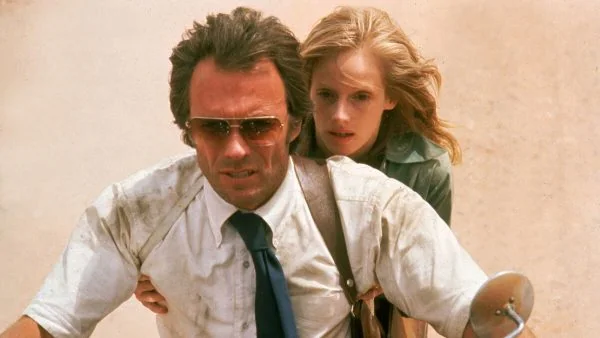
The 1970s marked another pivotal decade for Clint Eastwood, who had already made his name playing the Man with No Name in Sergio Leone’s spaghetti Western trilogy in the ‘60s. He went on to star as the tough SFPD Inspector Harry Callahan in the first three Dirty Harry movies before he subverted his famous on-screen persona for something different in The Gauntlet. Instead of the no-nonsense detective who shoots first and asks questions later, Eastwood’s Ben Shockley is a polar opposite – an alcoholic Phoenix detective who only does what his superior (William Prince) tells him to do.
Initially looking like a simple assignment to escort a witness named Gus Mally (Sondra Locke) from Las Vegas for an upcoming trial, the two soon find themselves becoming a target for both sides of the law, including the police and the mob. Eastwood, who also directed the movie, first portrays his character as an incompetent, naïve cop before the truth drives him to become a determined protector, ensuring he and Mally make it to the trial.
The Gauntlet benefits from Eastwood and Locke’s contrasting on-screen dynamics, with the latter not depicted as a damsel in distress but rather as a cynical, fiercely independent character. Save for the controversial train scene that feels jarring and borderline exploitative, the movie showcases Eastwood’s flair for visceral action set pieces, notably the motorcycle-and-helicopter pursuit and the armoured bus finale riddled with bullet holes.
Samuel L. Jackson as John Shaft in Shaft (2000)

Whereas the iconic Richard Roundtree-led Shaft in the early ‘70s was a product of the blaxploitation era, John Singleton’s 2000 version – which also served as a sequel – structures his movie more as a studio blockbuster but still maintains a level of no-nonsense style and grittiness of the original. Roundtree shows up in a cameo as the older uncle, a nice touch that adds a sense of connection instead of rewriting him as a different character.
Casting Samuel L. Jackson is a no-brainer, exuding the charisma of a confident, cool-guy swagger as the nephew and NYPD police detective John Shaft. The movie doesn’t waste time getting down to business, as the story follows Shaft investigating the racially motivated murder of a young Black man (Mekhi Phifer) at the hands of an arrogant real-estate heir, Walter Wade Jr. (Christian Bale).
Despite Shaft gathering enough evidence to put him on trial, the legal system unfairly favors the upper class as Walter walks away scot-free after being granted bail. The injustice doesn’t stop Shaft from trying to arrest Walter years later, only for the judge to reach a similar verdict. This is where the turning point kicks in: Shaft has had enough and famously throws his NYPD shield against the wall where the judge sits, quits the force, and does things his own way. Now operating outside the law enforcement system, Singleton raises the stakes by repositioning Jackson’s Shaft character as a vigilante of sorts on a quest to clean up the mess once and for all.
Sidney Poitier as Virgil Tibbs in In the Heat of the Night (1967)

Norman Jewison’s groundbreaking 1967 classic was credited as one of the key movies that defined New Hollywood: a story about a Black city detective, played by Sidney Poitier in his commanding performance as Virgil Tibbs, overcoming every ordeal to solve the case and even the one-sided white-supremacy system in the police force. The latter, led by Rod Steiger’s Oscar-winning performance as the prejudiced police chief Bill Gillespie, oversees his station in the small Mississippi town of Sparta. He doesn’t like Tibbs’s presence from the moment his fellow officer arrests him at a train station for a purely racial reason.
But despite the hostility, Tibbs remains calm and composed, relying on his intellectual wit and reasoning as a sharp detective who maintains professionalism while dealing with the discriminatory cops and investigating a murder. Even when Tibbs finally snaps at one point, he only does so in fair retaliation – a famous scene where he immediately returns with a slap across the wealthy cotton plantation owner Eric Endicott’s (Larry Gates) face. The slap-back scene wasn’t originally in the script, but Poitier insisted on having it added, or he’d refuse to do the film. Despite In the Heat of the Night securing multiple Oscar wins, the movie remains debatable after the Academy chose to snub Poitier without an acting nomination.
Harrison Ford as John Book in Witness (1985)
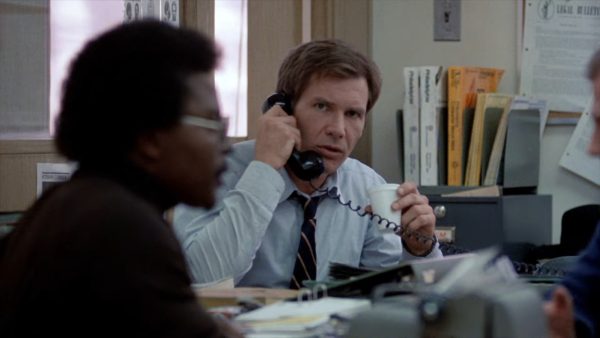
Here’s the movie that famously highlights the Amish community prominently in a major studio picture, even becoming a surprise box-office hit and garnering eight Oscar nominations. At the center of Peter Weir’s Witness is Harrison Ford’s John Book, playing the kind of role that’s synonymous with his on-screen persona – a cynical, witty, and tough character who’s good at what he does for a living. And in this case, a Philadelphia narcotics detective in charge of protecting an eight-year-old Amish boy (Lukas Haas), who witnessed the murder of an undercover cop in the train station’s men’s room.
Things get out of hand when Book realizes it has something to do with the corrupt police force, putting him, along with the boy and her mother (Kelly McGillis, who would go on to star opposite Tom Cruise in Top Gun a year later), in danger. The movie’s second act is where the movie flips the script by making Ford’s Book a vulnerable character stripped of the authority to fight back, forcing him to lie low and blend in with the Amish community and learn the way of their peaceful life. His experience as a fish-out-of-water outsider makes him see things from a different perspective, but only to a certain extent, when the past eventually catches up with him in the climactic third act. Ford’s grounded performance earned him a rare Oscar nomination in the acting category, even though he lost to William Hurt for Kiss of the Spider Woman.
Peter Weller as Alex Murphy/RoboCop in RoboCop (1987)
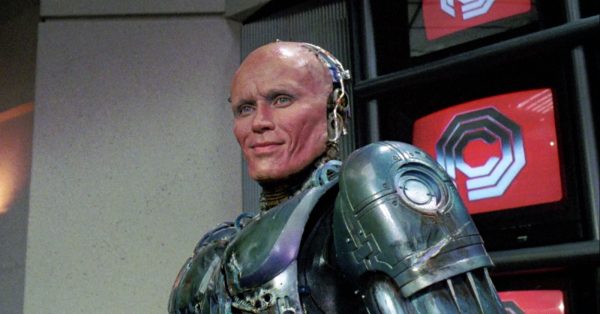
Paul Verhoeven’s deeply cynical look at capitalism and systemic corruption within the high-level corporate institution is one for the ages: a gritty sci-fi action thriller that also satirizes American culture. Verhoeven doesn’t shy away from violence and gore, whose uncompromising European sensibility is put to good use in reshaping the Hollywood blockbuster at the time. But beneath the hard R-rated mayhem, he also grounds RoboCop by introducing Peter Weller’s Officer Alex Murphy, an idealistic uniformed cop patrolling the dystopian Detroit with his trusted partner, Anne Lewis (Nancy Allen).
But it doesn’t take long before he dies in the line of duty, trying to arrest a group of criminals led by Clarence Boddicker (Kurtwood Smith). Instead of an honorable police funeral, Murphy’s death is exploited by Omni Consumer Products (OCP), which owns and privatizes the city police department. They turn him into corporate property without medical consent, revitalizing the otherwise dead Murphy as a cyborg cop.
The story reaches a pivotal moment when he discovers Clarence’s criminal empire is directly tied to the higher OCP management, specifically the corrupt vice president Dick Jones (Ronny Cox). Despite being programmed to uphold the law and justice, he has a unique directive that prevents him from arresting a senior OCP executive. Doing so would result in a violent seizure, but beyond Verhoeven’s pessimism about his subject matter, the movie still ends on a high note. And that is, justice is served as Murphy gets his last hurrah after successfully breaking the corporate chain of command.
Ethan Hawke as Jake Hoyt in Training Day (2001)
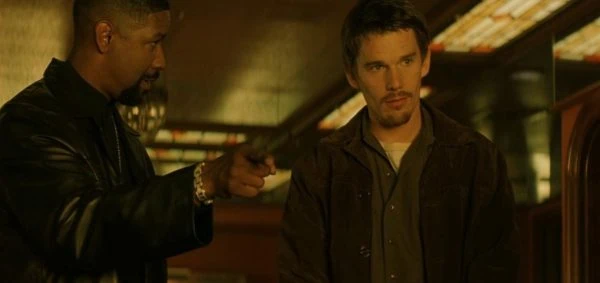
Denzel Washington’s memorable Oscar-winning portrayal as the corrupt narcotics officer Alonzo Harris may have been the star of the show in Training Day. But the movie wouldn’t have worked well without a character who served as the moral high ground. That character in question is Jake Hoyt, played by Ethan Hawke, the young LAPD officer-protégé assigned to work with Alonzo. True to the title, the movie’s 24-hour timeline is tightly framed to navigate Hoyt’s hands-on training under Alonzo’s evaluation to see if he’s fit for his narcotics team.
Being a rookie, Hoyt is first portrayed as a wide-eyed officer before he realizes Alonzo has been trying to manipulate him over the course of his training day, even forcing him to smoke PCP at one point. Antoine Fuqua ratchets up the stakes as the movie peaks when Hoyt finally gains leverage by turning the tables against his mentor. But instead of resorting to personal justice, he’s smart enough to maintain his own integrity as a law enforcer by letting the other side of the law execute him instead. Hawke’s performance earned him an Oscar nomination for Best Supporting Actor, even though he lost to Jim Broadbent for Iris.
Mel Gibson as Thomas Craven in Edge of Darkness (2010)
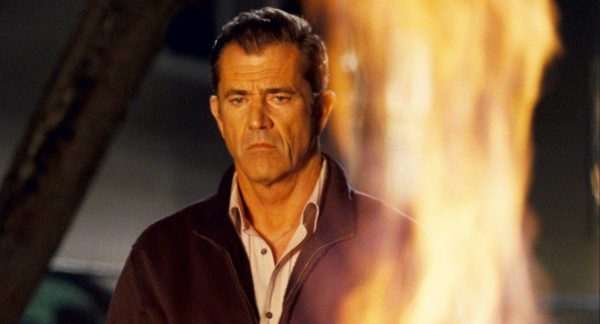
Supposedly his comeback role in eight years to lead a major studio picture after Signs, Mel Gibson’s grief-stricken performance as Boston detective Thomas Craven in Edge of Darkness marks a notable shift in how he plays a law enforcement character. Typically, fans and audiences expect him to channel the Martin Riggs-style, rage-fuelled cop role in the Lethal Weapon quadrilogy, especially given that Edge of Darkness shares the same familiar trait: a man with nothing to lose.
Based on the 1985 six-episode BBC television series of the same name, the movie opens with a seemingly mundane stretch of Craven and his adult daughter Emma (Bojana Novakovic) spending time together. It isn’t long before the daughter gets brutally gunned down on the front porch, leaving Craven completely stunned. Instead of a typical blood-for-blood vengeance route, Martin Campbell favors a slower-burn approach in delving into the deep melancholy of his main character.
That means Craven spends most of the time looking somber before the movie gradually picks up the pieces, detailing his daughter’s employment with a shadowy research facility funded by the U.S. government. His investigation leads to a cover-up that’s beyond his standard police-detective work, one of which involves a corrupt senator. Gibson still has what it takes to command a performance, but it’s a pity that Edge of Darkness didn’t perform as well as expected.
Keanu Reeves as Tom Ludlow in Street Kings (2008)

Unlike the straight-arrow law enforcement roles in Point Break and Speed, Keanu Reeves’s Tom Ludlow in Street Kings is more of an unorthodox LAPD cop resorting to dirty methods to get things done. That means planting evidence and using calculated measures to execute criminals. He’s been working under Captain Jack Wander (Forest Whitaker), believing that he’s doing the necessary work to keep the streets clean.
But things change when his former partner, Terrence Washington (Terry Crews), is killed in a convenience store that looks like a robbery, prompting him to investigate the murder and discover the systemic corruption connected to the very captain that he idolizes the most. It does take a while to warm up to the fact that Reeves’s otherwise clean-cut, on-screen heroic persona is stripped away in favor of a morally dark and conflicted character for a change. His performance is backed by reliable supporting turns from Whitaker and Hugh Laurie, while David Ayer’s gritty direction blends his usual cynical look at law enforcement with visceral street-level violence. Street Kings did reasonably well at the box office and even spawned a standalone DTV sequel three years later titled Street Kings 2: Motor City.
What are your favourite one-man cop against the system movies? Let us know on our social channels @FlickeringMyth…
Casey Chong