
That changed as Roblox’s free-to-play model, endless supply of user-made games, and social features (customizable avatars, chat, virtual currency) drew in a steadily younger audience, and by the 2010s it had become a default digital hangout for kids and pre-teens. That shift shows up in the numbers: Roblox averaged 132 million daily active users in the first quarter of 2026, up 35% from a year earlier, and pulled in $1.4 billion in revenue over that same stretch. It’s a platform built for everyone that ended up mattering most for kids.
That distinction, “for everyone” versus “for kids” turns out to matter enormously. It shapes how a platform handles chat, how it makes money, and how well it can catch the things that put children at risk, which is exactly what’s at stake in Roblox’s most consequential move in years: a 2026 overhaul that finally introduced separate, age-based accounts for younger users. It’s a real attempt, even 20 years later, to solve the problem of children’s safety that’s made the lack of online spaces for young people such a hot topic.
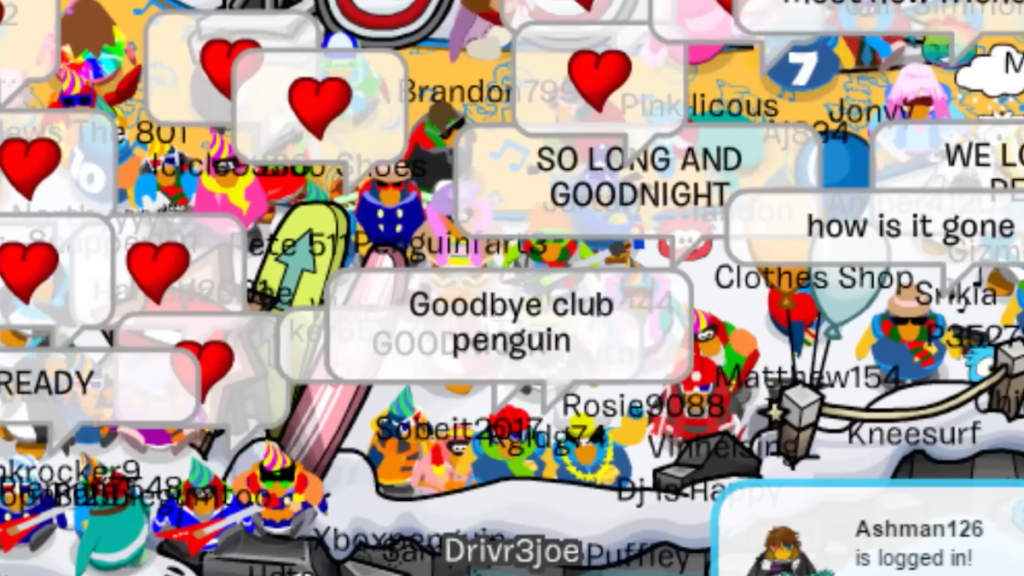
Lance Priebe, creator and co-founder of Club Penguin, says he didn’t originally build the platform for kids in the marketing sense; that framing came later. “I never really made [Club Penguin] for kids in that particular sense of the word, that just became a marketing thing later on,” Priebe tells Den of Geek. “I was just always wanting to create a fun place that was safe for everybody to play online, and in doing that, you have to build safety first, which of course made it safe for kids.”
That ordering, safety first, audience second, is close to the opposite of how current online spaces for young people grew. Roblox opened its doors to any creator and any player in 2006, then had to build safety systems to catch up to the scale that resulted, a scale that now includes more than 44 million user-made games and experiences.
Clark Stacey, founder of Animal Jam and co-founder of WildWorks, doesn’t think that method was necessarily dishonest, but he identified it as a choice with consequences. “I do think it’s a little disingenuous to claim that you’re not a kids platform, when substantially most of your users are kids,” Stacey says. “I know that they’ve invested significantly in their safety systems and moderation system, it’s incredibly expensive.”
Stacey argues the deeper issue is structural. Roblox does not make its own games or run its own social spaces, it provides the tools and the servers, and lets millions of independent creators build on top of them. “They’re a tool base and its servers. And that allows them to escape a lot of liability for what their users might do.”