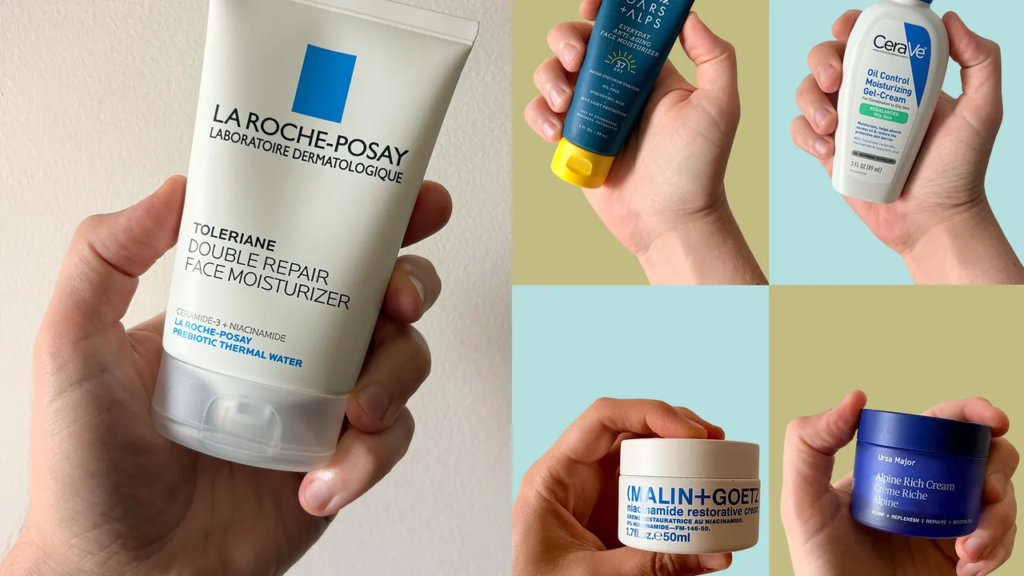

Ingredients to Seek: There are some tried-and-true ingredients worth looking for, and Dr. Ruth recommends “a combination of humectants like hyaluronic acid and glycerin, barrier-supporting ingredients such as ceramides, and emollients or occlusives that help prevent water loss,” while also calling out niacinamide for its barrier-supporting and anti-inflammatory benefits and squalane for helping prevent moisture loss. Ideally, a good formula combines several of these to hydrate, help keep that moisture where it belongs, soothe, and protect your skin.
Ingredients to Avoid: “There isn’t one ingredient everyone needs to avoid,” says Dr. Ruth, though “sensitive or eczema-prone skin may fare better without fragrance, while acne-prone guys should look for oil-free or non-comedogenic formulas.” Essential oils can also irritate some skin types, and you should avoid potentially drying alcohols if your skin is already compromised. Not all alcohols are bad, though: Fatty alcohols like cetyl and cetearyl alcohol can actually help soften skin.
Texture: Cream, lotion, gel, balm: Each has its nuances, and a lot comes down to skin type and personal preference. “Texture largely reflects the balance of water, oils, humectants, and occlusive ingredients,” says Dr. Ruth, with creams and balms generally better suited to dry or compromised skin and gels and lotions to oily or acne-prone skin. But don’t equate lightweight with less effective: Newer gel formulas can deliver serious hydration without feeling heavy.
Fragrance: Fragrance smells nice, but it doesn’t make a moisturizer work better. As Dr. Ruth puts it, “Fragrance doesn’t provide a skin-health benefit,” and it “can be a common cause of allergic contact dermatitis,” making fragrance-free the safer bet for sensitive or eczema-prone skin. If fragrance doesn’t irritate you, fine, but if your skin is reactive, you’re better off skipping it.
Day vs. Night Creams: This is important, often overlooked, and oddly personal. The biggest difference between day and night creams comes down to texture, ingredients, and whether you want something more restorative or more easy-wearing. As Dr. Ruth explains, “Daytime products are often lighter and quicker absorbing while nighttime creams can be richer and more occlusive.” But gauge your skin and the climate, as plenty of moisturizers can pull double duty day or night.
Environment and Climate: “A thicker, more occlusive cream may be helpful in cold, dry weather, while a lightweight lotion or gel may be more comfortable in humid weather or for oily skin,” says Dr. Ruth. In other words, the moisturizer you apply on the reg in January may feel like too much come July, and vice versa: A lighter gel might not cut it in the dead of winter. It helps to rotate, gents.
What to Know About Different Skin Types
Remember, no two people have the same needs from a skin care product; typically, you should factor in your skin’s oil levels (including a lack of oil), as well as conditions like acne, sensitivity, loss of resilience over time, and more. Here are the key qualities to look for in a moisturizer based on key skin conditions and demands.
Dr. Malik says to choose light, oil-free, water-based formulas, and bonus points if they promise to have non-comedogenic ingredients (meaning their formulas are designed not to clog pores). For this same reason, you’ll want to avoid hefty, suffocating creams and oil-heavy products, he notes. (Hey, your skin makes enough sebum as it is!)
Read More: How to Deal with Oily Skin
Look for moisture-drawing ingredients, known as humectants (hyaluronic acid, glycerin), says Dr. Malik, as well as skin-softening emollients (squalane and shea butter) and ceramides. Many dry-skin moisturizers have a richer-feeling texture than other options, he adds. Also, consider avoiding potentially drying alcohols as well as added fragrance, particularly if your skin is sensitive or compromised.
Read More: 5 Ways to Get Rid of Dry Skin
With sensitive skin, you don’t want many bells and whistles. Fragrance-free formulas are often a safer bet, and Dr. Malik says to look for soothing ingredients such as colloidal oatmeal, as well as skin-barrier-supporting ones like ceramides. Keep in mind that not all alcohols are inherently bad for sensitive skin: Fatty alcohols like cetyl and cetearyl alcohol can actually help soften skin.
Read More: The Best Skin Care for Sensitive Skin
If you are prone to pimples, you have to balance this with other skin variables (like dryness, oiliness, sensitivity, etc.). So your search for the best product becomes one of balance and priorities. Look for non-comedogenic formulas, says Dr. Malik, particularly if you’re prone to clogged pores. Ideally, your regimen will include acne-fighting ingredients somewhere, though it doesn’t have to be your moisturizer that pulls all that weight. Salicylic acid and benzoyl peroxide can directly target acne, while niacinamide can help support the skin barrier and calm inflammation. And while lightweight formulas often work well for acne-prone skin, don’t assume that every richer or more occlusive ingredient will automatically clog pores.
Read More: 8 Habits to Prevent Acne
If your skin is oily in some parts (like the T-zone), and dry in others (often the cheeks), then you could be classified as having combination skin. For this, Dr. Malik says you want to choose products similar to oily skin (as outlined above), “but consider balanced formulas with a blend of hydrating and oil-controlling ingredients,” he says.
If you can’t log any complaints about being overly oily or overly dry, then lucky you. For this kind of “normalcy” (which isn’t so normal as it is rare), Dr. Malik says to prioritize lightweight formulas with hydrating ingredients (think hyaluronic acid, squalane, and glycerin).
For skin that has lost buoyancy, softness, and resilience over time, you want to prioritize hydrating ingredients to help with dryness, notes Dr. Malik. He advises using anti-aging ingredients such as niacinamide and peptides. Lastly, be sure to use broad-spectrum SPF 30 or higher during the day, whether it comes from your moisturizer or a separate sunscreen.
How I Tested the Best Moisturizers
I’ve tried countless moisturizers over the years (and there are a zillion out there), from niche newcomers and luxury formulas to drugstore stalwarts, including every formula here, of course. Some have long been in my rotation; others I tested more recently, paying attention to how they performed from application through the day or overnight. Texture is important: how a cream, lotion, or gel feels, its consistency, and how quickly it absorbs. I also considered ingredients, fragrance, layering, SPF, and each formula’s suitability for different climates.