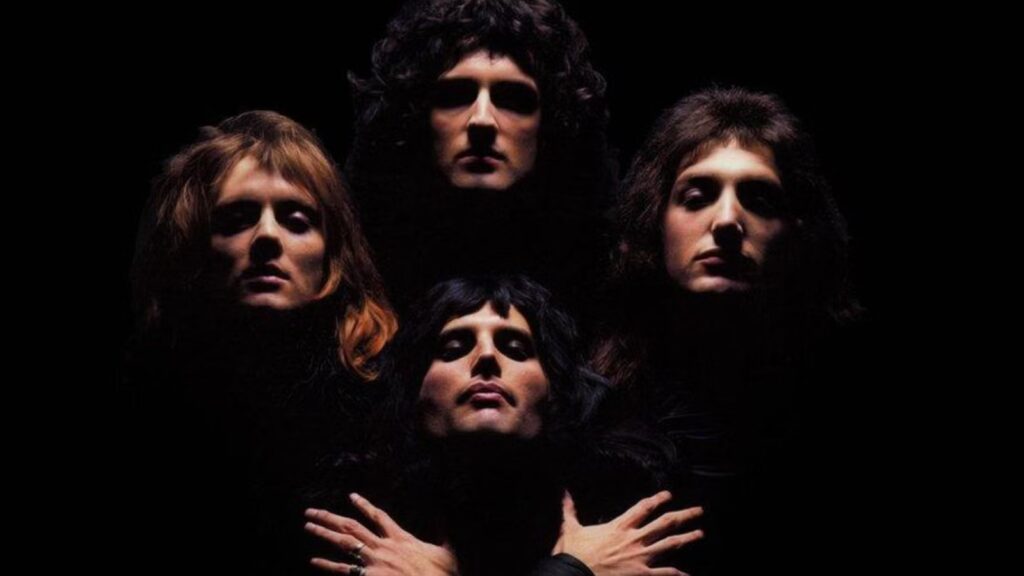

The 1970s were an incredible decade for music. It was a time of change. Lots of British invasion bands were either breaking up, like The Beatles, while others were deciding to expand their horizons. In America, artists like Bruce Springsteen were finding their voice, and becoming the huge stars they were always meant to be. There were also incredible bands like Queen, who had been around for a while, but were finally being taken seriously. The result was some of the best songs ever written.
Each of the songs included in this list are iconic in their own way and contributed to shaping the decade in which they were released. These songs are also still incredibly relevant, despite the fact that most of them were written more than 50 years ago. Here are 10 classic rock songs that defined the 1970s.
10
“My Sweet Lord” — George Harrison, 1970
George Harrison inaugurated the 1970s with one of the greatest hits of the decade, and unarguably the biggest of his career. He released it as a single for his first post-Beatles solo album, All Things Must Pass, and it topped the charts worldwide. Not only that, but it made Harrison the first Beatle to top the UK and US charts with a single. “My Sweet Lord” is perfect in its simplicity. It’s a beautiful, soulful chant, including religious expressions like “hallelujah” and “Hare Krishna” and praising the Lord. From his time in The Beatles, Harrison had developed a fascination with hinduism and Indian music, incorporating sitar into his songs and working with Ravi Shankar. While he gradually abandoned that era of his songwriting as he moved into the ’70s, the remnants of his admiration for hinduism are clear in this song.
9
“Bohemian Rhapsody” — Queen, 1975
One of the most recognizable songs not just of the decade but of the century. While Queen had been steadily growing from their beginnings in the 1970s, with “Bohemian Rhapsody,” people finally started paying proper attention. “Bohemian Rhapsody” was completely different from anything that had been done before in rock music. With just four instruments, Queen created an orchestra, and emulated the sound of an operatic choir within the format of a rock band. The song consists of several sections: a soulful piano intro, a ballad, a mock opera section, and a hard rock ending. Being almost six minutes long, it almost wasn’t allowed to be released as a single, but the band insisted, and it was such a success that, over 50 years later, it’s still iconic.
8
“Stairway to Heaven” — Led Zeppelin, 1975
Having an 8-minute-long song as the most famous in your catalog is impressive, and only Led Zeppelin could manage it. “Stairway to Heaven” was released in 1971 as part of their untitled album, which fans decided to name Led Zeppelin IV, and to this day, it’s considered one of the greatest rock songs ever written, for many reasons. “Stairway to Heaven” starts with an ominous and intriguing arpeggio on acoustic guitar, and gradually picks up the pace, introducing more and more instruments, until it goes electric, with Jimmy Page exploding on one of the longest and most recognizable guitar solos ever. Truly a staple of 1970s rock music.
7
“Live and Let Die” — Paul McCartney, 1973
This is a song that both cinephiles and music nerds adore. In 1973, Paul McCartney was tasked with writing the theme song for the James Bond film, Live and Let Die. And wow, did he deliver. This track, by the same name as the movie, became the first Bond theme song to top the US charts, and was even nominated for an Academy Award. The song opens as a slow, almost gloomy track about jaded people becoming disillusioned with society, but as it reaches the chorus, it explodes in an orchestral climax, with a cinematic urge that sounds and feels like a car chase.
6
“Baba O’Riley” — The Who, 1971
“Baba O’Riley” might sound like the ultimate celebration of youth and excess, but it is, in fact, the exact opposite. When The Who released this song in 1971, they were drawing inspiration from their own generation, and not exactly in a celebratory way. In fact, Peter Townshend said that he found it hilarious that young people understood it as an anthem, when he was in fact writing about the Woodstock ’69 audience and how he believed they were ruining their lives. Townshend said that the concept of “teenage wasteland” was inspired by “the absolute desolation of teenagers at Woodstock, where audience members were strung out on acid and 20 people had brain damage. The irony was that some listeners took the song to be a teenage celebration.”
5
“Born to Run” — Bruce Springsteen, 1975
“Born to Run” is an incredibly reflective, romantic rock song. While Bruce Springsteen released it in 1975 on the Born to Run album, he had been writing it for quite a while. Which makes sense, when you pay attention to how deep the lyrics are. Obviously, while in the song, the narrator is talking to a girl named Wendy, the idea of being “born to run” is not just about a young runaway couple but about escaping the simple life of working-class families in a small town. “I had these enormous ambitions. I wanted to make the greatest rock record that I’d ever heard, and I wanted it to sound enormous and I wanted it to grab you by your throat and insist that you take that ride, insist that you pay attention, not to just the music, but just to life, to feeling alive, to being alive. That was sort of what the song was asking, and it was taking a step out into the unknown,” Bruce Springsteen said about it.
4
“Layla” — Derek and the Dominos, 1970
“Layla” is a song about forbidden love and betrayal, written by Eric Clapton and released in 1970 by Derek & The Dominos. The opening riff of this song is one of the most iconic and recognizable ones in music, and to this day is a song that guitar players around the world favor. Clapton took the name from the Persian poem The Story of Layla and Majnun. He saw himself in the story of a young man consumed by his love for Layla. At the time, he was struggling with his feelings for Pattie Boyd, who was his best friend, George Harrison’s, wife. He wrote this song for her, and eventually, when Boyd and Harrison divorced, he married her.
3
“Miss You” — The Rolling Stones, 1978
In the 1970s, the Rolling Stones went disco. While they of course didn’t become a disco band, they read where music was headed perfectly, and the way they incorporated disco elements in their 1978 album, Some Girls, is honestly stunning. “Miss You” is an incredibly example of their ability to adapt to the changing times in music without losing their essence. Drummer Charlie Watts said about this song that it was “heavily influenced by going to the discos. You can hear it in a lot of those four-to-the-floor and the Philadelphia-style drumming.” There are many reasons why the Rolling Stones are among the most important rock bands in history, and their ability to change with the times is only one of them.
2
“We Will Rock You” — Queen, 1977
“We Will Rock You” is the ultimate stadium song. No matter how old you are, everyone has probably stomped their feet and clapped to this simple but incredibly catchy rhythm. The original track is mostly a cappella, until the outro, when guitarist Brian May plays a guitar solo that perfectly captures the intent of the song; the sense of urgency and the way it encourages the audience to participate in the music. When performing it live during their News of the World tour, Queen would open their shows with a fast version of this song that is a full-on hard rock track. Whichever version you prefer, though, this song is undoubtedly an icon of the decade.
1
“Band on the Run” — Paul McCartney and Wings, 1973
We’re closing this list with Wings’ greatest hit, “Band on the Run.” In 1973, Paul McCartney took his band (which, at that point, consisted only of his wife Linda McCartney and guitarist Denny Laine) to Lagos, Nigeria. He wanted to record in an environment that was completely different from what he knew. The song “Band on the Run,” from the album by the same name, was the gem that came out of this adventure. The song has three important sections: the slow, moody intro, the urgent, focused middle (“If I ever get out of here”), and the last part, which includes orchestral arrangements, open acoustic strumming, and generally a celebratory feeling. Lyrically, the song starts with a band being incarcerated, then it goes on to plan their escape, and finally, to them being a “band on the run” that swears they will never be caught.