
Movie: The Paradise
Rating: 2/5
Banner: SLV Cinemas
Cast: Nani, Sonali Kulakarni, Mohan Babu M, Kayadu Lohar, Sampoornesh Babu, Raghav Juyal, and others
Dialogues: Thota Srinivas
Music Director: Anirudh Ravichander
DOP: Ch. Sai
Editor: Naveen Nooli
Production Designer: Avinash Kolla
Fights: Ram Laxman
Producer: Sudhakar Cherukuri
Written and Directed by: Srikanth Odela
Release Date: September 24, 2026
Since the film was announced last year, “The Paradise” has generated considerable excitement. The two songs that went viral further boosted the hype around the film, which has also been trending on social media and booking platforms.
Touted as Nani’s biggest film yet, the movie has created significant expectations. The question is whether it lives up to all the hype.
Story
A tribe called Savari, which has no recognition in India, lives in a place called Paradise, ruled by Shikanja Malik (Mohan Babu). When Jadalu, the young son of Sammakka (Sonali Kulkarni), tries to steal biryani, Malik orders his men to tattoo his hand with the word “La***Koduku”.
Fourteen years later, Jadalu (Nani) returns from jail, determined to take revenge on Malik. He holds resentment towards his mother, believing that she is a prostitute. He also falls in love with Subbu (Kayadu Lohar), an aspiring actress.
When Sammakka’s friend (Eeshwari Rao) reveals the truth behind why his mother was branded a prostitute, Jadalu realises his mistake. Later he begins a direct confrontation with Shikanja Malik. The rest of the film revolves around their face-off.
Performances
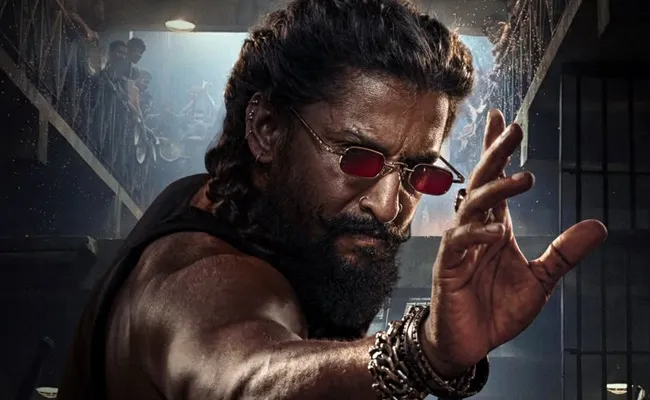
Nani continues to experiment with mass and action roles, following films such as “Dasara” and “HIT 3”. In “The Paradise”, he takes on a completely unconventional character, sporting braids and tattoos and portraying a man from a tribal community. He has clearly worked hard on his appearance and body language.
However, his performance is a mixed bag. Nani is good in the emotional scenes, and his appearance is terrific, but his dialogues lack impact. The character requires a certain aura and authority, which is missing in several portions.
Sonali Kulkarni is fine as Sammakka. The senior Bollywood actress brings dignity and emotional depth to the role and steals the show in many scenes.
Kayadu Lohar plays an aspiring actress who takes up B-grade roles. However, her character and its connection to the main story worked as it got aligned with mother’s characterization and protagonist’s reactions.
Eeshwari Rao, as Sonali Kulkarni’s friend, is good. Her narration of Sammakka’s past is one of the film’s better emotional portions.
Mohan Babu initially makes a strong impression as Shikanja Malik. The film itself opens with his character, creating the impression that he is a formidable antagonist. However, the character loses its impact in the second half, and the climax portion involving him turns out to be a damp squib.
Sampoornesh Babu has a barely noticeable role. Considering his presence, it is surprising that he was given a part that could easily have been played by any other actor.
Raghav Juyal is not particularly effective. Priyadarshi, as MLA Shankaranna, in a character resembling KCR, makes a decent cameo. P Vijay Kumar plays the role of NTR.
Technical Aspects
Even before the release, Anirudh Ravichander’s music had become a major talking point. The viral songs “Aaya Sher” and “Yesha Nagula” make an impact on screen as well. However, it is Anirudh’s background score that deserves attention. He delivers strongly, particularly in the first half, elevating several scenes. In the second half, though, the background score feels repetitive and lacks the same impact. The English song that arrives after the interval does not work.
The production design is one of the film’s strengths. The slum sets created by Avinash Kolla are impressive and give the film a distinct visual identity. Although some portions remind us of “Salaar”, the overall production design is effective.
The dialogue writing is good in parts. Editing, however, is where the film falters badly, especially in the second half. Naveen Nooli fails to rescue a narrative that becomes increasingly predictable and stretched.
The two major action sequences are well executed, but the excessive violence takes away from the impact. There is an overdose of gore, with repeated shots of bodies being chopped and dismembered. Some of these sequences are difficult to watch and could alienate large section of the audience.
Highlights
Eeshwari Rao’s narration about Sammakka’s story
Interval bang
Anirudh Ravichander’s songs
Drawbacks
Flat narration for the most part
A dragged-out and predictable second half
Excessive violence and gore
Lack of clarity in the plot
Kayadu Lohar’s track feels forced
Analysis
“The Paradise” is the second film from director Srikanth Odela. Like his first film, he has narrated this story in chapters, with the film divided into six chapters. However, whether the story is told in chapters or not makes little difference to the viewing experience.
The film struggles to maintain consistency in its opening portions, relying heavily on violence and a few implausible narrative choices. Its treatment of the heroine’s track feels forced and disconnected, but connects to mother’s characterization and hero’s viewpoint on them.
However, the film gradually finds emotional depth in its exploration of motherhood, family, and misplaced perceptions. The third chapter, “Mother,” stands out as the strongest section, bringing emotional weight and clarity to the narrative. The performances and pre-interval build-up help the film recover from its uneven beginning. Overall, despite its flaws in logic, pacing, and character development, the first half manages to create some attention towards the interval.
But the same clarity does not continue after the interval.
Once the film enters its second half, director appears to struggle with how to take the story forward.
There are occasional attempts to inject momentum. The brief appearance of a KCR-resembling character and the immediately following “Yesha Nagula” song provide some energy. But these moments do not solve the larger problem.
For most of the second half, the narrative feels as though it is searching for a direction, with the director seemingly unsure about how to develop the conflict and eventually bring the story to a satisfying conclusion.
This becomes particularly evident in the prolonged fight sequence involving the attempt to save a newborn baby. The sequence is visually fine, but its execution and logic make it feel silly and unnecessarily stretched. The film repeatedly opts for spectacle when the writing needed more emotional or narrative weight.
The larger world created around Shikanja also suffers from a similar problem. The idea of a man creating his own world called Paradise in a city like Secunderabad, even in the 1980s, is difficult to accept within the film’s setting. Visually, the world clearly draws from the kind of gritty, larger-than-life spaces seen in Prashanth Neel’s films such as “Salaar” and “KGF”. But while those films manage to generate an adrenaline rush through their world-building and elevations, “The Paradise” rarely achieves the same impact.
The action, violence and scale are all present, but the emotional or dramatic payoff needed to turn them into genuine elevations is missing. This is ultimately where “The Paradise” falls completely.
Overall, the film tries to combine Prashanth Neel’s world-building and action template with mother-son sentiment, while adding excessive violence and large-scale action. There is nothing inherently wrong with drawing from familiar genres or influences, but the film needed to bring its own freshness and conviction to these elements. Instead, the writing remains predictable and the narrative loses steam after the interval. Except for the “Mother” chapter, the songs and the pre-interval bang, the film remains largely flat. What begins with considerable promise eventually turns into a long, predictable and tiring watch. “The Paradise” turns out to be a messy action drama with little redeeming points.
Bottom Line: ‘Blood’y