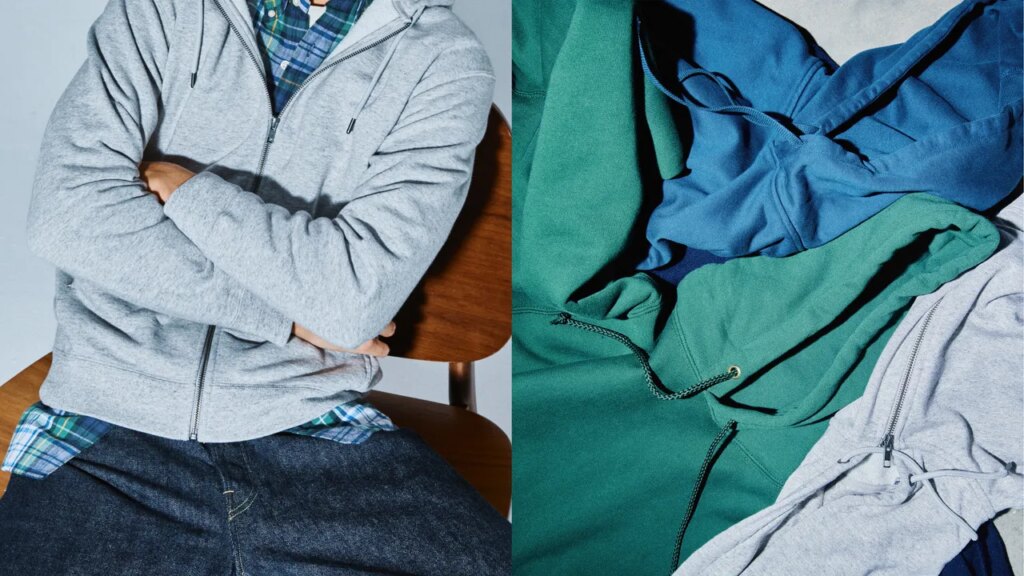

If you’re after a really warm hoodie, it’s all about the fabric. The warmest hoodies will use thick, heavyweight fabrics which normally start at about 12 ounces, or 400 GSM, and go up from there. Oftentimes, warmer hoodies are made of a brushed fleece which has made using an industrial comb that brushes one side of the fleece for a fluffy feel that also improves heat retention. For even better heat retention, some hoodies use a double-faced fabric, often with some kind of jersey or French terry for the exterior and a waffle-knit thermal fabric for the interior. But hoodies come in more materials than the usual cotton or cotton-poly French terry you’re used to seeing.
Designers are crafting hoodies from all kind of materials like cashmere, wool, fleece, even super technical performance fabrics, each with their own unique properties and advantages. Regardless of the material, high-quality fabrics use long staple fibers which are both strong and smooth.
The most sought-after hoodies will use extremely rare loopwheel machines which are famed for their particular knitting style which uses the natural tension of gravity to knit a fabric that’s unparalleled density and softness. Additionally, loopwheel fabrics are knit without any side seams which makes them more durable and comfortable.
After fabric comes construction. Belgium says details like gussets and flatlock stitching “create a garment that feels great from the inside out, while allowing freedom of movement, without any funny draping.” Flatlock stitching is often seen on higher-end hoodies since they’re produce a smoother, flatter seam that sits more flush and comfortably against the body.
Ribbing at the hem and cuffs should stretch and retain their shape after years of wear. Zippers should operate smoothly without jamming or snapping (obviously). Here, YKK zippers are a great option, but fancy hoodies will use zippers from brands like RiRi or Lampo. Grommets for drawstrings should be flush with smooth edges.
When it comes to fit, it’s all subjective. But generally speaking, the shoulder should sit at or just below your shoulder bones. The body should have room for range of motion and potential capacity for burritos. Classic lengths should fall right at the hips or just below your belt line. Belgue keeps it simple and says, “The fit is personal. It’s whatever feels best for what your vibe is.”
How We Test and Review Products
Style is subjective, we know—that’s the fun of it. But we’re serious about helping our audience get dressed. Whether it’s the best white sneakers, the flyest affordable suits, or the need-to-know menswear drops of the week, GQ Recommends’ perspective is built on years of hands-on experience, an insider awareness of what’s in and what’s next, and a mission to find the best version of everything out there, at every price point.
Our staffers aren’t able to try on every single piece of clothing you read about on GQ.com (fashion moves fast these days), but we have an intimate knowledge of each brand’s strengths and know the hallmarks of quality clothing—from materials and sourcing, to craftsmanship, to sustainability efforts that aren’t just greenwashing. GQ Recommends heavily emphasizes our own editorial experience with those brands, how they make their clothes, and how those clothes have been reviewed by customers. Bottom line: GQ wouldn’t tell you to wear it if we wouldn’t.
How We Make These Picks
We make every effort to cast as wide of a net as possible, with an eye on identifying the best options across three key categories: quality, fit, and price.