
I saw them live only once decades ago. My new U.K. pal and ace photographer Tony Woolliscroft pleaded with me to see them. (Check out his excellent new photo book on the Red Hot Chili Peppers.) I was a tad lukewarm given my love of the more cerebral stylings of Blur, Pulp, Suede, and The Verve. Oasis were a bit too laddish. But I ultimately acquiesced, and they did nothing but disappoint. It was in March 1996 at the Paramount Theater at Madison Square Garden. My then girlfriend (future wife) Bobbie and I were in attendance. Richard Ashcroft, lead singer of The Verve, opened as a solo acoustic act. I so wanted to see his band, but he was still quite entertaining. Oasis were playing in New York in support of their excellent 2nd album, (What’s The Story) Morning Glory?. We left early because the Gallaghers were clearly fighting on stage, which made for a horrible show. Too bad, because a year and a half earlier, I missed their rousing, inspired U.S. debut at the small “jamband” club Wetlands, hot on the heels of their Capitol Records debut, Definitely Maybe.
In the UK, they were an instant success, ushering in the new rock genre Britpop to dizzying heights. In August 1996, they played two sold-out shows at Knebworth Park in London, in front of 250,000 people! But they never reached the dizzying heights of their UK and European success in America. They’d open for U2 in 1997 on their stadium and arena tour, but they were far less successful Stateside. Still odd, considering that Noel Gallagher is one of the most successful songwriters in British rock music history with nine UK number-one singles and twelve UK number-one albums (eight with Oasis and four with his post-Oasis band, High Flying Birds). He became the first artist in UK chart history to reach number one with ten consecutive studio albums.
Given all this history, I decided not to read any reviews and to see their new film with an open mind.
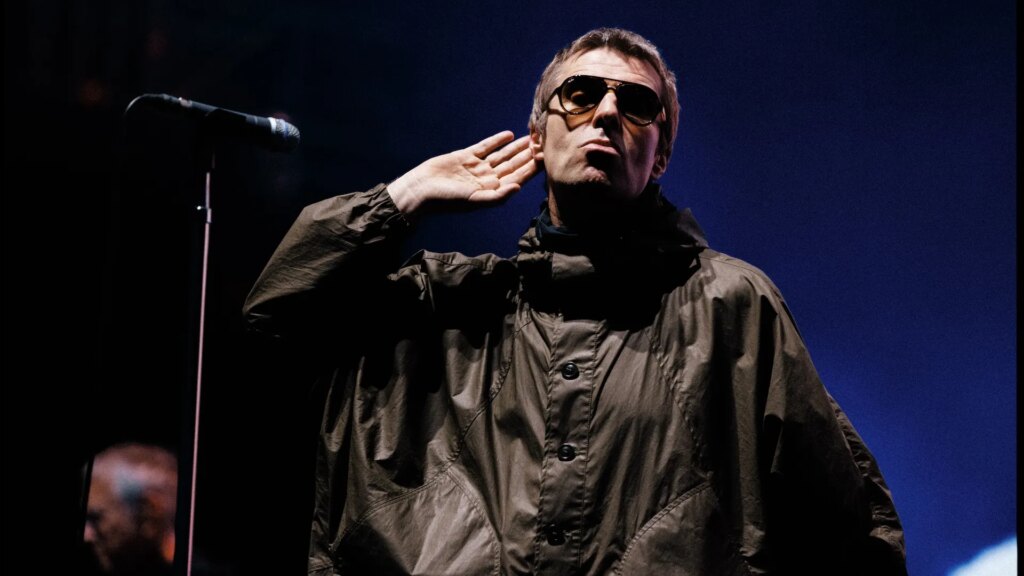
For most of the film, the audience is a fly on the wall throughout the rehearsals and stadium shows. It opens with the start of rehearsals on a massive soundstage in Wimbledon, London. The directors fixed, remotely monitored cameras so as not to disrupt the process, as Noel and his bandmates—original guitarist Paul “Bonehead” Arthurs, guitarist Gem Archer (Heavy Stereo, Beady Eye, High Flying Birds), bassist Andy Bell (Ride, Beady Eye), and American drummer Joey Waronker (Beck, R.E.M., Roger Waters)—work on arrangements before their mercurial lead singer arrives. The tension palpable. Would Liam even show up? Yes. When he finally did, his scowling, intense swagger loomed over the band and the tech people like a lead zeppelin. But when he opened his mouth to sing… well, everyone knew the magic had returned—his powerful vocals cutting through the wall of Oasis’ powerful music. And, in that moment, so did the audience. We know that they are capable of delivering. But will they implode, like in times past?
When the band finally took the stage for their very first show on July 4th at Principality Stadium in Cardiff, Wales, Ian grabbed his brother Noel’s arm to raise it in victory and hold it as they strode to the front of the stage, the crowd roaring in anticipation of the experience that would soon unfold. There’s much to love about this documentary. And much to revel in. It definitely moved my wife and me.
In these days of AI, economic challenges, endless wars, and political divisiveness, it is the purity of real music played by real musicians and their communion with fans that triumphs in arena-sized “churches.” It’s also about brothers reunited to forgive past transgressions, real or imagined; about contrition, the joy of sharing their music with the world, and how everyone in attendance feels it.