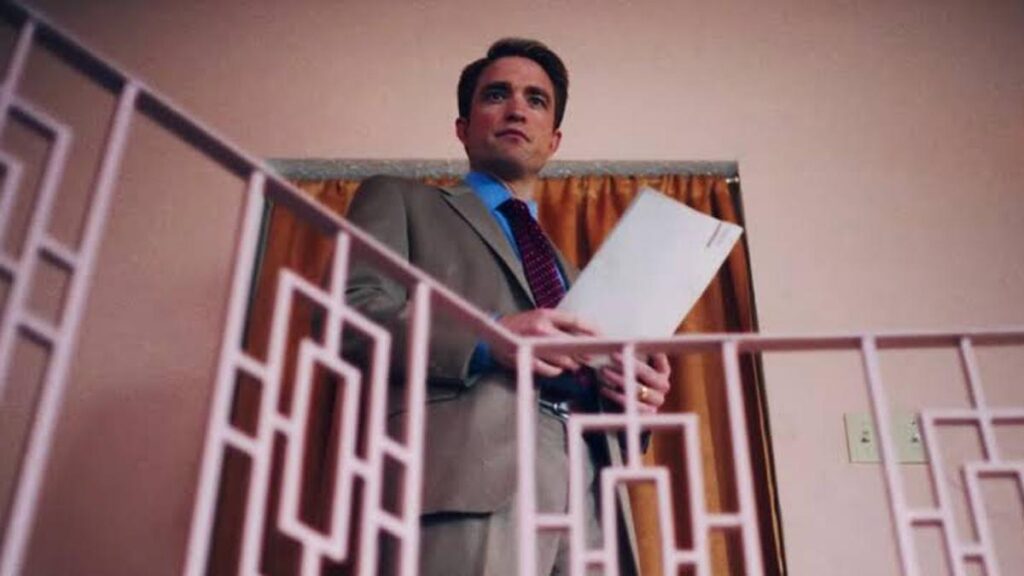

Oh boy, is this a difficult film to write about.
Lance Oppenheim’s feature debut takes the 2007 Esquire investigation “Tonight on Dateline This Man Will Die” and turns the rise and collapse of To Catch a Predator into a psychological crime thriller, with Robert Pattinson playing series host Chris Hansen as he sets out to make television history. Watching Hansen turn the exploitation of evil into a narcissistic feedback loop is a perverse sort of entertainment. But trying to meaningfully dissect the opportunism and self-interest baked into his righteous mission to “cleanse the world of an ancient evil,” however, has already earned the ire of a corner of the internet that could use some remedial media literacy. Hansen is a complicated and deeply flawed man who exists in the grey sludge between sainthood and depravity, but the minute you start criticising a guy who catches pedophiles, suddenly it’s, “you see how this looks, right?”

Hansen became the face of To Catch a Predator after Dateline NBC began working with Perverted Justice, the online vigilante outfit whose members posed as minors in chat rooms and arranged meetings with men they had lured into the sting. Hansen would then appear at the house, introduce himself as an NBC correspondent and read the men their own messages back to them, turning an internet exchange into a piece of television theatre before the police intervened. The timing was perfect. America was already living through the post-9/11 expansion of surveillance and moral crusading, while the internet had started to develop the lawless reputation of a place where anybody sinister could be hiding behind a screen name. To Catch a Predator brought that anxiety into every living room in the United States. By 2006 it was the highest-rated programme of the night, so the prospect of moving Hansen into a regular primetime slot was hardly a modest ambition.
Primetime (English)
Director: Lance Oppenheim
Cast: Robert Pattinson, Merritt Wever, Skyler Gisondo, Matthew Maher, Phoebe Bridgers
Runtime: 110 minutes
Storyline: Chris Hansen, host of “To Catch a Predator,” sets out to make television history in 2006.
Oppenheim is an excellent fit for this material. The filmmaker has talked about how he grew up watching To Catch a Predator, while his previous documentaries Some Kind of Heaven and Ren Faire have both followed people ensconced in the peculiar realities they have built around themselves. His citing F for Fake and Close-Up as thematic touchstones for Primetime only makes the film feel like an organic extension of those longstanding interests.
Robert Pattinson is extraordinary. I genuinely think this is the best performance of his career, and very possibly my favourite performance of the year so far. He has found something incredibly foul in Hansen. Every one of his gestures and mannerisms feels like vetted by corporate communications and calibrated for an audience, even when there is nobody around to impress. Watching him rehearse those filthy chat-log exchanges is especially unnerving because it feels like Pattinson subjected himself to the same humiliating little rituals required to get Hansen into his body. But Hansen is creepy because there is nothing especially exotic about him. He has the posture and manners of a respectable man, but he uses all of it to indulge a spectacularly inflated sense of his own righteousness. Pattinson’s twitchiness and penchant for eccentricties makes the whole thing worse because he buries it inside the beige blandness of this middle-aged network correspondent. He seems to instinctively grasp the ridiculousness of Hansen’s private little mythology, which makes every one of his self-serious flourishes even funnier and every ounce of vanity a little more repellent.

A still from ‘Primetime’
| Photo Credit:
A24
The supporting cast is just as sharp. Skyler Gisondo is terrific as Dan, the young decoy whose participation makes the production of To Catch a Predator look considerably uglier from the inside. Hansen takes an almost paternal interest in him, coaching him through the stings while gradually pulling him further into the moral swamp of the job. Gisondo starts with Dan’s awkwardness played almost lightly, then lets it curdle into something genuinely disturbing as the sheer trauma of the work begins to take its toll. Merritt Wever is magnificent as Andie Bender, the producer trying to keep the operation running. She brings a tired authority to the enterprise but there is also something so conniving about her power trip in her performance. Matthew Maher is positively disgusting as Xavier, the online vigilante behind Perverted Justice — you can practically smell the rancid intensity behind his fervour. Phoebe Bridgers is also surprisingly good as Del in her feature debut (yes, I squealed at the NIN T-shirt). There is not a single performance here that feels out of place.
The filmmaking is where Oppenheim gets properly deranged. Primetime looks like a television signal that has developed a fever. Grainy early-2000s camcorder imagery collides with garish practical lighting, smeared lenses, crushed blacks and a boxy 4:3 frame that keeps the characters trapped inside their own broadcast. The image constantly seems on the verge of deteriorating, which gives even ordinary rooms the atmosphere of evidence recovered from a damaged hard drive. The colour grading deserves enormous credit because the film is frequently gorgeous in precisely the places where its subject matter becomes most repellent. That cold blue grade hanging over the night sequences is beautiful enough to make you resent the film for making ugliness so photogenic. The sound design does similar work. Electronic interference, television hiss and abrupt sonic intrusions turn the production environment into something halfway between a newsroom and a haunted house. Oppenheim understands that To Catch a Predator was already a surreal object. His achievement lies in pushing its latent unreality until the format starts resembling a nightmare about television.

A still from ‘Primetime’
| Photo Credit:
A24
To Catch a Predator looked bizarre when it aired. Oppenheim understands that the ugliness of the original footage had a distinctness of its own and pushes its latent unreality towards an I Saw the TV Glow-adjacent uncanniness. He crafts the look of the film around that ugliness so completely — through the early 2000’s camcorder grain, the garish lighting, the lens smears and washed-out colours — that the cheapness feels rather seductive. The boxy, pixelated 4:3 frame also makes every room feel claustrophobically small for the people inside it. And the image often looks as though it has been copied, compressed and copied again, which kind of suits a film about television people manufacturing reality for other television people. But the colour grading is especially gorgeous and deserves massive credit. There is a cold blue running through so much of the film that somehow makes the sordid enterprise feel evocative. And the sound design is just as good, with television hiss, electronic interference and stray bursts of noise creeping into every shot.
Over its NBC run, To Catch a Predator produced 238 apprehensions, yet only 36 ended in guilty pleas or convictions. Its entanglement with online vigilantes, police and television raised questions about entrapment, evidentiary standards and the jurisdiction of journalism itself. But Hansen seems to exist in a universe where those distinctions have already been settled. He has decided that the cause is righteous, so everything required to prosecute it receives the same benediction by association. That conviction gives him an almost disconcerting freedom from self-scrutiny, and it’s almost comical until you realise how completely it immunises him from examining his own conduct.
Oppenheim is doing something genuinely devious with Primetime. He takes the moral alibi that made To Catch a Predator so consumable and subjects the act of watching to the same scrutiny. The programme’s entire premise depends on converting another person’s humiliation into a public service, with spectatorship laundering the appetite for punishment into something socially respectable. The obscenity of reality television is that it can absorb voyeurism, humiliation and punitive pleasures, and repackage them under the garb of public interest. Oppenheim is turning the machine back onto its makers. This is exploitation art made from exploitative artists, and it’s wickedly entertaining to witness.
The delicious irony is imagining Hansen sitting through Primetime as his own moral crusade is transmuted into prestige entertainment for the very audience that has spent years consecrating him as a kind of secular patron saint of potential victims. Surely that cannot constitute an abuse of spectatorship. Surely this is an acceptable commodification of evil. Surely this is still God’s work.
Primetime is currently running in theatres
Published – September 25, 2026 06:31 pm IST