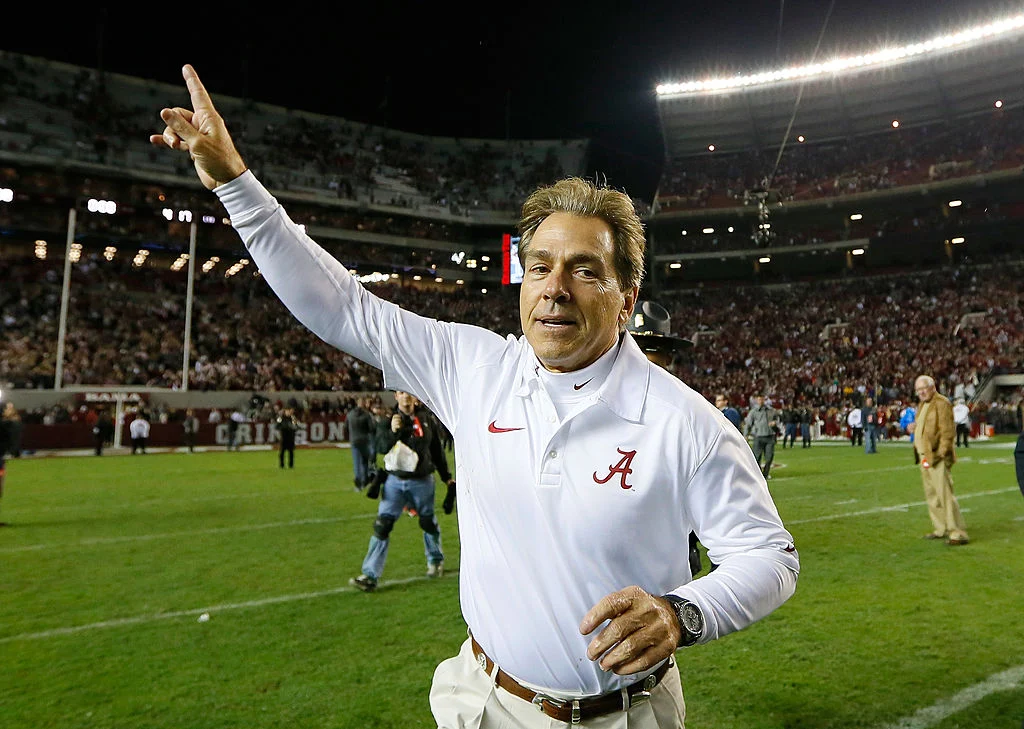

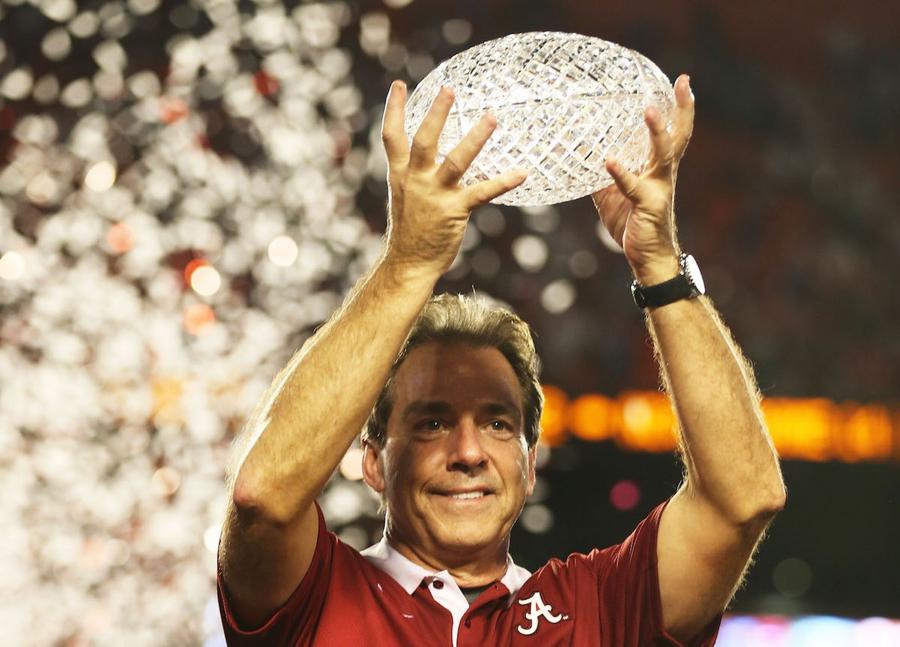
Nick Saban’s legacy in college football is beyond dispute. Over a 28-season college head-coaching career, he compiled an extraordinary 292–71–1 record and captured seven national championships — six with Alabama and one with LSU — securing his place as the most successful college coach of the modern era. During his 17 seasons leading the Crimson Tide, Nick Saban earned $124 million, placing him among the highest-paid coaches in sports history.
You might think a résumé like that would be enough to call it a career. But while Saban was dominating the college football world, he was also quietly building a business empire that could rival his on-field success. And it has nothing to do with football.
Through minority ownership stakes, high-stakes acquisitions, and a partnership with veteran auto executive Joe Agresti, Saban co-owns a luxury car dealership conglomerate called Dream Motor Group. The company operates across five states, sells tens of thousands of vehicles each year, and has continued expanding through nine-figure acquisitions. What began with a single phone call has evolved into a serious business powerhouse — one that may ultimately cement Saban’s place not just in the coaching pantheon, but among America’s billionaire entrepreneurs.
Andy Lyons/Getty Images
Early Roots: From Dad’s Gas Station to A Coaching Legend
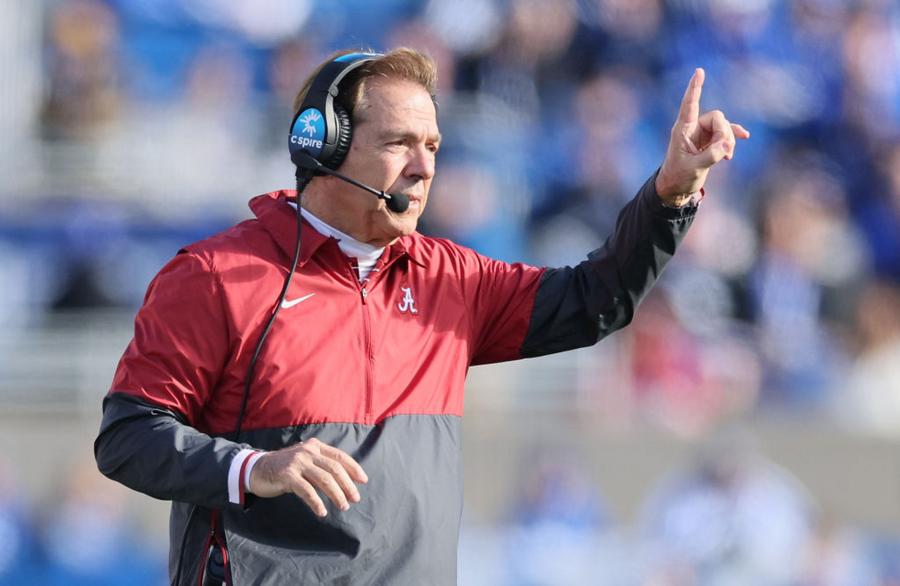
Saban’s affinity for cars and mechanics traces back to his youth. He grew up in a small coal-mining town in West Virginia, where his father ran a service station. Young Nick pumped gas, changed tires, and did odd jobs — learning not just mechanical skills but how businesses run at ground level. Over several decades in football, he also built a reputation for process, detail, and culture — traits that would carry over into his business investments.
When Saban first considered entering the dealership world, he didn’t cast a wide net. He met Joe Agresti, a self-made dealer in Louisiana, whose background and philosophy mirrored Saban’s own approach to discipline and structure. Agresti rose from modest roots in New Jersey, studied accounting, worked at Arthur Andersen, and eventually purchased a stake in a Baton Rouge Mercedes-Benz dealership. When the two met, their shared values clicked immediately.
Dream Motor Group
Thus was born the partnership behind Dream Motor Group. Saban became a minority partner in many of the ventures, while Agresti handled the day-to-day operations.
Over the following decade, Dream Motor amassed a high-end portfolio built primarily around Mercedes-Benz. Some of the key holdings include:
- Mercedes-Benz of Birmingham, with locations in Irondale and Hoover, Alabama
- Mercedes-Benz of Baton Rouge, Louisiana
- Mercedes-Benz of The Woodlands, Texas
- Mercedes-Benz of Music City, Nashville, Tennessee
- Prancing Horse of Nashville, a Ferrari dealership
- INFINITI of Birmingham, located in Hoover, Alabama
Here’s a video tour of the grand opening of Prancing Horse of Nashville from March 2023. Appropriately, Nick gave the opening welcome speech:
In 2023, Dream Motor made its most ambitious move yet, acquiring two Mercedes-Benz dealerships in South Florida — Coral Gables and Cutler Bay — along with associated facilities and real estate. The transaction’s estimated value was $730 million.
Those two stores dramatically expanded the group’s footprint and revenue base. In April 2025, Dream Motor’s annual revenue was described as nearing $2 billion, with annual sales of 20,000 Mercedes-Benz vehicles, plus hundreds of Infinitis and Ferraris.
The buying spree continued in November 2025, when Dream Motor acquired Toyota of Montgomery and Lexus of Montgomery from Sutherlin Automotive Group. The transaction was valued at $151 million, according to Pinnacle Mergers & Acquisitions, which advised on the sale.
On April 1, 2026, Dream Motor added two more South Florida dealerships: Bill Seidle’s Nissan and Bill Seidle’s Mitsubishi in Doral, along with their associated real estate. The stores now operate as Nissan of Doral and Doral Mitsubishi, expanding the group’s presence in the Miami market.
The company built its business around a few key luxury brands, especially Mercedes-Benz, but those later acquisitions broadened its reach into mainstream automotive retail. Another key partner, Steve Cannon, the former CEO of Mercedes-Benz USA, joined the venture, bringing high-level industry experience and connections.
Getty Images
Money, Margins & Culture: The Financial Mechanics
A big question: how does this empire actually make money — and how profitable might Saban’s cut be? Selling expensive cars is only part of the business.
Profit pools in dealerships
- New-vehicle sales carry relatively thin margins, but drive overall volume.
- Used and certified pre-owned vehicles can generate higher margins per unit.
- Financing and insurance are important profit centers: dealerships earn income through arranging loans and selling products such as extended warranties.
- Service, parts, and collision repair offer recurring revenue streams that do not depend entirely on customers buying another car.
- Real estate adds another layer — owning the land and buildings creates assets that can appreciate in value or generate rental income.
Agresti is famously meticulous about data. He monitors every dealership’s performance down to the number of cars sold per salesperson each night, and even keeps track of buyers’ names. Each store’s financials are reviewed monthly to ensure consistency and profitability.
A dealership’s value also extends beyond its inventory and buildings. Its brand affiliation, customer relationships, location, and earning power all help determine what another buyer would pay for the business. That combination helps explain the enormous sums involved in transactions such as Dream Motor’s South Florida purchase.
Because Dream Motor’s model blends dealership operations, real estate ownership, and premium brands, its owners have multiple ways to build wealth. They can collect operating profits while also benefiting from growth in the value of the underlying businesses.
Saban’s Stake & Wealth Scenarios
We don’t know how much of the business Nick Saban owns, but Joe Agresti’s net worth was $1.1 billion in 2025. The magazine described Agresti as holding majority stakes in the dealerships, with Saban a minority partner in many of the ventures.
Agresti’s personal fortune does not tell us precisely what Dream Motor Group is worth, and Saban’s ownership percentage could vary between dealerships. But a few hypothetical scenarios illustrate why even a minority stake could represent an enormous fortune. The figures below refer to equity value — the value attributable to the owners after accounting for net debt — rather than annual revenue.
If Dream Motor Group had an equity value of $2.2 billion, a 10% stake would be worth $220 million, while a 20% stake would be worth $440 million, and a 30% stake would reach $660 million.
At an equity value of $1.8 billion, a 10% to 30% ownership interest would be worth between $180 million and $540 million. At $1.6 billion, that range would be $160 million to $480 million. Even at $1.4 billion, the same ownership range would represent $140 million to $420 million.
Billionaire Path
If, through a mix of exceptional execution and extraordinary luck, Dream Motor Group’s equity value ever climbs to $3 billion — and if Nick truly owns a 30% stake — his share would be worth $900 million. Combined with $100 million in other net assets, that would make him a billionaire.
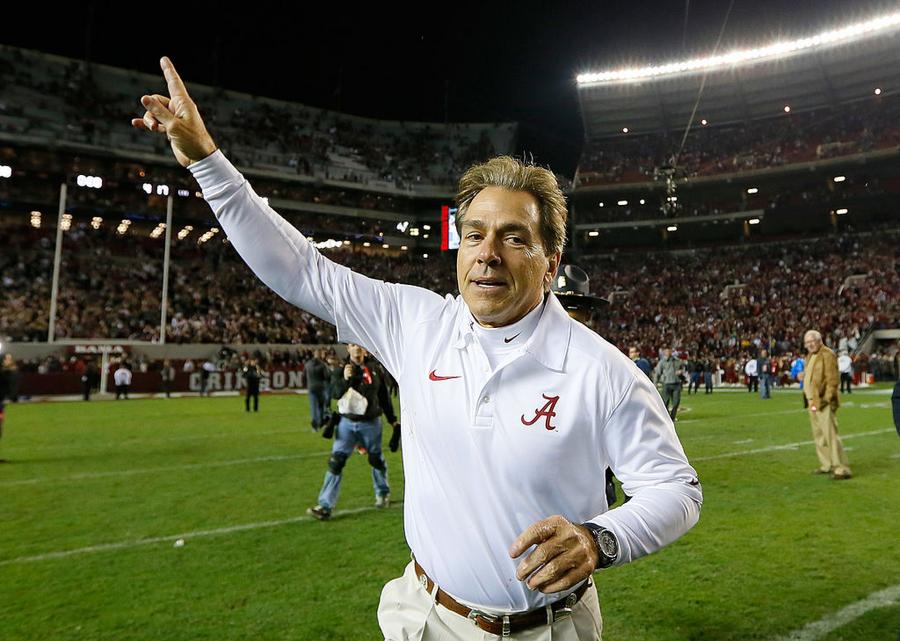
Kevin C. Cox/Getty Images
Those are hypothetical scenarios, not disclosed valuations or ownership figures. It’s possible Nick owns a much smaller fraction of the businesses, and his coaching earnings cannot simply be added to the value of his stakes. Any earnings he invested in the dealerships would already be reflected in those ownership interests.
Whatever the exact percentage, one thing is clear: Nick Saban didn’t enter the car business to dabble. He partnered with a proven operator, brought the same culture and process-driven mindset that made him a football legend, and helped build a business designed to keep generating wealth long after his coaching whistle went silent.
In football, Saban became synonymous with preparation, precision, and relentless execution. In business, those same traits have helped him build a second career as an entrepreneur. Whatever the eventual value of his stake, Dream Motor Group has ensured that Nick Saban’s legacy won’t just be measured in championships — it’ll also be measured in horsepower, luxury, and billion-dollar ambition.