

When the police are called regarding a situation involving an elderly couple, dementia and consent, the family at the centre of it find themselves engulfed in an increasingly painful and devastating set of circumstances.
The first time we see Anna Calder-Marshall’s Leslie and Tom Courtenay’s Martin, it is from the back. Even so, you can feel the mutual compassion, the love, the support, this old married couple hobbling up some steps together, arm in arm, her gripping the bannister, him grasping a walking stick. For an opening shot, it does a lot of heavy lifting. An uphill struggle? You bet.
When we next see them, a couple of minutes later, another perspective, and another act of love. Seemingly. It is daytime in their modest north London house, and Leslie’s daughter Amanda (Juliette Binoche) walks in on them having sex. It’s a functional, humdrum sex scene – Leslie, in fact, looks practically lifeless. Amanda, distraught, lashes out at a sheepish Martin, her stepfather, reminding him that she’s told him again and again not to do this, that if he kept doing so, she would call the police. He objects, and she does just that.
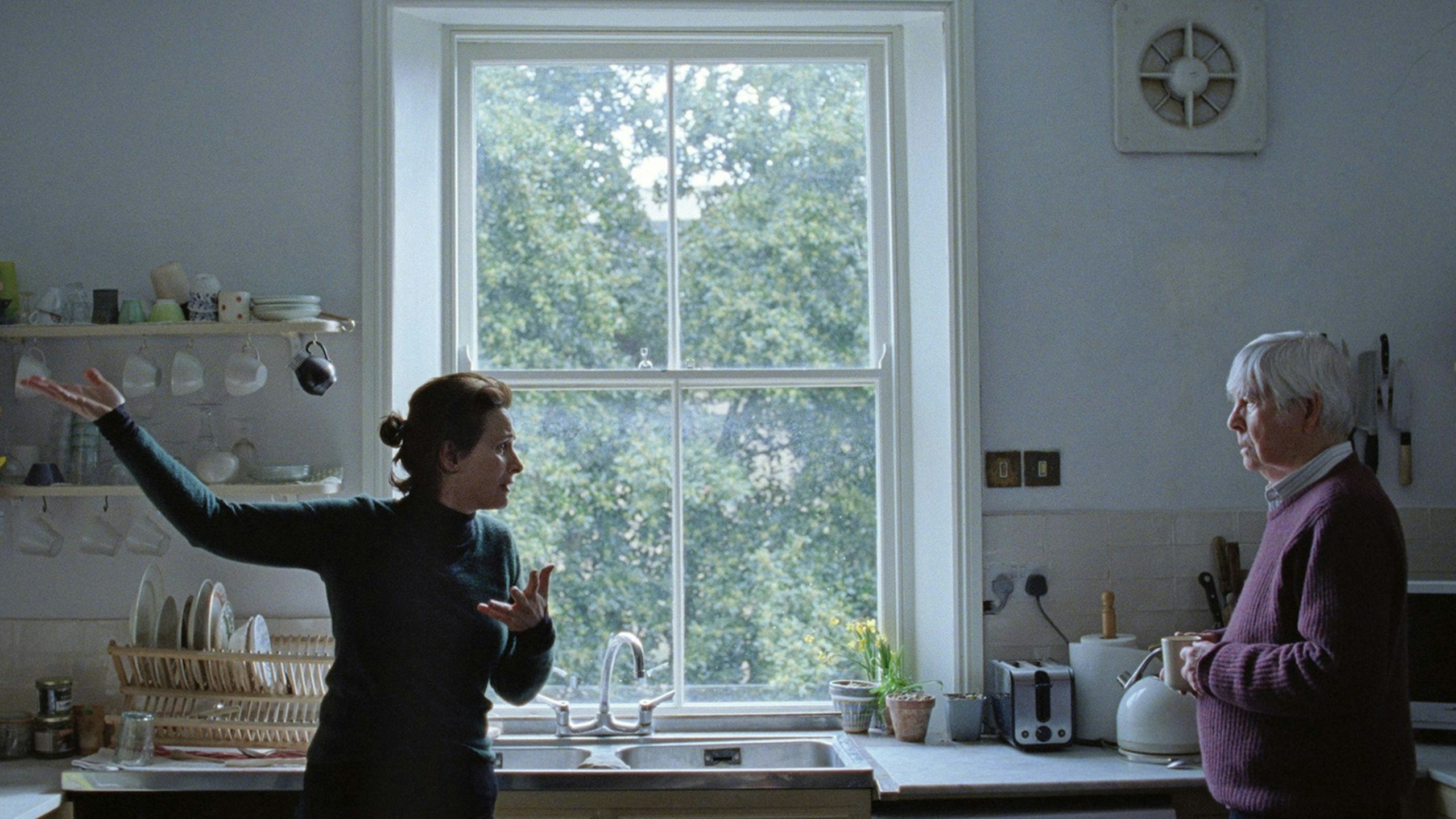
As she explains to them on the phone, her mother has advanced dementia and doesn’t have the capacity to give sexual consent. They ask Amanda if she saw her struggling. “She doesn’t resist because she doesn’t know what’s happening to her,” she responds. And as the authorities get involved, so begins a chain of events shedding light on emotional ethical quandaries, and on a bureaucratic system doing its best under quite impossible circumstances. When SOIT (Sexual Offences Investigation Trained) officers decide to temporarily separate Martin and Leslie, Amanda objects. Leslie is completely dependent on Martin, she explains: “He loves her, dearly.”
This is a very upsetting film, an incisive investigation of a complex, thorny, and sorely human situation, in which binary offerings of what is morally right or wrong are not clear cut – how could they be, when even the person at the heart of it all may not know what they want? One of the most perplexing issues it explores is disinhibition, in which the person, because of the condition, runs on purely primal instincts. And they may well absolutely want sex with their partner. Should others be able to deny it of them – definitively, indefinitely – because they may not knowingly be consenting, even if they are initiating it? And who would make that decision? The family? The authorities? These are the sort of questions that Queen At Sea so admirably and desperately poses.
There is an unflinching intimacy all round.
Really though, despite the inciting incident driving the film, it is ultimately about so much more than that: it is about the unfathomable quagmire of dementia. “I don’t know what’s going on in there anymore. She’s unreadable,” says Amanda at one point. Leslie – played so delicately and, to be honest, frighteningly by Calder-Marshall – seems in a state of constant confusion. When asked questions by authorities, her eyes plead to her daughter for help. The film is such a sympathetic portrayal of the loss of agency, of independence, of integrity and often dignity, and of the collateral damage on family members. Binoche’s Amanda is at her wit’s end, trying her best to navigate something not necessarily navigable, wanting the best for her mum and also for her own daughter, the teenage Sara (Florence Hunt), whose adolescence is being dramatically impinged by what’s happening.
The stakes are compounded by American writer/director Lance Hammer’s filmmaking which, for the early stretch at least, presents proceedings in a cold, matter-of-fact and brutal style, fixed cameras passively observing what’s happening. This creates a stark sense of unease, making the film feel intrusive and even voyeuristic, which is appropriate – this shouldn’t be comfortable. It’s a very effective approach from cinematographer Adolpho Veloso, who did such painterly work on last year’s Train Dreams.
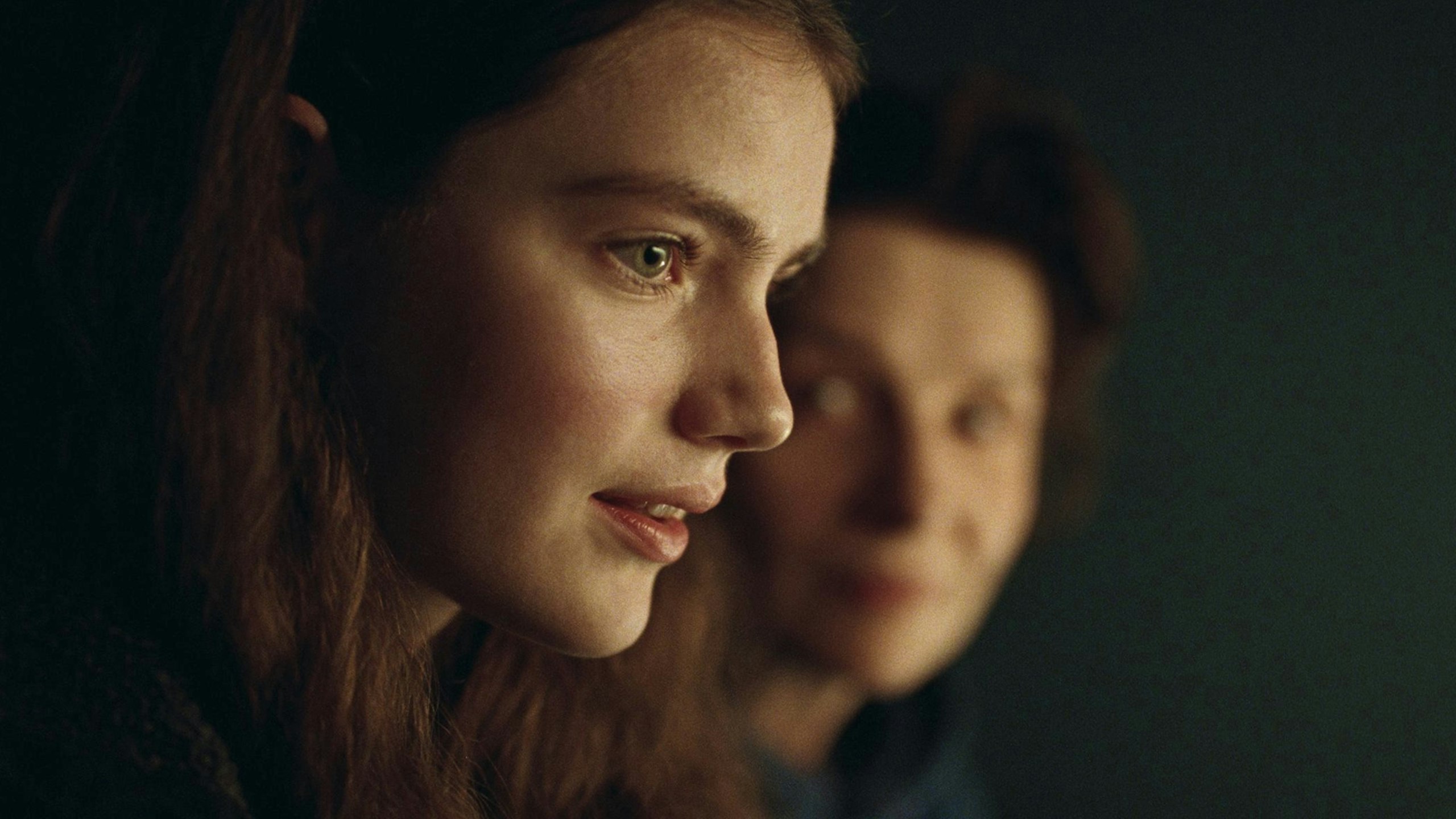
There is an unflinching intimacy all round. A gynaecological examination. Amanda tenderly bathing her mother. The endless little heartbreaks. There’s not a line of dialogue that doesn’t seem like it’s being thought for the first time, let alone said, via unshowy, underplayed but incredibly powerful performances. Calder-Marshall is 79, Courtenay is 89; both are quietly but profoundly affecting. Meanwhile, the smaller, supporting characters – police, doctors, social workers and care-home staff – feel uncannily real. As it turns out, there’s a reason for that: in his efforts to make it all as accurate as possible, in terms of scenarios, terminology and even cadence, Hammer (who spent many years developing the film) consulted such staff and then asked them to appear on screen. The resulting authenticity makes for an even more confronting experience. (Also, if you know north London, Hammer captures Tufnell Park and Archway’s leafy and somewhat drab suburban tones so vividly – it’s shocking that it’s taken an American to get this right.)
Everything is so naturalistic and convincing that when events suddenly ratchet up at the end, it feels somewhat at odds with everything that’s come before – a bit of plot taking over from such a considered case study. A strand focusing on Amanda’s daughter Sara, meanwhile, also contrasts with the matter at hand, as she embarks on her own romantic pursuits. It’s a bittersweet reflection of where her grandmother finds herself, the world opening up for Sara, young love in full bloom, but feels like a nice conceit rather than a vital piece of the film. Still, among all the bleakness, its sweetness and warmth provide a welcome counterpoint, and a relief.
Humanity is key to Queen At Sea, which highlights some very knotty politics, illustrating that the system surrounding cases like Leslie’s can overwhelm and – despite the best wills in the world – dehumanise. For the most part, this film has a gentle touch, and you feel its despair throughout as it weighs it all up, posing difficult questions and not presuming to have any answers. It’s about the utter tragedy of dementia, about these poor people who have lost themselves, and the family members who have lost a substantial part of them. It’s a sad, sad film. You should see it.
Appropriately and unavoidably bleak, and keenly understated, this is nevertheless a quietly enthralling piece of cinema, grappling with dementia both morally and mentally. Despairing, hugely compassionate work.