
The Real Madrid jersey moved from locker room to city sidewalk in the space of a single calendar year, and the shift happened on purpose. Adidas and Real Madrid launched an official lifestyle line that treated the shirt as a year-round garment, not match-day kit. Celebrity sightings and resale momentum turned the white blanco base into a neutral flex that works with wide-leg denim, cargos, and chunky sneakers in any U.S. city.
LFSTLR line formalizes crossover
November 2025 brought the first collection built explicitly for street use. Loose cuts, V-necks, and interlock fabric replaced the tight performance fit. Prices hovered around €150, positioning the pieces as mid-tier lifestyle rather than standard merch.
Players tested the new silhouettes before kickoff at the Bernabéu. Mbappé, Vinícius Júnior, and Bellingham posted pre-match looks that doubled as product shots. Adidas added a permanent Real Madrid streetwear tab on its global site to meet demand.
The move gave retailers in Los Angeles and New York a clean narrative to sell. Stockists already carried similar athleisure drops from other sports franchises; the Real Madrid jersey now fit the same rack without explanation.
Classic blanco stays the hook
Both the 2025/26 and 2026/27 home kits kept the signature white base with only subtle piping and collar changes. Store copy stressed that the jersey works “on and off the pitch,” a direct nod to lifestyle wear.
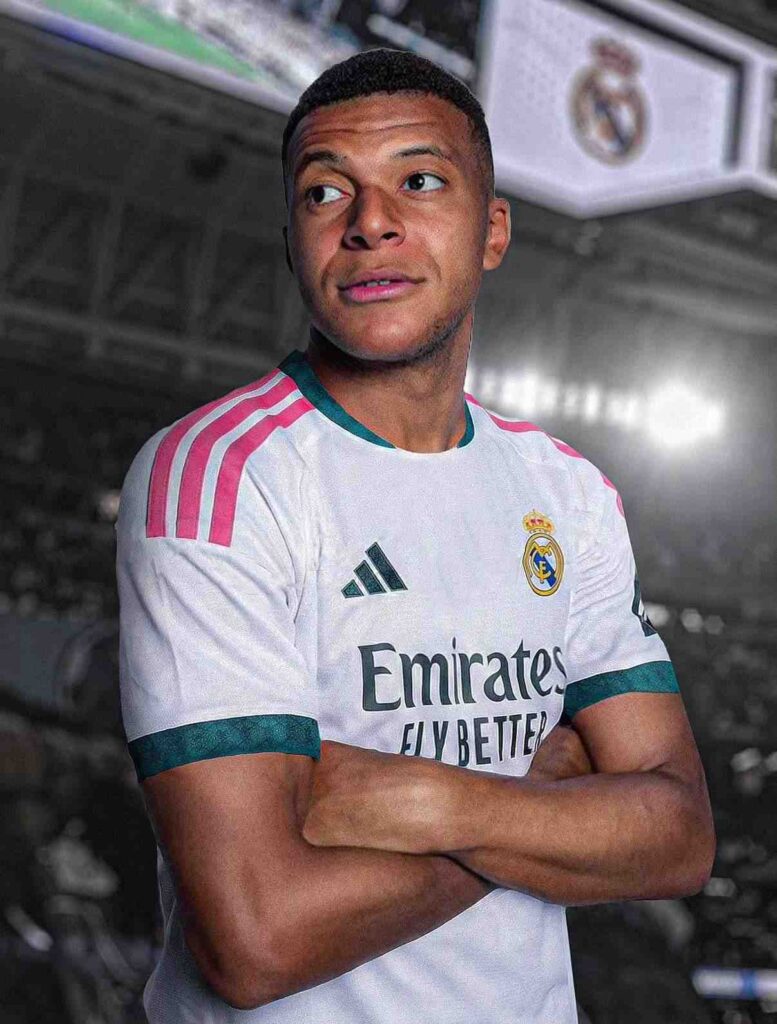
Retail prices ranged from $105 to $150. Sell-through stayed strong because the neutral palette paired with existing U.S. streetwear staples. The pink Three Stripes accents on the 2026/27 version initially drew fan skepticism, yet player imagery normalized the look within weeks.
Extended partnership terms through 2034 signal that Adidas will keep producing lifestyle variants. Each new kit refresh feeds the same pipeline rather than resetting it.
Reissues feed Gen Z nostalgia
1999/00 and early-2000s replicas reappeared at resale and thrift outlets in 2025. Gen Z buyers treat the older cuts as authentic layering pieces, not replica kits. Search volume for styling tips spiked on TikTok and Instagram Reels.
Baggy cargos, chore coats, and chunky sneakers became the default pairing. The vintage route lowered the entry price and sidestepped the constant new-kit cycle that many fans had begun to resist.
Los Angeles and New York resale scenes already embraced vintage sportswear. The Real Madrid jersey slotted into an existing ecosystem rather than creating one from scratch.
Celebrity sightings drive reach
Justin Bieber and Hailey Baldwin appeared in the jersey on separate occasions in late 2025. Kim Kardashian wore hers courtside at the Bernabéu. Each post reached audiences outside football circles and removed the need for explanatory captions.
Algorithmic Reels now surface styling videos before official club content. Viewers who do not follow European football still register the shirt as a recognizable neutral piece.
Record sales followed. Real Madrid moved more than three million jerseys in 2025, generating roughly €196 million in merchandise revenue, the first club to cross that threshold in a single year.
Styling language spreads fast
U.S. content creators adopted the same formulas seen in European feeds: oversized fits, layered outerwear, and modest-fashion adaptations. Color-swap edits and “how to style” templates circulate weekly.
The repetition across platforms normalizes the look for viewers who may never watch a match. The white base functions like a blank canvas rather than a team statement.
Retailers in major cities report that customers ask for the jersey by silhouette rather than by club affiliation, confirming the shift in language.
Retail availability widens
Adidas flagship stores in New York and Los Angeles carry both the current kit and selected LFSTLR pieces. Online global shipping removes geography as a barrier for smaller markets.
Resale platforms list vintage and new versions side by side, letting buyers choose price point and condition. StockX and similar sites show steady transaction volume rather than seasonal spikes.
Department-store buyers now treat the Real Madrid jersey as a core item in the sportswear-as-fashion section rather than a niche football display.
Brand strategy locks in gains
Adidas extended its partnership through 2034 with explicit language about lifestyle expansions. Future collections will include racing-inspired cuts and additional relaxed silhouettes already in development.
Player ambassadors continue to appear in non-match settings wearing the same pieces, keeping the product visible without requiring match-day context.
The club benefits from year-round revenue that does not depend on on-pitch results, a structural advantage over teams that rely solely on replica-kit cycles.
Market response stays steady
Search interest for styling content remains elevated rather than peaking and dropping. TikTok hashtag volume continues to climb even after the initial LFSTLR launch window closed.
Retailers note that customers return for second and third colorways once the first purchase normalizes the garment in their wardrobe.
Industry analysts view the Real Madrid jersey as the clearest current example of a football shirt achieving sustained streetwear status without losing its club identity.
Outlook points to longevity
The combination of official lifestyle releases, fresh kit refreshes, vintage reissues, and celebrity visibility has created a self-reinforcing loop. Each element feeds the others without requiring constant reinvention.
American consumers who discovered the shirt through social feeds now treat it as a reliable neutral layer rather than a seasonal novelty. The blanco base continues to absorb new styling references while retaining its core recognition.