
You can trust Guitar World
Our expert reviewers spend hours testing and comparing guitar products so you can choose the best for you. Find out more about how we test.
What is it?
We’ve examined many Eastman guitars in the past, and every reviewer – including our late and terribly missed friend Dave Burrluck – has been bowled over by the quality, style, innovation and organic nature of the firm’s instruments.
Poignantly, Dave was down for reviewing this very guitar, and had made noises that he’d rather like to buy it afterwards. What Dave always said was, “Eastman guitars exude rock ’n’ roll, while certain other manufacturers’ instruments don’t.” And he had a point.
While many Eastmans we’ve seen might not have been molecule-perfect icons like, say, a PRS, they have all possessed an X-factor that makes you want to play them, gig them, even roughhouse them – not keep them imprisoned in their cases like untouchable museum pieces.
Latest Videos FromGuitar World
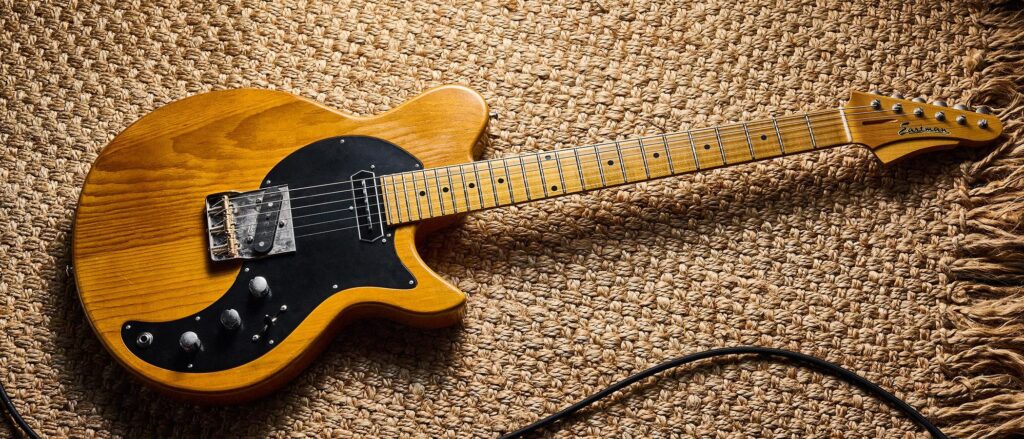
So, with all that said, let’s look at this offering from Eastman’s burgeoning range of originals: the SC Classic in Asbury Butterscotch. We love the look of this entire series of novel, rather than ‘tribute’, models. Indeed, this writer reviewed a Juliet, one of the first of these all-new designs, and praised it highly.
But where the Juliet features a Firebird-style raised centre section, a more offset look and rather more bulbous upper ‘horn’, this model takes the styling to the next level.
The SC Classic boasts some interesting design themes, too, including an Oregon pine body, which makes for extreme lightness and resonance, and the FullerTone neck that we’ve seen on several other models.
All Kauffmann Series guitars – which are promoted with the tagline, ‘Made in Holland, Born for Tone’ – are built at Eastman’s European headquarters in Mijdrecht in the Netherlands, just a few kilometres south of Amsterdam.
We spoke to Pepijn ’t Hart from Eastman and he put it to us: “All our bolt-on guitars (D’Ambrosio series, Kauffmann series, FullerTone series) are built around the most important feature: the FullerTone neck designed by Otto D’Ambrosio. We like to think that we only bring an instrument to the already overfull market if it adds something new, an improvement. So that’s why we would never do a Fender-style bolt-on neck joint.”
Our guitar’s pine body and maple neck with glued-on maple fingerboard comes in what Eastman calls its Time Travel finish. Here, the level of ageing is the brand’s Light version, so the neck feels like bare wood under your fingers, while the body seems only lightly dusted in nitrocellulose lacquer so the pine’s grain pores remain open. It’s vibey and unpretentious.
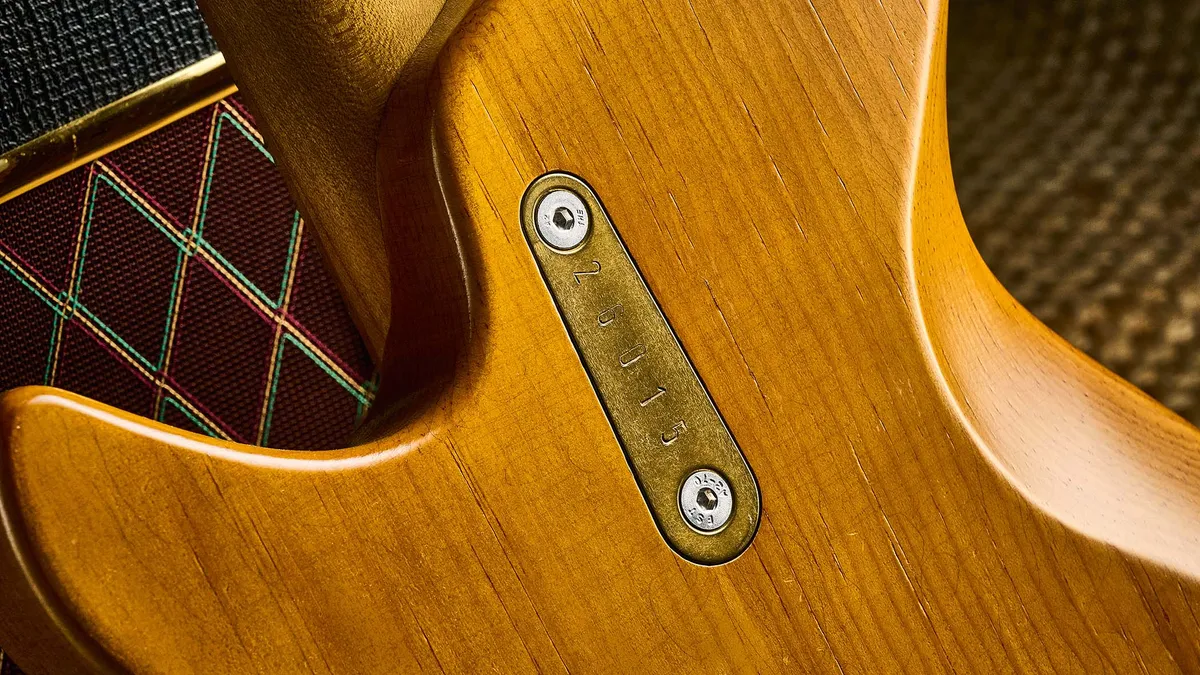
What’s more, all the guitar’s timbers are roasted, surely contributing some of that lightness and resonance we speak of, but also a much improved level of stability.
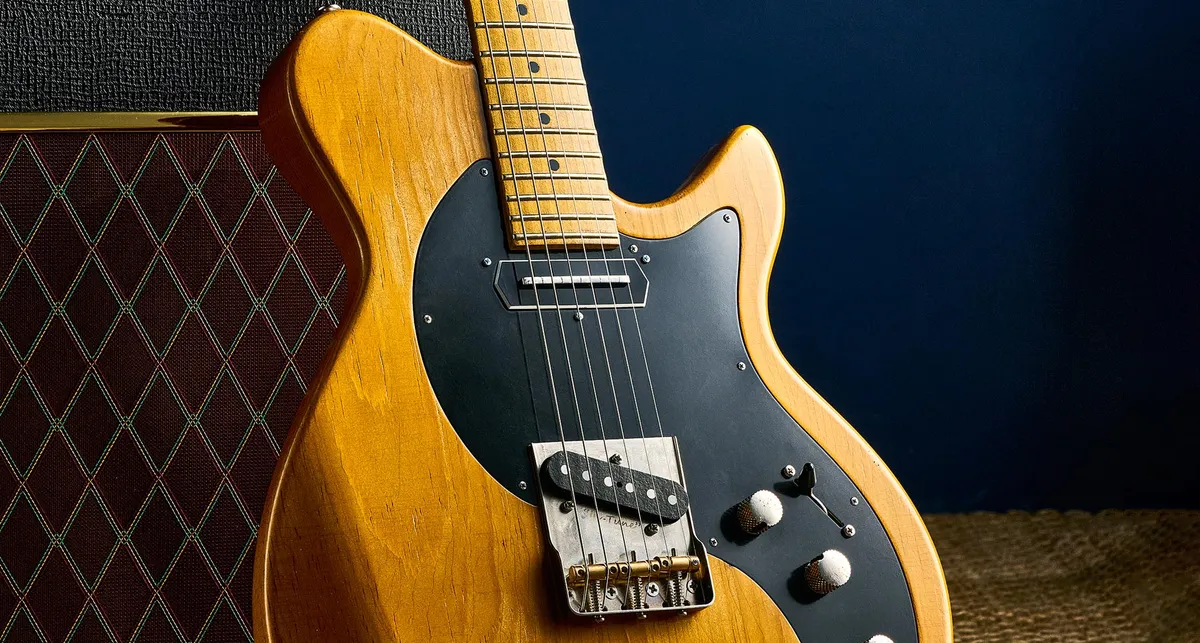
The pickup array is interesting, too. In the Gotoh In-Tune, Telecaster-style bridge plate with intonation compensated brass saddles, sits a Lollar Special T single coil with flush polepieces.
Nothing so unusual there. However, at the neck we find another Lollar, this time a beautiful Charlie Christian. Jazz guitar lovers will know that this style of pickup was fitted to the Benny Goodman Orchestra guitarist’s Gibson ES-150, which is, of course, how it gained its moniker.

This attractive pickup, black with white bevelled edging in a ‘hexagonal oblong’ shape, is also single coil but with just one raised bar polepiece.
Walt Fuller’s original design had huge bar magnets mounted under the guitar’s top, with three large visible screws holding them in place. Luckily, modern pickups like our Lollars have managed to dispense with this cumbersome method to maintain a more manageable footprint.
All the hardware is by Gotoh, including the simple-looking but highly sophisticated HAP-M tuners. These not only lock the string but also feature height-adjustable shafts and smaller holes on the three high strings for better tuning stability. They would be so easy to overlook so deserve a special mention.

The electrical components are, as always on Eastman guitars, of the highest order, too. So we find CTS 250k volume and tone pots, a Sprague Orange Drop .022 capacitor, and Gavitt Single Conductor wire with vintage cloth covering.
All the woodworking is flawless, with the tightest of joints, the routing of the two-bolt neckplate and that rather interesting inset black pickguard, all micron perfect
While we’ve mentioned how Eastman Guitars seem to rate playability and tones over pristine presentation, don’t mistake that for sloppy attention to detail.
All the woodworking is flawless, with the tightest of joints, the routing of the two-bolt neckplate and that rather interesting inset black pickguard, all micron perfect. This fret job, too, is very beautifully done, with perfectly crowned tops and exquisitely smoothed ends.
There are 24 of these beauties, which we feel on a guitar of this type is possibly over the top. That said, you don’t have to travel to the dizziest fretboard heights, but the extra frets are there should you do so.
Specs

- PRICE: $2,550 | £2,399 | €2,699 with quality padded gigbag
- ORIGIN: Mijdrecht, the Netherlands
- TYPE: Single-cutaway solidbody electric
- BODY: Roasted Oregon pine
- NECK: Roasted maple, with rounded C profile
- SCALE LENGTH: 648mm (25.5”)
- NUT/WIDTH: Unbleached bone/42.8mm
- FINGERBOARD: Roasted maple, integral, 254-304mm (10-12”) radius
- FRETS: 24 medium jumbo
- HARDWARE: Lightly aged nickel plated Gotoh In-Tune Telecaster style bridge, black sunken pickguard, knurled metal knobs with position markers, aluminium strap buttons
- TUNERS: Gotoh HAP-M locking, adjustable for height with smaller holes for thinner three strings
- STRING SPACING, BRIDGE: 56mm
- ELECTRICS: Lollar Charlie Christian (neck) and Lollar Special T (bridge), 1x volume, 2x tones, 3-way blade selector switch
- WEIGHT (kg/lb): 2.96/6.81/2
- OPTIONS: None
- RANGE OPTIONS: SC Vintage (from £2,299), with Lollar Royal T (neck) and Special T (bridge) pickups; SC Deluxe (from £2,399) with Lollar Lollartron (neck) and Special T (bridge) pickups (higher levels of ageing cost more)
- LEFT-HANDERS: Yes
- FINISH: Micro thin open-pore Asbury Butterscotch (as reviewed); custom colours available
- CONTACT: Eastman
Build quality, usability and sounds

A guitar this light, at only 2.96kg (6.53lb), and with that mildly aged finish, makes you just want to grab it and chuck it on with abandon. No kid gloves here! It really does feel broken in, even before you’ve played a note. But since that’s why we’re here…
As mentioned, the neck feels like bare wood, even though there’s surely the thinnest trace of nitro still there. Its shape is a very palm-friendly medium round profile, neither too chubby nor too slender.
Indeed, it’s very close to that of a ’56 Relic Strat sitting only a metre away from your scribe’s desk. It feels really nice and we can’t see it offending anyone other than the heaviest of metallers (and they would surely take no interest in such a beast).

That said, it doesn’t simply play itself. There’s a degree of fight back from the D’Addario 0.010 to 0.046 strings, and a lot of players do love that. Similarly, others might prefer to swap these for a set of .009s, or may we suggest 9.5s.
The fingerboard and those perfectly polished medium jumbo frets feel great under the fingers. This thing is speedy, too, and quick country, rock and blues licks fall out of the CS Classic all too readily. Bends, too, due to a 254mm to 304mm (10 to 12 inches) compound radius ’board, are a breeze, as is a healthy blues-rock vibrato and for all the above reasons.

Plugging into our Tone King Imperial, with OCD distortion in line, generates a delightful output of tones from the SC Classic. With a Custom Shop Telecaster and P-90-equipped Les Paul to hand the comparisons should be interesting.
As it happens, the Eastman is brighter than both heritage guitars. The Tele’s bridge pickup is darker with the tone on full, but they are much too close to call with the SC’s tone knocked back a tad. This actually makes it more versatile as some people love that real sparkle, especially when ultra clean and with chorus and delay added. Similarly, the Les Paul. And while comparing a P-90 to a CC is hardly aural science, they’re not a trillion miles apart so it’s worth doing.
The Eastman neck pickup has that same extra clarity we found with the Tele, and rolling the tone back here creates anything from the warmest jazz tone to some fabulous bluesy ones. And in the middle position with a good drenching of reverb, the SC Classic does a more than passable Peter Green impression.

Jumping on the OCD with a light to medium drive emphasises everything the Eastman has going for it. Now, obviously neither the Tele nor the Les Paul are torrefied pine with torrefied maple necks, so it seems likely that these elements – plus that tight fitting, long tenon FullerTone neck joint – are what’s bringing this added clarity and airiness.
One tiny niggle is that on the neck pickup with drive and the tone rolled off there was a volume imbalance across the strings, the bottom four overpowering the top two. An adjustment soon fixed this, but it’s still worth noting.
Any owner of this guitar would be daft not to experiment with its tone controls, since there’s a bucketful of really tasty results to be had. It’s a fabulous, highly enjoyable and extremely musical-sounding guitar.
Verdict
Verdict: ★★★★½

It’s great to see more and more guitars that are not mere copies of a few iconic originals. We love the look of Eastman’s SC Classic, and it has been a wonderful instrument to spend time with. It’s somewhat weird the visual impact that the Charlie Christian pickup lends.
This writer remembers seeing Lennon’s LP Junior with the aforesaid coil fitted in his guitar’s neck position. It was both intriguing and exciting, and it’s the same here.
But this Lollar CC is also a brilliant choice because it’s not your usual Micawber-style humbucker, plus it looks much cooler than a Gold Foil to these eyes. Together with the Special T at the bridge there’s a plethora of great guitar voices here.
The neck is particularly lovely, too, and while you may prefer a bit less of a fight and therefore fit lighter strings, the fret job and setup are so darned good that you’ll feel at home in no time. Also, we feel the pricing is perfectly fair for a European-made instrument of this quality.
Guitar World verdict: If you’re looking for something vaguely T-style but with a serious dollop of genuine personality, all we can suggest is, why not go Dutch?
Hands-on videos
Eastman