
You can trust Guitar World
Our expert reviewers spend hours testing and comparing guitar products so you can choose the best for you. Find out more about how we test.
What is it?
Cort KX500 Baritone is the first six-string baritone guitar the company has made
A lot of guitars are made in the Cort factories nowadays. Squier, PRS, Ibanez, and many more have some of their import guitars crafted in Cor-Tek facilities, and we’re starting to see more and more of the company’s own models emerge. The Cort KX500 Baritone is the first six-string baritone guitar the company has made, with the only other foray into the territory prior being the KX257B and EVL-K57B, both 7-string guitars with a baritone scale.
Cort has been making guitars since 1973, so they’re far from the new kids on the block. From manufacturing guitars like Kramer and Hohner in the 80s, to crafting the budget offering of the mega brands of today, the company has shipped a massive 20 million instruments as of 2023.

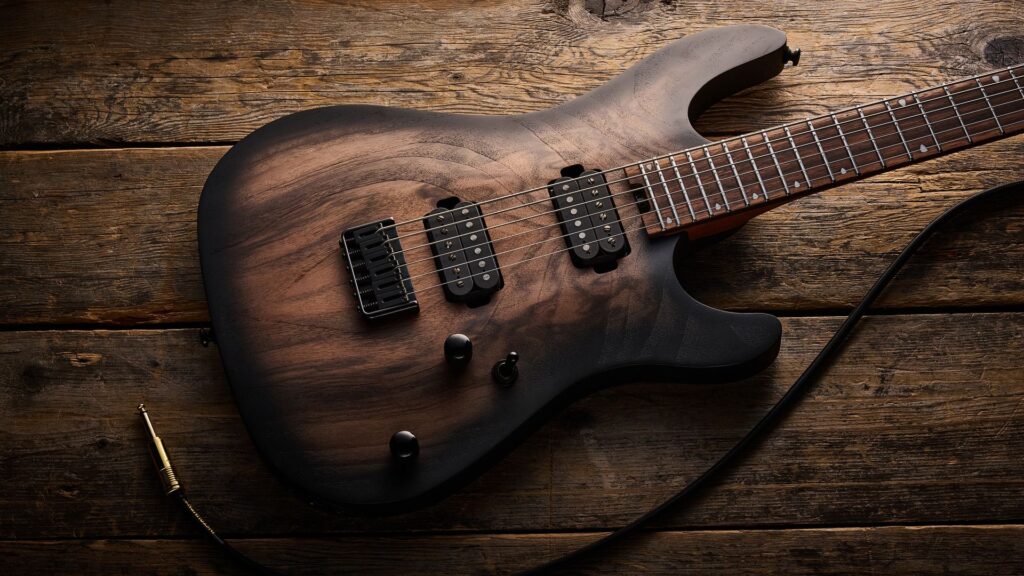
The KX500 is a new offering to help the brand grow in another direction, no doubt hoping to capitalize on the massive popularity of baritone guitars at the moment. It’s got a 28.03-inch scale, pairing an okoume body with an English walnut veneer top and an open-pore finish.
Latest Videos FromGuitar World
The neck is a five-piece roasted maple and walnut combo, shaped to a ‘D’ profile. It’s got a Macassar ebony fingerboard with a 15.75-inch radius. Teardrop inlays mark the 24 jumbo, stainless steel frets, and it also features luminous side dots. A Graph Tech Black TUSQ nut sits atop the guitar.
Hardware consists of Cort’s own hardtail bridge, with strings running through the body. A lineup of six locking tuners is on the headstock. It’s packing some serious pickups too, with the Seymour Duncan Sentient in the neck and the Nazgul in the bridge position. A three-way toggle selector controls your pickup selection, with a push-pull tone knob for coil splitting.
Specs

- Price: $929.99 | £699
- Made: Indonesia
- Type: Six-string baritone guitar
- Body: Okoume with English walnut veneer top
- Neck: 5-piece roasted maple and walnut, D profile, bolt-on
- Fingerboard material/radius: Macassar ebony, 15.75″ (400mm) radius, teardrop inlays, luminous side dots
- Scale length: 28.03″ (712mm)
- Nut/width: Graph Tech Black TUSQ, 44.8mm
- Frets: 24, jumbo stainless steel
- Hardware: Cort hardtail bridge (string-through-body), Cort locking tuners
- String spacing at bridge: 52mm
- Electrics: Seymour Duncan Sentient (neck) and Nazgûl (bridge) humbuckers, 3-way toggle pickup selector, master volume, master tone (push/pull coil split)
- Weight: 3.1 kg
- Left-handed options: No
- Finishes: Natural Black Burst (matte, open-pore)
- Case: Cort Gig Bag
- Contact: Cort Guitars
Build quality

Build quality rating: ★★★★½
The KX500 is noably lightweight for a baritone, coming in at 3.1kg/6.8lbs on my scales. The thin, arched top, three-piece Okoume body is very Ibanez-esque in its execution, reminding me of the S and RG models There’s a belly cut on the back for additional comfort, and the neck heel is sculpted for better upper fret access.
The roasted maple neck is split by two thin strips of walnut as I examine the back side of the guitar. This is for added stability, especially useful when the higher tensions of baritones come into play. The transition point between the headstock and the neck features a volute to help protect it should it take a fall.

While the hardware is nicely applied, with the knobs and switches all feeling firm, the tuners do feel a little cheap. Some are stiffer than others, which is likely fixable with some lubrication. For a guitar that hits nearly a grand, however, I’d expect the tuning machines to offer a more consistent feel straight out of the box.
There are precious few things out of place in terms of the aesthetics, although I did spy some kind of tooling mark on the nut. It’s barely noticeable, likewise with some slight marks where the neck meets the body on the treble side. All in all, it’s a very well-put-together instrument.
Playability

Playability rating: ★★★★½
The KX500 doesn’t feel like a massive jump from a regular electric guitar
Those new to baritones can often struggle with the change in size, but the KX500 doesn’t feel like a massive jump from a regular electric guitar. The relatively light gauge strings help, with a set of D’Addario EXL157 14-68 fitted from the factory. It makes the transition pretty comfortable, even when I hadn’t played my own baritone for a short while.
If you’re coming to the instrument as someone new to baritones, you may find that 44.8-inch nut width a little daunting. Paired with the 15.75-inch radius fretboard, it makes it feel almost like a classical guitar, quite wide with the strings spaced further apart than you might be used to. It won’t be long before you’re up and running, though.

The lighter string gauge paired with a decent action makes it very playable from the off. Measuring at the 12th fret with my finger on the 1st fret, it’s ever so slightly north of 1mm, and it feels nice and low when I play it. Add in the jumbo frets, and you’ve got a very playable feel. It’s a little buzzy on the low B unplugged, but when I play clean through an amp, it doesn’t carry over.
For me, that stretch from the 1st to the 5th fret is at the limits of my capabilities as someone with a typically average hand size for my height. For smaller players, it will feel pretty massive. It doesn’t hold me back all that much, though, and I find all my usual riffs and techniques are available with a slight adjustment.
It’s a really nice-feeling neck, and the lighter gauge means full-tone bends are comparatively easy versus some of the other baritones I’ve tested recently, like the Gretsch Electromatic Jet and the Jackson Sleep Token IV Monarkh.
Sounds

Sounds rating: ★★★★☆
Sitting down in front of my audio interface to put the KX500 under a microscope in terms of tone, I run it through Line 6’s Helix Stadium Native models to see how the dual Seymour Duncan humbuckers perform.
The bridge pickup is very high output, and that’s immediate from the moment I put it through the Deluxe Reverb model. When picking hard, it drives the amp straight to break up, despite the volume not being above the halfway mark. I find I can control it with the volume knob, or by switching to the single-coil mode, which delivers a purer clean tone.
They’re quite surgical in their feel. It’s not a clean tone that will satisfy traditionalists, but if your mainstay is metal and you need pickups to handle the more melodic parts, these do a decent job. The neck humbucker is particularly nice for arpeggiated chord work, but overall they come across as a little dull when played through a totally clean amp model with a touch of spring reverb.
In the split coil positions, it’s a similar story. They’re similarly clinical, thinner versions of the humbuckers that sound slightly sharper, but lack that sweetness and dynamics of a true single coil. You won’t fool anyone into thinking you’re playing a Strat with these.

The neck position isn’t a huge jump from the bridge sound
Switching to a 5150 6L6-inspired preset, things start to get a lot more fun. The bridge pickup delivers a super satisfying modern metal rhythm tone. It’s got plenty of that clank, with the natural heft from the low tuning when I chug the open low B string. It’s aggressive and snarling, but controlled enough to be precise with it.
The neck position isn’t a huge jump from the bridge sound, adding a touch more warmth and low end but sounding very much like part of the family. Here I switch to a model based on the Orange Rockerverb to eke out some doomy riffs. It sounds fantastic, with plenty of low-end oomph to underpin slow power chord riffs.
Moving to some lead work, the bridge position cuts through nicely as I lay into some huge, moody bends, adding some tape delay and plate reverb into the mix. Each note has loads of cut when I play fast alternate-picked scale runs, and switching to the neck position adds a touch of warmth, but it doesn’t sound miles away from the bridge.
Verdict

Overall, I was very impressed with the Cort KX500. It’s very much a baritone geared towards heavy players, and the playability and sound make that clear from the off. If you live to chug, you’ll find a lot to love here. That said, these aren’t the pickups you’re looking for if you want a baritone to play Ennio Morricone tunes.
Overall, the guitar is really nicely put together
The tuners could be a bit better in terms of feel, but the tuning overall does hold really well even under super harsh playing, so I can’t knock them in terms of pure performance. Overall this guitar is really nicely put together – it’s lightweight for a baritone, and feels nice and agile on a guitar strap for live playing.
Guitar World verdict: For metal players, the Cort KX500 Baritone is absolutely worth your consideration. The build quality is fantastic, and the playability is spot on, with a nice low action out of the box. The Seymour Duncan humbuckers definitely deliver when it comes to the demands of modern metal. They’re not the most versatile, though, so if you want something that can cover genres other than the heavy stuff, you’d be best off looking elsewhere.
|
Test |
Results |
Score |
|---|---|---|
|
Build quality |
Some small aesthetic flaws and inconsistent tuners |
★★★★½ |
|
Playability |
Really nicely set up out of the box, plays fantastic |
★★★★½ |
|
Sounds |
Great for modern metal, but a little one-dimensional for less heavy stuff |
★★★★☆ |
|
Overall |
An awesome baritone guitar if you just want to chug and shred |
★★★★½ |