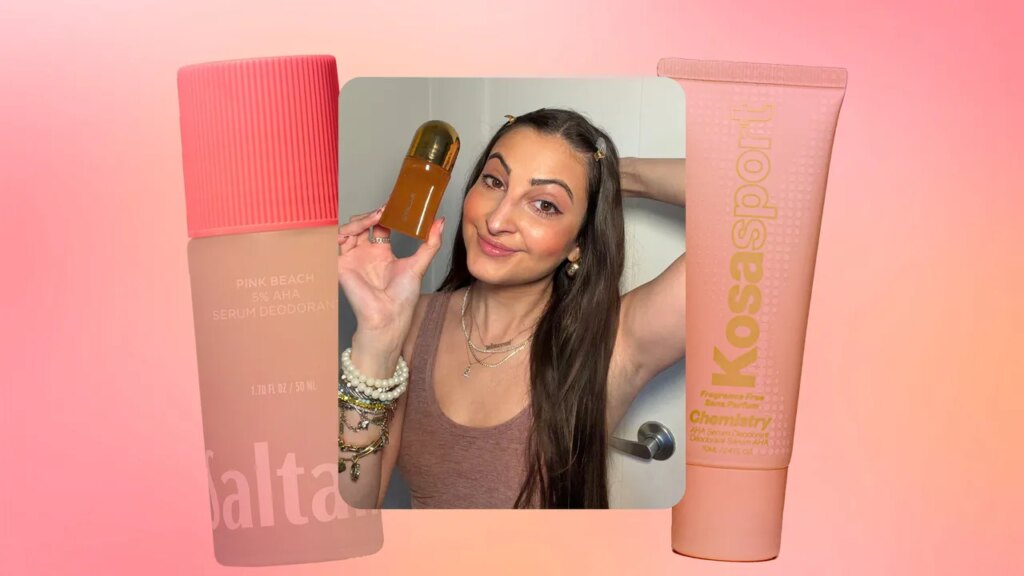

Not big on underarm scents or have skin that’s a little extra sensitive? This fragrance-free pick is the one to try. It’s a roll-on formula that contains gentle lactic acid and mandelic acid to help brighten underarms. The addition of aloe vera juice and hyaluronic acid helps soothe and hydrate skin that may feel a little irritated. “For somebody whose darkening is being driven by irritation, fragrance-free is generally where I’d start,” says Dr. Palm. And to top it off, “this formula is marketed as clinically and allergy tested and includes hydrating ingredients alongside the acids,” she says.
Frequently asked questions
What causes dark underarms?
“There are a few different reasons underarms can appear darker, but irritation is probably one of the most common culprits,” says Dr. Palm. Shaving, friction from clothing, ingrown hairs, and even certain deodorants can cause low-grade inflammation, which may lead to excess pigment known as post-inflammatory hyperpigmentation (PIH). “This tends to be more noticeable and can linger longer in patients with medium to deeper skin tones,” says Dr. Palm.
While some discoloration is simply the result of irritation or hair removal, a sudden change is worth paying attention to. Underarm darkening can occasionally signal an underlying medical condition, so “consult a health care professional if the darkening develops suddenly, worsens rapidly, becomes thickened or velvety, or appears in other body folds, such as the neck or groin,” says Dr. Shah. Medical conditions like acanthosis nigricans are characterized by thickened, velvety, darker patches of skin. It is often associated with insulin resistance, obesity, or certain endocrine disorders. “Hormonal changes and genetic factors may also contribute to the development of underarm pigmentation,” says Dr. Shah.
How can you minimize dark underarms?
The first step to brighter-looking underarms is figuring out what might be irritating them in the first place. “The skin is frequently exposed to friction from skin-to-skin contact and clothing, which can contribute to gradual darkening over time,” says Dr. Shah. Hair removal can play a role too: “Shaving and waxing can cause mild inflammation and irritation, potentially triggering increased pigment production,” Dr. Shah says.
And just because your underarms aren’t your face doesn’t mean they’re not prone to skin care sensitivity. “The underarm skin is also more delicate and sensitive than skin in many other areas, making it more susceptible to irritation and subsequent pigmentation,” says Dr. Shah. That makes your deodorant worth a closer look. “Fragrance, certain preservatives, or simply a formula that doesn’t agree with your skin can cause irritation. Switching to something gentler and keeping the skin moisturized can make a surprisingly big difference,” says Dr. Palm.
What ingredients work best for dark underarms?
When it comes to brightening uneven underarm tone, several tried-and-true skin care ingredients can help, including niacinamide, kojic acid, azelaic acid, vitamin C, alpha hydroxy acids (AHAs), and tranexamic acid. “These ingredients work through different mechanisms, including reducing melanin production, promoting skin cell turnover, and helping to fade existing discoloration over time,” says Dr. Shah.
But resist the urge to throw every brightening ingredient at the problem. If you’re using a deodorant formulated with exfoliating acids, you probably don’t need to layer on additional exfoliating serums or treatments. “I would rather have someone use a gentler product consistently than layer several acids together, irritate the area, and end up darker than where they started,” says Dr. Palm.
How long does it take to brighten dark underarms?
Think slow and steady rather than overnight transformation. How quickly you see results depends on what’s causing the discoloration and how deeply the pigment has set in. “You may start seeing some improvement within 4 to 8 weeks, but I generally tell patients to give a consistent routine around 8 to 12 weeks before deciding whether it’s working,” says Dr. Palm.
We tested brightening deodorants by evaluating their application, texture, scent, staying power, and ability to improve the appearance of uneven underarm tone over time. Our testers considered a range of skin types and concerns, including sensitive skin, irritation, discoloration, and bumps, and paid close attention to how each formula felt on freshly shaved and unshaved skin.
Our testers looked at formulas featuring derm-recommended brightening and exfoliating ingredients such as niacinamide, mandelic acid, azelaic acid, and licorice root, as well as ingredients designed to support the skin barrier and soothe irritation. The deodorants that made the cut applied smoothly without excessive residue or irritation and helped keep underarms feeling fresh throughout the day. With consistent use, our top picks also helped improve the appearance of discoloration, bumps, and uneven tone, while offering a pleasant scent and comfortable wear. We also considered how long each formula kept testers feeling fresh and dry, since performance can vary considerably from one deodorant to another.