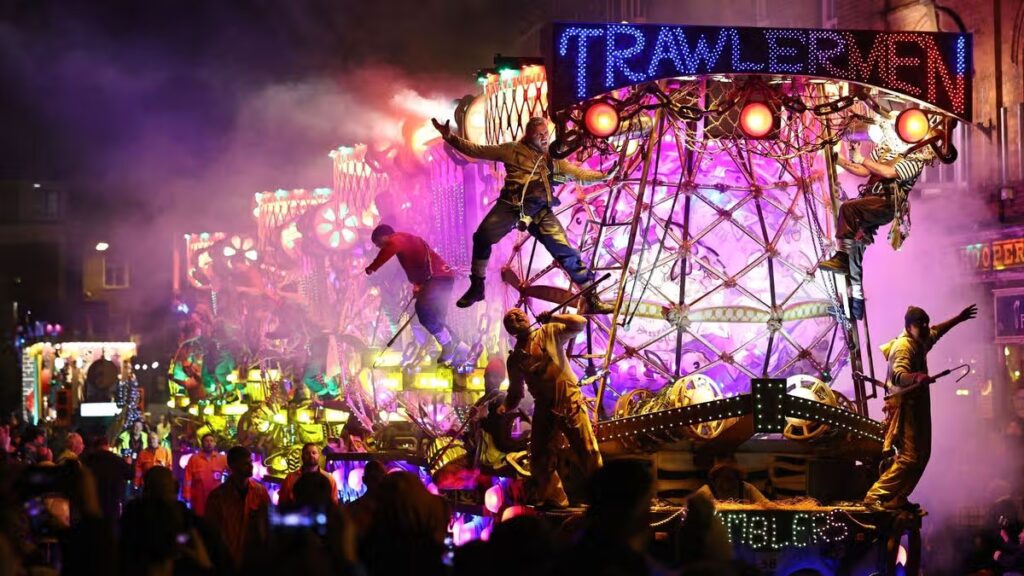

They are among the biggest events in the country and are right on our doorstep
They are the biggest events of their kind in Europe, can attract more than 100,000 people to a unique spectacle, and are on Bristol’s doorstep every year.
But many in Bristol – particularly those who recently arrived in the city – may not have ever been to one of the huge Somerset Carnivals that take place every autumn.
So we’ve put together a handy guide for these must-see events, so there’s no excuse now to miss out on what is one of the biggest cultural events in the West Country calendar.
The carnivals evolved out of the pagan traditions of light festivals as the winter nights draw in, and the Somerset traditions were cemented in the 1600s as celebrations of the defeat of Catholic terrorists in the Gunpowder Plot – Guy Fawkes, 1605, treason and all that.
Want to see more of the stories you love from BristolLive? Then make us your preferred source on Google. To add BristolLive as a preferred source, simply click here
The carnival season is actually well underway already, with three different ‘circuits’ – the Wessex Grand Prix Circuit, East Devon Circuit and the South Somerset Circuit. These involve smaller carnivals in towns across Wiltshire, Dorset, Devon and Somerset, often on Saturday evenings, from late August, through September and October, and combine local entries with some of the carnival clubs with illuminated carts.
But after the clocks go back, entrants from the three circuits come together for the Guy Fawkes Circuit, which sees the huge illuminated carts compete with each other over two gruelling weeks where eight different towns host the massive carnival events.
Here’s everything you need to know about attending one of the events.
What are this year’s dates and times?
We’ll get to the main events – the big Guy Fawkes Circuit – below, but the three regional circuits are well underway already, with events in September. So if you want to check out a smaller, local town event, here are the lists of what’s to come.
The Wessex Grand Prix began a couple of weeks ago already and is focused on east Somerset, north Dorset and west Wiltshire.
- Saturday, October 3, from 7.15pm – Shaftesbury
- Saturday, October 10, from 7.15pm – Gillingham (Dorset)
- Friday, October 16, from 7.30pm – Wincanton
- Saturday, October 17, from 7pm – Castle Cary
- Saturday, October 24, from 7pm – Trowbridge
- Saturday, October 31, from 6.45pm – Warminster
The second of four carnivals on the South Somerset circuit is this weekend.
- Saturday, October 3, from 7.15pm – Ilminster
- Saturday, October 10, from 7.30pm – Chard
- Saturday, October 17, from 7.30pm – Taunton
The East Devon Circuit began back at the start of September and has two more left to go.
- Saturday, October 3, from 7.30pm – Budleigh Salterton
- Saturday, October 24, from 7.30pm – Honiton
And then, all the big carts from all three circuits come together for the big Guy Fawkes Circuit in November… start planning which one to go to now…
- Saturday, November 7, from 6pm – Bridgwater
- Monday, November 9, from 7.30pm – Burnham on Sea
- Friday, November 13, from 7pm – Weston-super-Mare
- Saturday, November 14, from 7pm – North Petherton
- Monday, November 16 from 7.30pm – Midsomer Norton*
- Wednesday, November 18 from 7.30pm – Shepton Mallet
- Friday, November 20 from 7pm – Wells
- Saturday, November 21 from 6.45pm – Glastonbury
*(this is an independent carnival, not part of the official Guy Fawkes Circuit)
Getting there from Bristol
All the Somerset Carnivals are within an hour’s drive of Bristol, but some are a bit more accessible than others. The closest and easiest to get to from Bristol is Weston Carnival, which has the added bonus of being accessible by public transport too. The X1 bus service runs from Bristol to Weston through the night, and GWR usually put extra trains on to cope with the numbers of people coming from Bristol – and going back afterwards.
Two carnivals – Glastonbury and Wells – are on the famous 376 Mendip Explorer bus route, which runs from the bus station in Bristol, past Temple Meads, and out up the Wells Road through Totterdown, Knowle and Whitchurch, but a note of caution with that – check any changes to the routes with First because the carnival itself will often shut down the roads in the town centres.
Parking can be an issue but often the organisers will often have designated parking areas signposted on the road in to the town. North Petherton Carnival, for instance, is just off the M5 at junction 24, with parking in the Huntworth Business Park around the Bridgwater motorway services.
One handy hint is that, as you can see from the list above, the Somerset Carnivals is not just Bridgwater. That’s the first and the biggest in terms of crowds, but there are seven others that follow in the fortnight after that will have pretty much the same carts on show. So don’t think you have to go to Bridgwater Carnival to get the Somerset Carnival experience.
Here are ten more handy hints for the new carnival-goers.
1 Plan your route
If you’re driving, try to find a parking space on the Bristol side of the town you’re driving to. Roads are often closed and the towns are effectively closed to through traffic maybe an hour or two before the scheduled start, and a while after the end too.
If you park somewhere in a town centre, within the closed off area, or on the other side of the town, you could find yourself stuck the wrong side of a road closed sign afterwards. Each carnival has its own website which will have more detailed route maps and road closure timings.
2 Get there early
The crowds can be six deep along the sides of the roads, so getting there early and staking your place at the front is a good way to be able to see everything.
3 Be prepared to wait
Getting there early obviously means a long time waiting. And the other thing to factor in is that the procession can take two or three hours. So check the route and take that start time as a guide. It could be a couple of hours before you see anything, if you’re waiting at the end of the procession.
4 Wrap up warm
Not many of us choose to stand outside in one place on the side of the road in November – it might be freezing, it could well be raining or windy. So camping chairs and blankets are a good investment to take, along with snacks, drinks, sweets – and phone chargers.
5 Choose your spot
It can get very very crowded, particularly in the centre of the towns where the carnival is. But the routes are often a couple of miles long, so don’t be afraid to check out the route on the individual carnival’s website, and head a bit away from the busy areas, to be guaranteed a good view. There’ll still be lots of people around, but without it being too crowded.
The routes also have two or three rest areas for the processions. These are sections of the route where those watching are not encouraged to stand to watch because, as the carts pass through, those on board can break character, have a rest, stretch their limbs and grab a drink or something to eat.
So don’t be fooled by the empty pavements in these little stretches – it’ll be like watching a play from the corridor to the dressing rooms in a theatre.
6 Buy a programme
They are often just a pound or two, and it’s a good way of supporting what is essentially a free event for the spectator. They will also contain a list of every entrant, and a good way to remember or mark out your favourites. If you’re watching with family or friends, you could even use the programme to play judge and score each one as they pass you.
7 Don’t say the F-word
Most carnivals around the world describe the large trucks carrying people dancing or dressed up in bright costumes as ‘floats’, but not in the West Country. They are ‘carts’ and you’ll get a few frowns and will stand out as a newbie if you say ‘float’.
8 Know your carts
There are different kinds of carnival carts – with two different kinds of clubs that could send three different kind of carts out into the procession. There are junior clubs, which are often children and teenagers on board, and then the regular clubs, which will tend to be people on board of all ages.
Then there’s generally three styles of carnival cart. The biggest, brightest and most impressive are usually the grand ones which go for stunning sound and visual effects, with more serious, often historic themes, like – for example, a pirate ship with pirates hanging off the sides of the ship, or the storming of the Bastille, or something else very active, loud and visual.
Then there are the comedy, or less serious, entries, which are often even more colourful and fun, but rely on clever gags and humour more than visual effects like revolving spaceships and dry ice.
And then there are the tableau carts. It’s a common observation that the numbers of clubs doing tableau carts has declined over the years, as clubs have been in an arms race to go for more elaborate animatronics, bigger sound systems and more swash and buckle, but there are still some clubs that do tableau entries and these are often the most impressive.
The tableau entries involve elaborately dressed carts and people in costume and character who get into position and remain absolutely motionless as they pass you. It’s like watching a real-life painting and if done well, can be so memorable.
9 Support the entrants on foot
In between the huge illuminated carts are often dance groups, majorettes, families, individuals or children who have entered with much smaller scale, hand-made entries who are just walking around instead of being high up in an elaborate stage. They can sometimes get a bit missed in between the loud booming carts, so give them an extra cheer of encouragement or a round of applause when you see them. There will also be local dance groups and cheerleading squads too – and the same applies to them
10 Take loads of cash
And by cash I mean coins. The carnivals rely on donations, and there will be little trucks that collect money from the crowds by inviting you to throw your coins into targets. Make sure you take a big bag of 10p pieces, or grab one of the volunteers going round before the start offering to change a fiver for some coins.