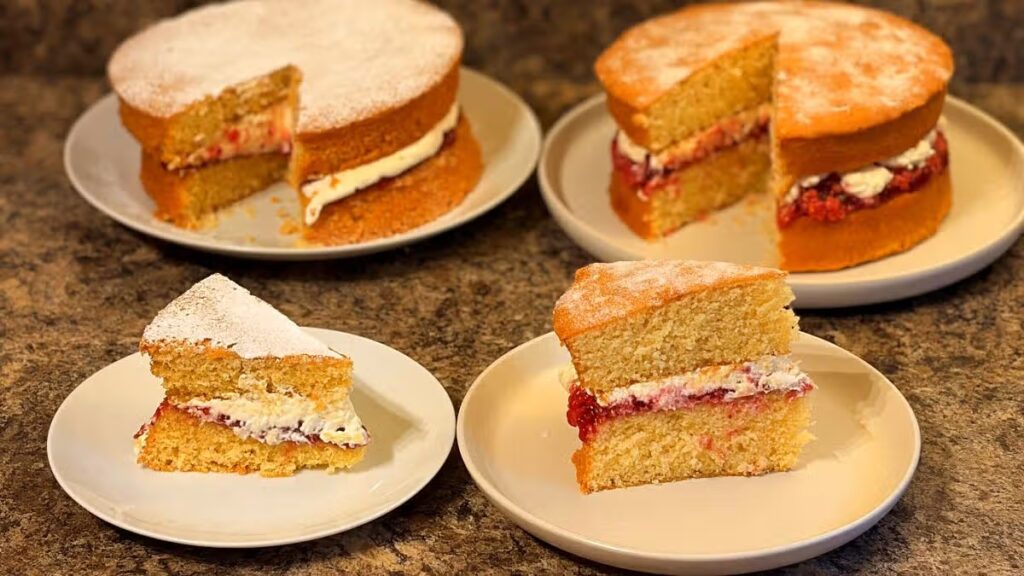

I compared Nigella Lawson’s and Paul Hollywood’s Victoria sponge cake recipes, and the results surprised me – here’s which one came out on top.

I compared Paul Hollywood’s sponge cake recipe to Nigella Lawson’s – 1 tasted better
The Victoria sponge cake, also known as the Victoria sandwich, holds a special place in British baking culture and is my personal favourite. This beloved treat consists of two light, fluffy sponges held together with raspberry jam and either fresh cream or vanilla buttercream.
Having previously put Victoria sponge recipes from baking icon Mary Berry and TV chef James Martin head-to-head — and crowning Mary’s the winner — it felt only right to continue the challenge.
With the latest series of The Great British Bake Off now gracing our television screens, I decided to pit classic bakes from judges Nigella Lawson and Paul Hollywood against one another, and what could be more quintessentially British than a Victoria sponge?
Following both recipes precisely as instructed on their respective websites, a clear winner emerged. Neither cake was a disaster by any means, but one truly stood out as exceptional — and not necessarily the one I’d anticipated.
Paul Hollywood’s Victoria sponge cake recipe
I kicked things off with Paul Hollywood’s Victoria sponge recipe, which calls for nothing more than basic store cupboard ingredients and, much like Mary Berry’s version, employs the straightforward all-in-one method.
Ingredients
For the cake
- 230g of plain flour
- Four teaspoons of baking powder
- Pinch of salt
- 230g of caster sugar
- 230g of softened unsalted butter, plus extra for greasing
- Four medium eggs
To finish
- 150ml of whipping cream
- 100g of raspberry jam or more if you like
- Icing sugar for dusting
Method
I began by heating my oven to 160°C Fan, lining the base of two cake tins with baking parchment and lightly greasing the sides with butter.
To prepare the sponges, I combined the flour, baking powder, salt, sugar, butter and eggs in a large mixing bowl. Using a hand-held electric whisk, I blended the ingredients together until everything was thoroughly incorporated.
I was careful not to overmix, as Paul warned that “this will tighten the mixture and result in a rubbery texture”.
I divided the mixture evenly between the two cake tins and baked them for 30 minutes. The sponges emerged a beautiful golden-brown colour, though I was a touch deflated to find they hadn’t risen as much as I’d anticipated, particularly given I’d used four teaspoons of baking powder.
Regardless, I left both sponges to cool in their tins for a few minutes before transferring them to a wire rack.
Once both sponges had cooled completely, I chose the better-looking one for the top layer and placed the other, top side down, on my serving plate. I spread the jam generously over the bottom layer, then whipped the cream to soft peaks and spooned it over the jam.
I carefully positioned the second sponge on top and finished with a dusting of icing sugar before serving.
How did it taste?
Although the sponges didn’t rise as well as expected, they remained thoroughly delicious and utterly difficult to resist. Having never worked with whipping cream before, I found myself favouring its lighter consistency over double cream.
Nigella Lawson’s Victoria sponge cake recipe
Having popped Paul Hollywood’s Victoria sponge cakes into the oven, I turned my attention to Nigella’s recipe. The first thing that struck me about this version is that it calls for slightly more ingredients, with one in particular catching my eye – cornflour.
Despite having baked countless cakes over the years, I don’t believe I’ve ever reached for cornflour. Nigella, however, maintains that this ingredient “creates cakes that are exceptionally light and tender”.
Alongside the additional ingredients, Nigella’s Victoria sponge recipe also demands more steps and ultimately took me considerably longer to work through.
Ingredients
For the cake
- 225g of very soft unsalted butter (plus extra for greasing)
- 225g of caster sugar, plus two teaspoons for dusting
- One teaspoon vanilla extract.
- 200g of plain flour
- 25g of cornflour.
- Two and a half teaspoons of baking powder
- A pinch of salt
- Four large eggs, at room temperature
- Two to three tablespoons of milk, at room temperature
For the filling
- 75g of seedless raspberry jam
- 150g of fresh raspberries
- 150ml of double cream
Method
Just as with Paul’s recipe, I began by preheating the oven to 160°C Fan, greasing the sides of the tins with a little butter and lining the bases with baking parchment.
To prepare the sponges, I started by beating the butter and sugar together until wonderfully light and fluffy using a hand-held whisk, before incorporating the vanilla extract.
In a separate, smaller bowl, the recipe then instructed me to mix together the flour, cornflour, baking powder and salt.
Next came the task of beating one egg at a time into the creamed butter and sugar, followed by one tablespoon of the flour mixture, continuing in this fashion until all four eggs had been incorporated. This proved to be the most time-consuming part of the entire preparation.
With the eggs fully combined, I thoroughly scraped down the bowl before gradually whisking in the remaining flour mixture.
Once everything was silky smooth, I began beating in the milk, one tablespoon at a time, until the batter fell effortlessly from the beaters. Despite being a lengthy process, the batter had developed a wonderfully light and airy consistency.
I split the cake batter equally between the two prepared tins and placed them side by side in the oven for approximately 28 minutes. The cakes emerged with beautifully golden tops that bounced back at the touch. I removed them from the oven and set them aside to cool.
When the time came to assemble the cake, I spread jam across the bottom sponge layer before introducing one additional ingredient to Paul’s recipe – fresh raspberries. Before adding the fruit, I placed the raspberries on a plate and gently crushed them with a fork, then distributed them evenly over the jam.
This lent a pleasant freshness to the cake and helped offset the sweetness of the sponge and jam.
Over the jam, I added whipped double cream as Nigella recommends, then positioned the second sponge on top and sprinkled caster sugar over it to give the cake a light, sparkly dusting. Surprisingly, I preferred the cake topped with caster sugar to icing sugar, as I felt like it was a little more subtle.
How did it taste?
Nigella’s Victoria sponge was wonderfully light, moist and packed with more flavour than Paul’s, which came as quite a surprise. The Bake Off judge was certainly right that the cornflour helps to achieve a lighter and more tender sponge; however, that airy texture can equally be attributed to thoroughly creaming the butter and sugar together before incorporating the remaining ingredients.
The addition of fresh raspberries to the filling was a particularly welcome touch, as was the use of caster sugar rather than icing sugar.
While both cakes were undeniably delicious, Nigella’s recipe ultimately took the crown for both appearance and flavour.