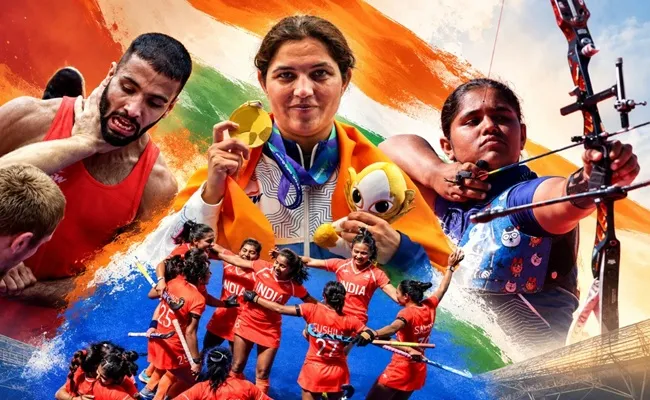

India has finished fourth at the Asian Games, but it is time to ask why so many of our champions succeed despite the system, not because of it.
Indian sport has given us plenty to celebrate lately. At the Asian Games in Aichi-Nagoya, India finished fourth on the medal table with 85 medals, including 21 gold, across athletics, shooting, archery, boxing, kabaddi, hockey and more.
What stands out is not just the medal count. Winning gold against sporting powers such as China, South Korea and Japan, which consistently dominate international competitions, is a remarkable achievement. Given their track record, beating them at the Asian Games can often feel as challenging as competing at the Olympics.
But as proud as I am, a few thoughts have been bothering me for a long time.
A Country of One Sport
India has a rich cricketing heritage. Ask a random person to name ten cricketers, and they will probably give you twenty. Ask them to name ten players from any other sport, and most will stop at three or four, with the first name almost always being P.T. Usha. Ask for famous women athletes outside cricket, and the list often ends at two.
Almost 89 percent of India’s sports economy comes from cricket, according to WPP Media’s Sporting Nation report for 2025, leaving just 11 percent for kabaddi, football, hockey and everything else.
Naturally, more young people aspire to become cricketers than athletes in any other sport, and as a result, we leave a great deal of talent untapped.
Parents and students often complain that schools and colleges do not encourage other sports. They are right. The system is heavily skewed.
I know this from personal experience.
During my college days, we would send about fifteen students to the university cricket tournament and fewer than ten, in total, for all other sports combined. Those fifteen players would enjoy the dormitory stay, lose in the first or second round and return empty-handed. This happened year after year.
Meanwhile, students competing in other sports quietly brought back medals, which were pinned on the notice board and soon forgotten.
My own physical education teacher would not allow me to compete at the university level even when I offered to pay my own expenses. That created real resentment in me, and I do not want any young person to go through the same experience.
Jewels That Need a Little Polish
One athlete who caught my attention at these Games is Baranica Elangovan, who won bronze in the women’s pole vault with a clearance of 4.15 metres, giving India its first Asian Games medal in the event.
As a child, the only name I knew in pole vault was the legendary Ukrainian Sergey Bubka.
To see an Indian woman overcome the odds and stand on that podium is phenomenal.
We have such jewels across the country. All they need is a little encouragement and support.
What Can Be Done
Here are a few ideas for discussion, and I welcome the views of readers, educators and policymakers.
Rebalance public funding: Cricket can largely sustain itself through sponsorship and broadcasting revenue. Government sports budgets should therefore focus more heavily on other disciplines.
Share the endorsement spotlight: Private companies should consider ensuring that at least half of their sporting brand ambassadors come from non-cricket disciplines.
Promote sport as health: Running, swimming, badminton, football and other sports should be encouraged not merely as competitive activities but as part of everyday fitness.
Protect time for sport: Colleges and universities should publish tournament calendars well in advance and keep at least a month free around major sporting meets so that students can participate without academic disruption.
Build facilities for every sport: Almost every village and town has some kind of cricket ground, but very few have even a basic running track or facilities for other sports.
Scout talent at the grassroots: A transparent national system should identify promising children in villages and small towns and provide professional coaching from an early age.
Make sport a real subject: With around 40 percent of children studying in private schools, many of which appoint a physical education teacher only in name, sport should become a mandatory subject with compulsory participation. Governments should inspect schools and penalise institutions that fail to comply.
Invest before the medal: Governments often announce rewards worth crores after athletes win, but spend comparatively little on producing champions. Investment should come first in the form of coaching, facilities, nutrition and training. Afterward, a stadium, sporting facility or road could be named after the champion along with a modest financial grant. Successful athletes can also earn substantial income through endorsements.
Open private-sector jobs to sportspersons: Companies should consider reserving at least one percent of jobs for sportspersons, providing them with a respectable and secure career after retirement from competitive sport.
Not a Criticism, but a Call
I am not criticising the government. Out of curiosity, I searched Google to find out which countries provide government jobs to sportspersons. India was the only country that prominently appeared in the results because of its sports quota in public-sector recruitment.
That is a policy to be proud of, and I believe the private sector should follow by setting aside employment opportunities for sportspersons and military veterans.
Cricket will always have a special place in our hearts. But a nation of 1.4 billion people cannot be defined by a single sport.
Give our children the grounds, the teachers, the coaching and the time, and the medals pinned quietly on notice boards will one day move to the front of the hall.
By Chakrapani Innamuri