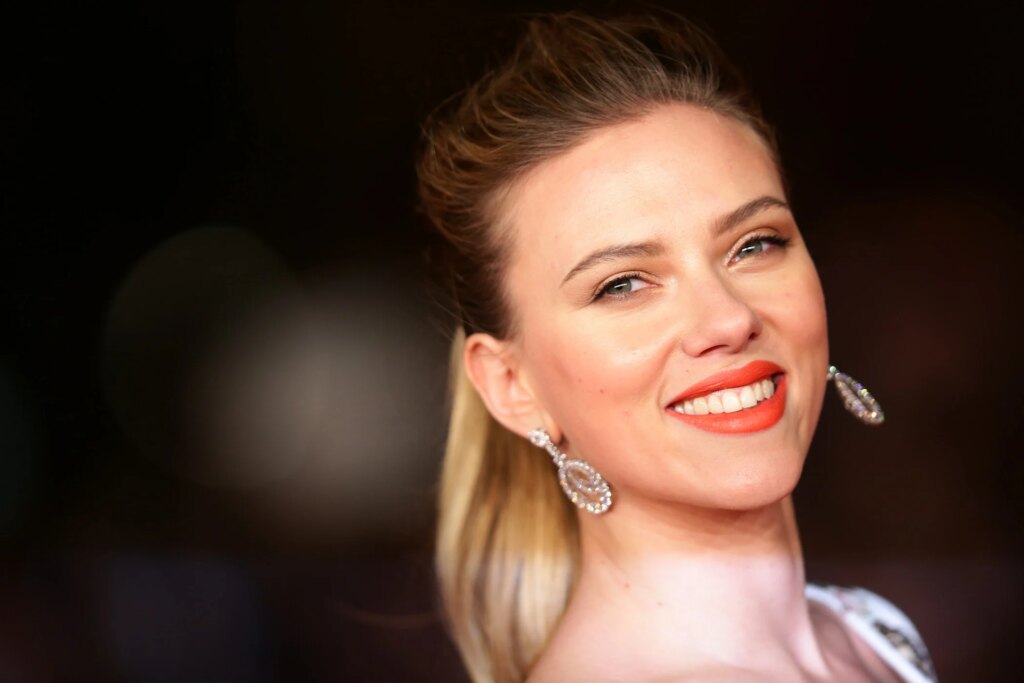

Who is the highest-paid actor in the world? The answer depends on whether you’re measuring annual earnings, guaranteed salary or the final amount an actor takes home after backend participation.
In the latest completed calendar year, Adam Sandler was Hollywood’s highest-paid actor, earning $48 million from film and television in 2025 after representation fees. But the biggest individual Hollywood paydays operate on an entirely different scale. An A-list actor can earn $20 million just for agreeing to make a movie, while streaming services sometimes guarantee $30 million, $40 million or even $50 million to compensate stars for giving up traditional backend participation.
When a star negotiates a percentage of a successful movie’s revenue, a seemingly ordinary salary can turn into a $50 million, $70 million or $100 million payday. That’s how Sandra Bullock turned a $20 million guarantee for “Gravity” into at least $70 million, how Jack Nicholson transformed a reduced $6 million salary for “Batman” into $60 million, and how Bruce Willis turned a $14 million salary for “The Sixth Sense” into a $114 million windfall that remains the largest clearly established single-film acting payday in Hollywood history.
The Highest-Paid Actors Right Now
The latest complete annual ranking covers calendar year 2025. The 20 highest-paid actors earned a combined $590 million from film and television during the year. The earnings figures below represent pretax income after representation fees. These are “gross” earnings before standard fees paid to agents, managers and attorneys. The ranking includes compensation from acting, producing and directing while excluding unrelated business investments, endorsements, commercials, social-media partnerships, stand-up comedy and podcasts.
Sandler’s return to the top was powered by his long-running Netflix relationship, including “Happy Gilmore 2” and “Jay Kelly.” Tom Cruise finished second thanks largely to “Mission: Impossible – The Final Reckoning,” once again using the kind of backend participation that has made him one of the most successful dealmakers in Hollywood history.
Mark Wahlberg‘s $44 million year was driven heavily by streaming, including an estimated $25 million payday for Amazon’s “Play Dirty.” Scarlett Johansson earned an estimated $20 million upfront plus participation for “Jurassic World: Rebirth,” while Brad Pitt secured something increasingly unusual from a streaming-backed studio: traditional gross participation in Apple’s “F1.” Denzel Washington, meanwhile, finished sixth with $38 million after representation fees.
Annual rankings can change dramatically from one year to the next because movie releases, production schedules and backend payments are uneven. They are useful snapshots of current earning power, but the truly extraordinary Hollywood paydays usually come from individual contracts.
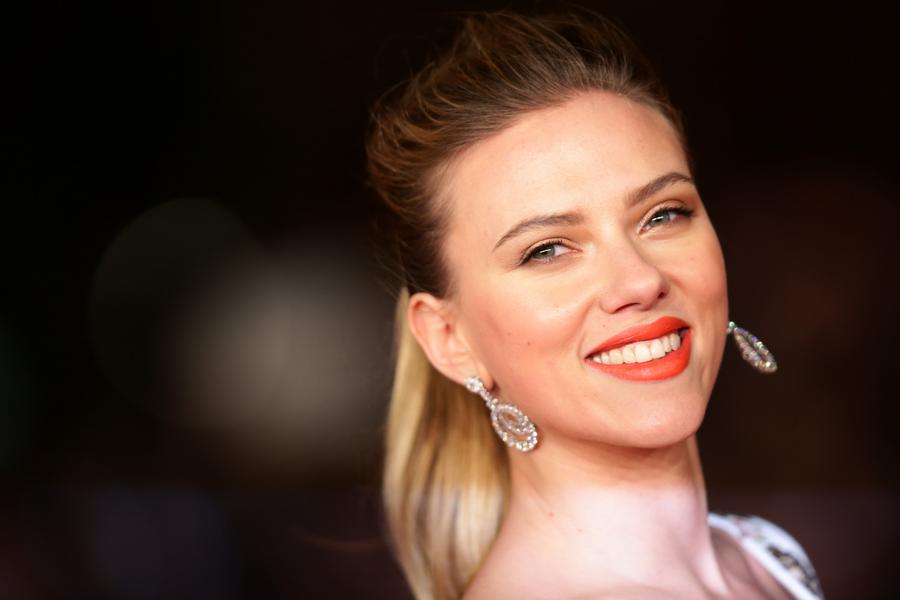
Vittorio Zunino Celotto/Getty Images
How Much Does An A-List Actor Make Per Movie?
For decades, $20 million has represented the symbolic benchmark for an elite Hollywood movie-star salary. Jim Carrey famously crossed that line when he received $20 million to make 1996’s “The Cable Guy,” a deal so large that rival studios complained it would permanently inflate star salaries.
They were right. Tom Cruise, Arnold Schwarzenegger, Mel Gibson, Harrison Ford, Tom Hanks, Denzel Washington, Julia Roberts, Leonardo DiCaprio and other major stars subsequently joined the $20 million club. But today’s compensation market is much less standardized than it was during the peak of the theatrical blockbuster era.
A star might receive $20 million upfront for a studio movie plus substantial backend participation. Another might accept a smaller guarantee in exchange for producing fees and gross points. Streaming services frequently go in the opposite direction, offering a larger guaranteed payment because there may be no conventional theatrical backend at all.
Recent examples show how wide the range has become. Johansson’s “Jurassic World: Rebirth” package included an estimated $20 million upfront plus participation. Wahlberg received an estimated $25 million for “Play Dirty.” Pitt’s reported agreement for Netflix’s “The Adventures of Cliff Booth” is worth $40 million, while Netflix’s deal for two “Knives Out” sequels allocated an estimated $100 million to Daniel Craig, effectively paying him about $50 million per film.
The $20 million salary is still an important Hollywood benchmark. It just isn’t the ceiling anymore.
Salary Vs. Backend: How A $20 Million Salary Becomes A $100 Million Payday
An upfront salary is guaranteed. If an actor signs for $20 million, that money is owed whether the movie becomes a billion-dollar blockbuster or disappears after opening weekend. Backend participation is different: it gives the actor a financial stake in the movie’s success.
The exact contract language can be worth tens of millions of dollars. A percentage of “net profits” may sound lucrative, but studios can typically deduct production costs, marketing expenses, distribution fees, overhead, interest and other charges before contractual net profits are calculated. Hollywood accounting has produced numerous cases where commercially successful movies generated little or no contractual net profit.
Gross participation is far more valuable. A powerful star may negotiate a percentage of defined studio receipts before many of those expenses are deducted, sometimes through a structure known as first-dollar gross participation. That does not literally mean receiving a percentage of every dollar handed to a movie theater; contracts define which revenues count and where in the financial waterfall the participant gets paid.
The strategy itself predates the modern blockbuster. Jimmy Stewart and legendary agent Lew Wasserman helped pioneer salary-for-participation deals decades ago, demonstrating that a star could sometimes make more money behaving like an owner than like an employee. For a deeper history, see our history of massive Hollywood paychecks and backend deals.
The Biggest Movie Paydays In Hollywood History
Backend participation is what turns large salaries into historic paydays. Several actors have earned $60 million or more from a single film, and a handful have reached or crossed the $100 million mark.
These figures represent total compensation generated by the movie, not simply the original acting salary. For the full ranking and the stories behind each deal, see our list of the largest movie paydays in Hollywood history.
These figures represent total compensation generated by the movie, not simply the original acting salary. For the full ranking and the stories behind each deal, see our list of the largest movie paydays in Hollywood history.
Getty Images
Why Bruce Willis Still Holds The Single-Movie Record
Bruce Willis was already commanding some of Hollywood’s largest salaries when he agreed to star in “The Sixth Sense.” His compensation included a $14 million guarantee plus unusually valuable backend participation and a share of home-video revenue.
That became enormously lucrative when “The Sixth Sense” earned more than $670 million worldwide and became the most-rented home-video title of 2000. Willis ultimately earned another $100 million through his participation, bringing his total compensation to $114 million.
Tom Cruise’s ultimate compensation from “Top Gun: Maverick” may have surpassed Willis in raw nominal dollars, but Cruise’s exact final take has never been publicly established. Willis’ $114 million therefore remains the largest clearly established single-film acting payday, and its value becomes even more extraordinary when measured in today’s dollars.
Read the full story of Bruce Willis’ $114 million “Sixth Sense” payday, or see our investigation into the largest single-movie actor payday of all time.
Four Contracts That Explain How Hollywood Stars Get Rich
The biggest paydays aren’t all created the same way. Four famous contracts illustrate four different ways actors have used leverage to turn a movie role into something much more valuable than an ordinary salary.
Jack Nicholson – “Batman”
Jack Nicholson normally commanded around $10 million per movie when he agreed to play the Joker in 1989’s “Batman.” Instead of taking his usual guarantee, he accepted $6 million and negotiated valuable participation tied to the movie’s success and related revenue. “Batman” earned more than $400 million worldwide and became a merchandising phenomenon, ultimately pushing Nicholson’s compensation to an estimated $60 million. His contract became one of Hollywood’s defining examples of a star accepting less guaranteed money in exchange for far greater upside.
Read the full story of Jack Nicholson’s legendary “Batman” deal.
Tom Hanks – “Forrest Gump”
When production costs on “Forrest Gump” became a problem, Tom Hanks gave up much of his guaranteed compensation and accepted gross participation instead. The movie became one of the biggest hits of the 1990s, and Hanks ultimately earned about $70 million.
The contrast with author Winston Groom makes the deal especially instructive. Groom’s contract gave him a percentage of net profits, and despite the film selling more than $600 million worth of tickets, Paramount’s accounting initially showed that “Forrest Gump” had generated no contractual net profit. The same movie produced dramatically different outcomes because one participant had gross points and another had net points.
Read more about Tom Hanks’ “Forrest Gump” salary gamble.
Sandra Bullock – “Gravity”
Sandra Bullock‘s “Gravity” contract was unusually favorable because she did not have to choose between security and upside. She received $20 million guaranteed against 15% of first-dollar gross, along with participation in home video, television licensing and other revenue.
When “Gravity” earned more than $720 million worldwide, Bullock’s compensation reached at least $70 million. Unlike stars who surrendered most of their salary to obtain backend participation, Bullock had both a $20 million floor and enormous upside.
Read the full story of Sandra Bullock’s extraordinary “Gravity” contract.
Tom Cruise – The Repeatable Backend Model
Tom Cruise is unusual because his giant backend paydays are not one-off accidents. As both star and producer, Cruise has repeatedly used his control over major projects to negotiate compensation structures that allow him to participate deeply in their success.
The first “Mission: Impossible” produced an estimated $70 million payday. “Mission: Impossible II” produced about $100 million, “War of the Worlds” another $100 million, and “Top Gun: Maverick” more than $100 million. For “Maverick,” Cruise accepted an upfront salary of roughly $13 million in exchange for valuable first-dollar participation; when the film generated nearly $1.5 billion worldwide, that decision became vastly more lucrative than taking a conventional $20 million or $30 million salary.
Cruise’s career demonstrates the financial advantage of combining star power, producing control and backend ownership. One extraordinary contract can make an actor rich. Repeating that structure across multiple blockbusters can create an entirely different level of wealth.

Getty
Streaming Changed The Meaning Of A Movie-Star Salary
The rise of streaming disrupted the traditional backend model because a Netflix or Amazon movie does not necessarily generate the same visible revenue streams as a conventional theatrical release. There may be no meaningful box-office gross against which participation can be calculated, and a film’s value to the platform may come from attracting subscribers, reducing churn or increasing engagement rather than generating direct transactional revenue.
Streaming services responded by paying more money upfront. Instead of offering a star $20 million plus a percentage of future profits, a platform can guarantee $30 million, $40 million or $50 million and effectively buy out the actor’s backend.
Daniel Craig’s “Knives Out” sequel agreement is one of the clearest examples, with an estimated $100 million allocated to him across two movies. Brad Pitt’s reported “The Adventures of Cliff Booth” salary is $40 million, Mark Wahlberg received an estimated $25 million for “Play Dirty,” and Cameron Diaz’s return to acting included a two-picture Netflix agreement valued at roughly $45 million.
The tradeoff is straightforward. A huge streaming guarantee gives an actor certainty, but it also removes much of the possibility that an unexpectedly enormous hit will transform an ordinary salary into a “Top Gun: Maverick”-style $100 million payday. See our complete ranking of the biggest actor paydays of the streaming era.
Timothy Hiatt/Getty Images
A Look Back At The Original 2014 Ranking
Celebrity Net Worth originally published this page on October 6, 2014. The original version ranked actors based on earnings between June 2013 and June 2014. The methodology and reporting conventions used at the time are not directly comparable to today’s annual ranking, but preserving the list provides a useful snapshot of what Hollywood’s compensation landscape looked like more than a decade ago.
Sandra Bullock’s position at the top was powered largely by “Gravity,” which is fitting because her contract remains one of the best examples of the difference between a large salary and a truly extraordinary movie payday.
The distribution business has changed enormously since that original ranking. DVDs collapsed, streaming exploded and studios became much more reluctant to hand out unlimited first-dollar gross participation. What has not changed is the underlying economics: the biggest guaranteed salaries go to actors with leverage, while the truly historic paydays come when stars use that leverage to secure a piece of the upside.
For television compensation, see our guide to the highest-paid TV actors and the biggest salaries per episode.