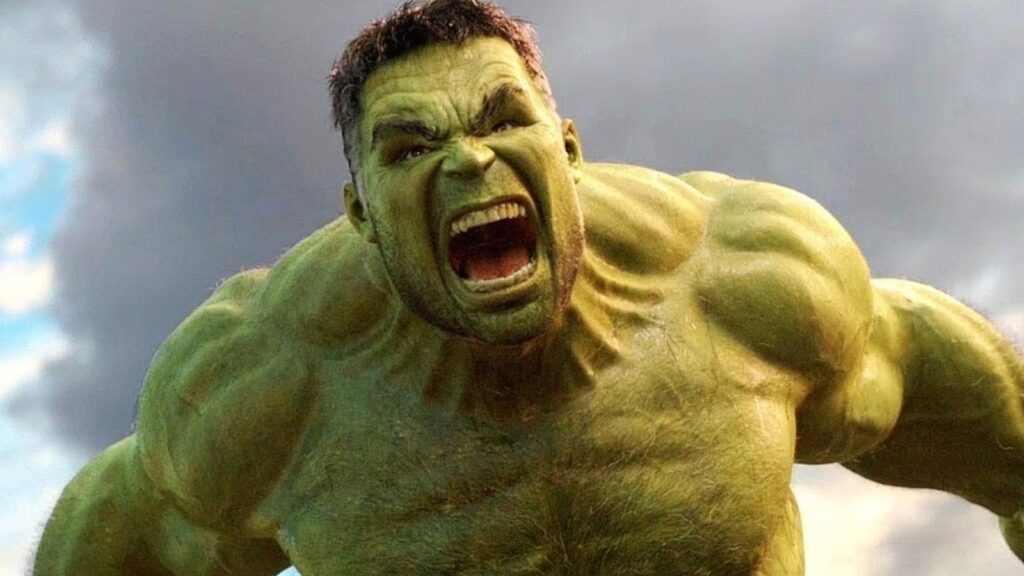

In every Look Back, we examine a comic book issue from 10/25/50 years ago (plus a wild card every month with a fifth week in it). This time around, I’m a bit late as I look at July 2016’s shocking death of the Hulk during the Civil War II crossover event.
In the last decade or so, comic book fans have grown accustomed to the corporate synchronicity between the world of comic books and the world of comic book FILMS, where comic book companies figure that it makes sense to tie the events of the comic books to the events of the very popular movies based on their characters. There tends not to be as much of an overlap as you would think, but it is totally reasonable for the companies to still want to try it (after all, there was a HUGE boom in Batman comic book sales when the Batman movie came out, so why NOT chase that hope?).
Therefore, when Captain America: Civil War came out, loosely adapting the hit Marvel crossover event, it made sense to do a sequel to that event, and while Civil War II definitely didn’t hit the same way as the original event, it still ended up having a major impact on the Marvel Universe, especially with the death of the Hulk in June 2016’s Civil War II #3 by Brian Michael Bendis, David Marquez, Olivier Coipel, Justin Ponsor, and Clayton Cowles.
What Was the Conflict Behind Civil War II?
The concept of the series was that a new Inhuman (this was during the period where new Inhumans were springing up around the world due to exposure to the Terrigen Mists, so that people who didn’t even know that they WERE Inhumans, like Kamala Khan, suddenly had powers kick in) named Ulysses revealed that his power was the ability to see into the future.
He told the Inhumans about an impending magical attack, and Earth’s heroes were all informed, allowing everyone to band together to save the planet…
-
 Image via Marvel
 -
 Image via Marvel
 -
 Image via Marvel
It is a great success, and Captain Marvel quickly embraces the idea of using the abilities of this kid (named Ulysses) to help stop other future attacks.
This, though, goes poorly when he announces a future attack by Thanos. Carol and a number of other heroes, including her good friend, She-Hulk, and her boyfriend, War Machine (who happens to be Iron Man’s best friend, James Rhodes), go to attack Thanos before Thanos even launches his own attack.
In the ensuing battle, War Machine is killed, and She-Hulk is badly injured. Tony does not take the news well that his best friend was just killed fighting someone who hadn’t even DONE anything yet…

This leads to a conflict between Carol and Tony over whether attacking people over premonitions is ethical. Tony decides to kidnap Ulysses to do tests on him. The Inhumans do not take that well, and the Avengers go with them to Tony’s headquarters to avoid a battle. While Tony is testing Ulysses, Ulysses has a new vision, but because he is hooked up to Tony’s machines, everyone present witnesses the vision…which shows the Hulk (who had recently seemingly been cured, with his Gamma powers moving over to Amadeus Cho) tearing apart the various superheroes in a horrific rampage.
How Did the Hulk Die in the Story?
Everyone heads over to where Bruce Banner has been hiding out, and they confront him, and he is all freaked out, as he has not Hulked out in quite some time, and he believes that he finally WAS cured. However, the vision was certainly VERY real to everyone (note that this issue is told in flashbacks while at a court trial).

Remember, we know that these visions are not the LITERAL future, because they were able to be stopped, so they could only inherently be POSSIBLE futures. So therefore, there are naturally a lot of arguments about whether they can actually do anything to Banner based on a vision of a POSSIBLE future.
Beast, though, makes things worse when he reveals that he has looked through Banner’s documents, and that Banner is experimenting on himself ot make sure that he doesn’t turn back into the Hulk ever again, but, of course, the fear is that one of those experiments could be what actually turns him INTO the Hulk again….

Banner is, naturally, angry at the invasion of his privacy, and he begins to get upset, and then suddenly, he is shot dead…

We then learn that this whole thing has been a trial for Hawkeye over him killing Bruce Banner.
Hawkeye then reveals that Banner specifically ASKED him to kill him if he ever hulked out again….
There is then the question of whether the Hulk actually WAS going to Hulk out, but Hawkeye insists that his vision is better than everyone else, and he could see Banner turning into the Hulk before anyone else could notice…

Hawkeye is cleared of wrongdoing, and that, of course, is more unsettling than anything else, that they just KILLED BRUCE BANNER based on a vision of a POSSIBLE future. It is here that Tony and Carol’s conflict over the use of Ulysses’ powers took a major change.
Al Ewing brought the Hulk back by revealing that the Hulk was, in effect, immortal (which was then explored in the pages of The Immortal Hulk).
If you folks have any suggestions for October (or any other later months) 2016, 2001, 1976 and 1951 comic books for me to spotlight, drop me a line at brianc@cbr.com! Here is the guide, though, for the cover dates of books so that you can make suggestions for books that actually came out in the correct month. Generally speaking, the traditional amount of time between the cover date and the release date of a comic book throughout most of comic history has been two months (it was three months at times, but not during the times we’re discussing here). So the comic books will have a cover date that is two months ahead of the actual release date (so October for a book that came out in August). Obviously, it is easier to tell when a book from 10 years ago was released, since there was internet coverage of books back then.