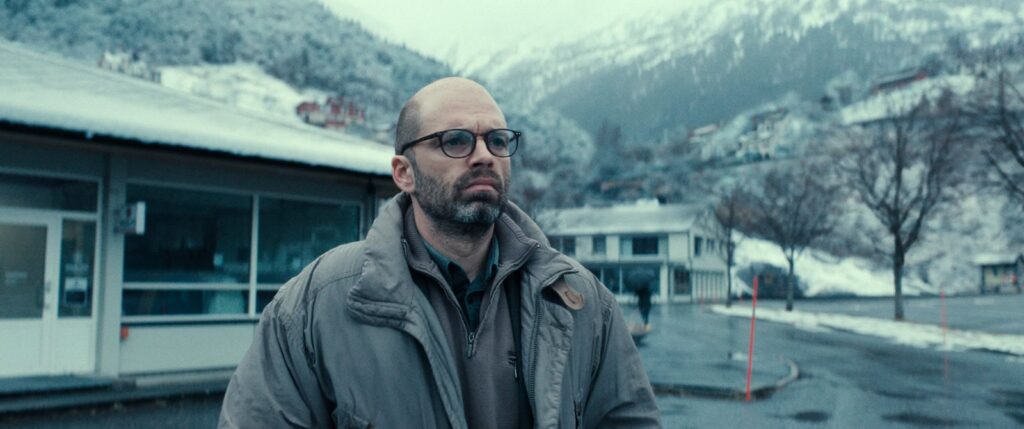

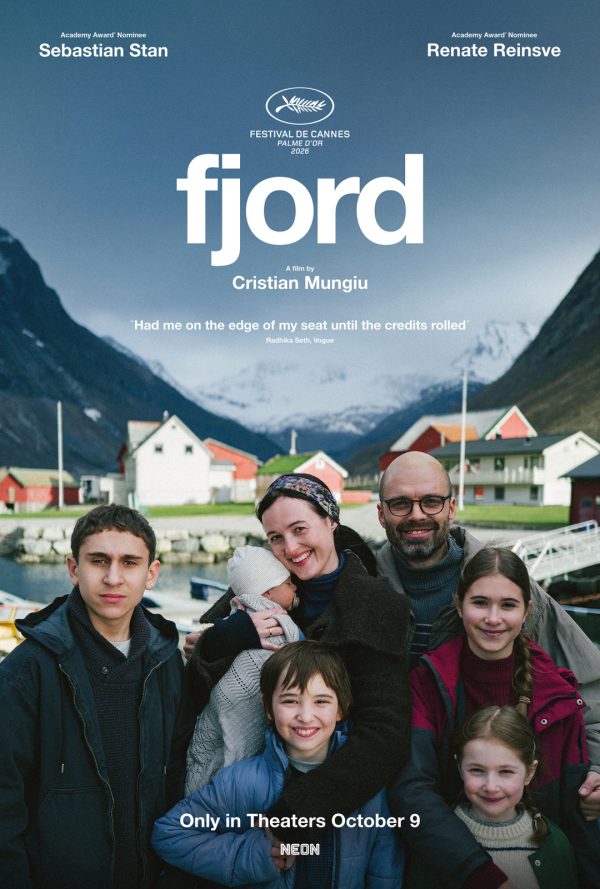
Fjord, 2026.
Written and Directed by Cristian Mungiu.
Starring Sebastian Stan, Renate Reinsve, Lisa Carlehed, Henrikke Lund-Olsen, Vanessa Ceban, Jonathan Ciprian Breazu, Ellen Dorrit Petersen, Lisa Loven Kongsli, and Markus Tønseth.
SYNOPSIS:
An immigrant Romanian family living in Norway is subject to an investigation and faces the scrutiny of the local judicial system.
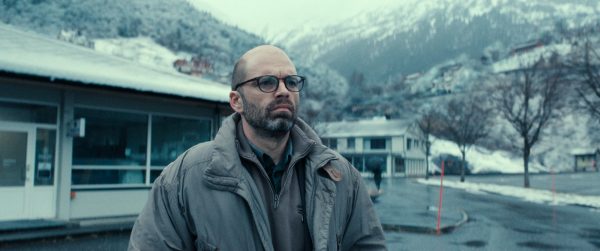
From writer/director Cristian Mungiu, Fjord is a 146-minute Norwegian thorny sociopolitical drama, or rather a chilly collision course between parenting, devout evangelicalism, and CPS; it simultaneously flies by due to a scintillating screenplay yet, aside from the occasional avalanche in the picturesque backgrounds of the town (courtesy of cinematographer Tudor Vladimir Panduru), is methodically presented as cold and clinical, as if to ensure viewers feel every minute not out of boredom, but to keep the complexities of the dynamics turning over and over inside their heads. This means questioning character allegiances and even finding pockets of empathy within parents whose beliefs on raising children without modern technology or contemporary music, excessive faith practices, and unorthodox punishments, and sometimes siding with them to the point of feeling shaken by the finale, wherein another layer rises from under the surface, seemingly driving home something else the movie is about.
Whether or not Norway’s Child Protective Services acting morally suspect with an ulterior motive of religious persecution is a culturally specific dilemma to the country itself or the result of something broader on the filmmaker’s mind is also worth pondering. Then there is the uneasiness of not wanting these children separated from their parents, despite all there is to disagree with them over. Considering that Sebastian Stan’s software developer father, Mihai Gheorghiu, is Romanian, moved his Norwegian wife, nurse Lisbet (Renate Reinsve), and five children of varying ages back to her homeland, and isn’t entirely fluent in the latter language, his statement in the investigation could also be misinterpreted. He admits that in the past he has “slapped them on the butt” as a form of punishment, although there are times when CPS worker Gunda (Ellen Dorrit Petersen) seems to willfully take that as a harsher action, such as hitting.

That’s also where most of the internal wrestling is done. Yes, Mihai has technically laid hands on his children, which is justifiably culturally taboo, but to equate this to a family man American dad in the 1950s taking off the belt and giving them a whooping is hardly fair. One can also see why a systemic institution such as CPS would also want to leverage that to take action over the fact that he instills homophobic beliefs into his children, and essentially raises them not just uncomfortably religiously devoted, but disconnected from modernity or anything resembling fun. That will certainly feel like abuse or heartless parenting to some, myself included, but that is also only a matter of differing opinions, no matter how much one feels that raising children to believe in 2026 that families are between a man and a woman is outdated, problematic, and plain wrong. The limits of tolerability are put on trial just as much as the parents.
It is also a remarkable testament to Sebastian Stan and Renate Reinsve, alongside a carefully crafted script, to find the humanity in people who could have come across as cartoonishly evil. A case can also be made that the film sands down some of the edges of a conservative family like this, giving a more likable depiction that serves the narrative’s complexities.
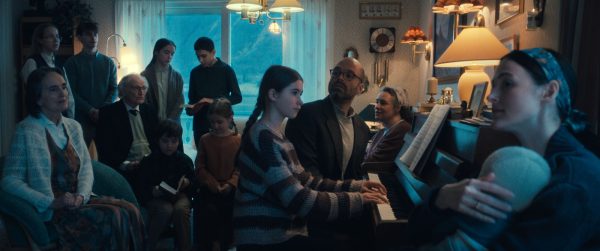
Rather than being allowed to go to a neighbor’s birthday party, the children’s world seems to revolve around a strict points system for how well they learn and practice Christianity. In theory, this is harmless, until one sees how the children interact maladjustedly and come across as detached from normal teenage behavior. Of the five children, the story mostly follows Elia (Vanessa Ceban) and her brother Emmanuel (Jonathan Ciprian Breazu) as they increasingly hang around the moodier, more rebellious Noora (Henrikke Lund-Olsen), who sneaks out at night using the family boat and occasionally acts out through minor self-harm.
Her father and school headmaster Mats (Markus Scarth Tønseth) don’t know how to handle her attitude (and don’t appear to know the extent of her behavior), which also casts doubt on relaxed, progressive-minded parenting being sunshine and rainbows. Funny enough, the problem child comes from this upbringing. Perhaps it is simply an astute look at two different sides of extremism.
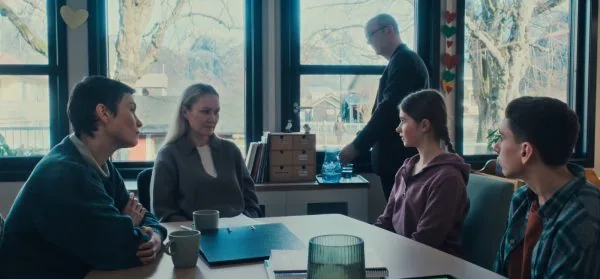
Meanwhile, Lisbet enters more of a personal caretaker role for that family’s depressed, ill, and immobile Ake (Øyvind Venstad Kjeksrud), in a superfluous subplot even if it does play a role in showing that, while the religious beliefs run deep, they are technically functioning in society and doing right by whomever they work with. Neither she nor her husband are depicted as pushing their beliefs onto anyone but their own. Mats’ wife, Frida (Lisa Loven Kongsli), also sets aside the culture clash to see their views and serve as the family’s attorney in the upcoming court case.
Said court case comes about as Elia arrives at school one morning with visible marks on her hand, and a litany of possible explanations, yet CPS is instantaneously convinced that an investigation needs to proceed forward and that it must be the result of physical abuse. Soon after, this results in a devastating one-take sequence, most notably with a Norwegian flag hanging outside a window in the background, where CPS breaks the news to Lisbet that, until a civil trial is conducted, all five children, including her infant reliant on breast milk, will be placed into foster care. Whether the mark on Elia’s hand was from her increasingly intense sports class, possibly taking a tumble down the stairs, or a reactionary shove from Lisbet during a moment of temporarily endangering that infant, it feels reasonable to suggest that it’s all a bit much and that there are surely motives of persecution behind it.
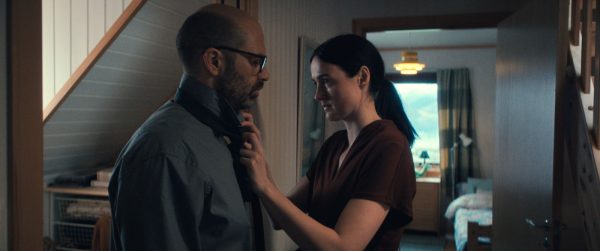
That’s a rough summary of what Fjord has stewed in viewers’ minds over its two and a half hours, with the back half mostly a series of dynamically composed courtroom sequences. The one significant flaw here, even if it could be argued as part of the film’s intent, is that as the children are placed into foster care, their perspectives and character are shoved into the background when they feel as if they should be equally relevant to the adults. Part of this is because something else is hinted at between two of the characters, though it’s obvious in a subdued way. Emotional distance is the priority, at least until the ending achieves some. That coldness throughout is the film’s greatest strength and weakness.
Flickering Myth Rating – Film: ★ ★ ★ / Movie: ★ ★ ★
Robert Kojder
https://www.youtube.com/watch?v=embed/playlist