
Few comic book writers have had as definitive an impact on the comic book world as Alan Moore. He helped reshape the medium’s genetics, consistently pushing boundaries and shifting the perception of comics from juvenile literature to a medium capable of tackling difficult themes and telling mature narratives as effectively as any great prose novel.
Moreover, what distinguishes Moore from his contemporaries is his unmatched versatility and willingness to defy expectations. Over his nearly half-century career, Moore refused to be confined to a single genre, exploring existential eco-horror, dystopian political thrillers, retro-futuristic pulp, and sprawling Victorian crime studies. His works consistently challenge readers to examine power dynamics, morality, and the medium’s formal boundaries.
Moore’s vast catalog can overwhelm seasoned fans and newcomers alike; however, to understand why he remains an untouchable titan of sequential narrative, you need to look at the foundational works that redefined what comics could achieve. This article makes it easier by highlighting 10 of the best Alan Moore comics every fan should read at least once.
Captain Britain

Alan Moore’s run on Captain Britain transformed a generic national superhero into a surreal, multiverse-spanning epic by taking him on a tour through alternate universes. The story features a sinister Prime Minister of England whose ultimate goal is to imprison superheroes in concentration camps. In this story, the mainline reality Earth was first referred to as Earth-616.
Moreover, Moore’s concepts forever altered Marvel Comics lore, including the Omniversal Guardian Roma and the terrifying reality-warping entity known as the Fury. Moore’s willingness to blend classic British eccentricities with psychological terror and cosmic absurdity exemplifies his brilliance and versatility.
The run also famously launched artist Alan Davis’s signature aesthetic, with his clean, dynamic, and expressive pencil work elevating an already great story. Together, Moore and Davis redefined what British superhero comics could look like, laying the narrative groundwork that would directly inspire Excalibur and influence Marvel’s multiversal storytelling for decades to come.
Superman: For the Man Who Has Everything (with Dave Gibbons)

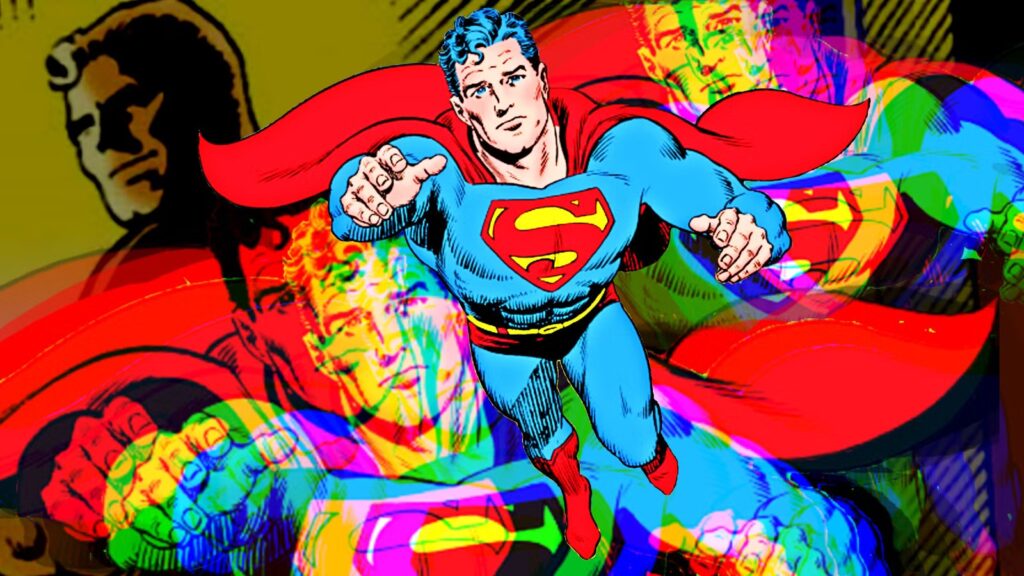
For the Man Who Has Everything is one of the most poignant and psychologically revealing Superman stories ever told. Created with artist Dave Gibbons, Alan Moore crafted a narrative in which Superman must confront Krypton’s destruction from an unprecedented perspective. The story opens on Superman’s birthday, when Batman, Robin, and Wonder Woman find him catatonic.
They find the “Black Mercy” attached to his chest, a parasitic alien plant dispatched by the warlord Mongul that traps its victim in a vivid, inescapable simulation of their deepest heart’s desire while slowly draining their life force. Superman’s ultimate wish was to live as a regular citizen on an unexploded Krypton, surrounded by his wife, children, and surviving family.
To free himself, Kal-El must accept that reality is a lie, in a heartbreaking goodbye to his fake son. Moore exposes a rare side of Superman through the raw rage he feels after losing his homeworld for the second time. His cynicism reflects wounded empathy and a clear-eyed awareness of what humans can be at their best.
Saga of the Swamp Thing

Moore reinvented Swamp Thing, turning the low-selling horror comic into a strange supernatural epic that helped define DC’s entire line of “mature” horror and supernatural comics, including Vertigo Comics. He also retcons the idea that Swamp Thing was a human who became a monster, revealing instead that he is a plant that believed itself to be the human Alec Holland.
Moore presents Swamp Thing as an elemental force transformed by a chemical accident that made him believe he was Alec Holland, turning him into the guardian of the Green, the spirit of all plant life on Earth. He crafted a gripping story about what it means to be human while giving Swamp Thing new dimensions that forever defined the character.

Moore’s creative genius shines in The League of Extraordinary Gentlemen, where he brings together a set of literary figures in a single narrative. Figures such as Edward Hyde, Mina Harker, Allan Quatermain, the Invisible Man, and Captain Nemo team up to save the British Empire from otherworldly threats.
Furthermore, Moore’s masterful ability to weave together classic works by H.G. Wells, Jules Verne, Bram Stoker, and Arthur Conan Doyle into a single, cohesive world plunges readers into a journey through retrofuturist Victoriana. Kevin O’Neill’s distinctively jagged, detail-rich artwork perfectly captures the gritty, smoke-choked streets of industrial London while complementing the story’s prevailing sense of Victorian gothic dread.
Whatever Happened To The Man Of Tomorrow?

Whatever Happened to the Man of Tomorrow? Served as the definitive, tragic farewell to the Silver Age version of Superman before DC rebooted its universe with Crisis on Infinite Earths. Framed as an interview set ten years in the future, Lois Lane recounts how Superman endures a barrage of attacks from members of his rogues’ gallery.
When Superman faces a coordinated attack from his rogues’ gallery, he is stripped of his innocence and forced to make the ultimate sacrifice. Moore’s narrative masterfully subverts decades of lighthearted Silver Age camp by adding high emotional stakes and overwhelming tragedy to classic continuity. Moore does this without discarding the uplifting optimism that defines Superman as a character.
V for Vendetta

Set in dystopian London ruled by fear and fascism, V for Vendetta centers on V, a masked vigilante and anarchist, as he embarks on a quest to topple the oppressive regime and awaken the slumbering masses by letting anarchy reign free. However, the methods that V employs are questionable, especially regarding the recruitment of his successor.
Moore explores whether ideas can outlive governments and rulers, and whether the ends justify the means. V is a polarising figure who uses unheroic methods to address a problem with no clear solution. Though provocative for its time, the story remains relevant today because of the far-right pseudo-populist government figures that have emerged since its release.
The Ballad of Halo Jones

It is a tragedy that Moore couldn’t finish his sci-fi masterpiece, The Ballad of Halo Jones, even though he had planned the story through to the end, because of a copyright dispute. Even so, The Ballad of Halo Jones remains one of Alan Moore’s most distinctively human science-fiction epics, skillfully blending hilarious antics, adventure, and bleakness into a unique, unforgettable experience.
Halo Jones is no chosen one, just an ordinary girl who wants to leave home, not save the galaxy. The desire to escape her dead-end life launches a vast adventure of brutal intergalactic wars, distant worlds, and luxury starliners. Its epic scale is anchored by a deeply personal story, one marked throughout by tragedy.
Promethea

Promethea is an epic fantasy tale masquerading as a superhero comic. Moore’s Promethea is Alan Moore’s ultimate artistic exploration of magic, mythology, and the power of human imagination. The story follows Sophie Bangs, a college student researching a recurring mythic figure in literature named Promethea. Sophie soon discovers a shocking truth that changes the trajectory of her life forever.
She discovers that Promethea is not mythical but real: an avatar of creativity and magic, made real whenever a human vessel channels her through art, poetry, or storytelling. After inheriting the mantle, Sophie is thrust into a cosmic journey across unseen planes of existence. In this work, Moore continues to expand the definitions of a hero.
Watchmen (with Dave Gibbons)

Watchmen brings together the brilliant creative mind of Alan Moore and the legendary artist Dave Gibbons to create one of the most influential graphic novels in the medium’s history. The story’s brilliance lies in its complex mystery, coupled with a critique of superheroes and exemplary political commentary.
By deconstructing superhero tropes and placing costumed vigilantes in a grounded, cynical alternate history shaped by Cold War paranoia and the threat of nuclear annihilation, Moore forever changed the DNA of comics. His use of each character to explore the grotesque side of superheroes was an unprecedented creative decision that set the standard for future comics.
Shaped by Gibbons’ jaw-dropping art, which perfectly captured a cynical alternate reality, Watchmen cemented itself as a pop culture staple and a must-read for all fans. This work is arguably one of the best examples of Moore’s bold, inventive writing and genre-defining genius.
From Hell

Alan Moore’s graphic novel From Hell is a masterclass in crafting a captivating, haunting narrative. The narrative frames the real-life murders committed by Jack the Ripper as a conspiracy designed to cover up a royal blunder. Moore breaks convention by revealing the killer’s identity early on as Sir William Gull, shifting the focus to the reason for the killings.
Moore presents Gull’s horrific butcheries as a calculated Masonic ritual meant to preserve male dominance at the dawn of the 20th century. The narrative offers a chilling psychogeographic exploration of power, class warfare, misogyny, and the dark underbelly of the British Empire. Gull is the product of harmful conspiracies, misogyny, and unchecked power taking hold in a man’s mind.
Campbell’s use of black and white effectively depicts a harsh world where genuine justice was never an option. Additionally, Moore uses the narrative to convey his longtime conviction that magic and the occult shape material reality just as forcefully as any idea potent enough to spur action.
- Birthdate
-
November 18, 1953
- Birthplace
-
Northampton, Northamptonshire, England
- Height
-
6 feet 2 inches
- Professions
-
Writer, Cartoonist