
The 1980s are remembered by many for the explosion in beloved sci-fi and fantasy franchises, from Indiana Jones to Back to the Future, but some movies have aged like milk. In many ways, the era represented the best and worst of cinema, with every great blockbuster matched by numerous overly safe, shallow, or instantly dated projects. Although kids of the decade look back on these with rose-tinted glasses, many just don’t live up to the hype today.
Many of the decade’s most ambitious projects were hamstrung by the limited technology of the time, while others suffered from dated stories and bad direction. It’s not hard to find a flick that had a good idea behind it but was terrible in execution. Though people might look back on these as some of the best the era had to offer, they don’t stand the test of time four decades later.
Streets of Fire Is A Misfire Of A Rock ‘N’ Roll Fable

In 1984, director Walter Hill turned in an experimental rock ‘n’ roll thriller when he cast Diane Lane and Michael Pare in Streets of Fire. It begins when a hardened biker gang abducts singer sensation Ellen Aim from a club, spurring her ex-boyfriend, Tom Cody, to come to the rescue. Working with his sister Reva, Ellen’s current boyfriend Billy, and a tough mechanic named McCoy, he begins his quest to save her.
Streets of Fire has a few good songs to its name but virtually nothing else working in its favor. The “rock ‘n’ fable” vibe it wanted feels cheap and riddled with clichés, choosing to go all in on an aesthetic rather than the execution of a good idea. It might have some lasting nostalgia for rock fans, but it’s a slog of an action movie replete with poor character resolutions and disjointed pacing. Setting the opening and closing songs aside, there’s nothing that makes it worth watching.
The Running Man Traded A Good Story For Cheesy Action

Arnold Schwarzenegger continued his sci-fi action career when he headlined the adaptation of Stephen King’s The Running Man. He plays Ben Richards, a police captain framed for the massacre of innocent protestors, after which he’s forced to compete as a TV gladiator. In this dystopia, entertainment corporations run the show, and men like Richards must fight to the death as the odds are stacked against them.
The designs and effects shown in The Running Man feel less like a high-dystopia than they do like a post-apocalyptic thriller in the vein of the Mad Max franchise. Schwarzenegger’s character is written as almost comical, a man who somehow advanced through a dictatorship’s secret police, only to realize they were the bad guys at the last minute. King’s story was great, but Hollywood’s first stab at bringing it to life felt as tacky as it gets.
Twilight Zone: The Movie Is A Stain On ’80s Cinema

Twilight Zone: The Movie assembled some of the strongest directors of the ’80s to remake four beloved episodes from Rod Serling’s classic series for an anthology film. It remakes four episodes from the original show, from a retirement home given a second shot at youth to a bigot traveling between eras of history. What stands out, however, is that none of these beat out the stories they remade, all feeling like inferior copies.
The production that led to the deaths of Vic Morrow and a pair of child actors, Twilight Zone: The Movie, left a black mark on ’80s cinema. Remembered by many as a terrible working environment at worst and uninspired sci-fi at best, it had nothing original to say. Instead, it wasted the audience’s time and the work of its directors on a campy recreation of other people’s stories, and its behind-the-scenes tragedy is unforgivable.
David Lynch’s Dune Deserved More

Frank Herbert’s Dune has been one of the most influential pieces of sci-fi literature since its 1965 publication, guaranteeing it an eventual adaptation. In 1984, that came courtesy of director David Lynch, who was given the unenviable task of compressing the epic story into a single 137-minute motion picture. It follows Paul Atreides’ quest for revenge against the Harkonnens, banding together with the Fremen to take Arrakis for themselves.
Less a matter of Lynch’s skills as a filmmaker than the simple limitations of the ’80s, Dune comes across as the definition of tacky sci-fi. Despite tackling some great sequences that even Denis Villeneuve chose to omit in his version, some of its creative choices and direction feel odd, disjointed, and noticeably low-budget. Even this version deserved more room to breathe, and the constraints placed on the director prevented this from being a masterpiece.
The Dark Crystal Is Visually-Jarring Dark Fantasy

The work of Jim Henson contributed some of the best stories of the ’80s, but his collaboration with Frank Oz on The Dark Crystal wasn’t among them. It takes place on the planet Thra, which is inhabited by two races created by the breaking of an ancient crystal; on one side are the peaceful and kind-hearted Mystics, the other the cruel and violent Skeksis. This tale belongs to Jen, a creature adopted by the Mystics who embarks on a quest to fulfill an ancient prophecy.
Despite being kept alive by the nostalgia of ’80s kids, The Dark Crystal overwhelms its audience with bad effects and character designs that almost fit the uncanny valley. It was an earnest attempt at fantasy, but it’s a visual mess that would have worked better in animation. Next to Labyrinth, it feels outclassed and outmatched in the realm of old-school dark fantasy.
A Nightmare on Elm Street 3: Dream Warriors Is Campy Horror

The ’80s was the decade of the slasher horror, and nothing represented that quite like A Nightmare on Elm Street 3: Dream Warriors. It picks up the story of Nancy Thompson after losing all of her friends to Freddy Krueger, the killer who haunts the dreams of the kids of Elmwood. Now a therapist, she realizes the kids in her care are the latest victims of the supernatural stalker. However, these kids can control their dreams and fight back.
Despite being the fan-favorite of the series, Dream Warriors began the shift away from suspense horror and towards cartoonish evil. Here, the groundwork was laid for some of the tackiest and cheesiest slashers ever made, from Hellraiser 3 to Child’s Play. While the previous two had felt genuinely scary, it became hard to see Freddy as anything more than the Bugs Bunny of scary cinema.
Short Circuit Made Some Bizarre Choices

The ’80s was nothing if not a place for experimental kids’ movies, especially those from genres like sci-fi, notably Short Circuit. It revolves around an experimental robot, Number 5, who becomes sentient after being struck by lightning. It turns to small-town girl Stephanie Speck for help, roping her into a manhunt as the government chases them both to try and recover the self-aware machine.
From questionable character decisions to the inexplicable choice to use “brownface” for actor Fisher Stevens to play an Indian character, it wears its ’80s sensibilities on its sleeve. In the movie’s defense, it doesn’t try to be much more than a kid-friendly sci-fi adventure, but it doesn’t hold up as well as its contemporaries. More than anything else, it began a shameless streak of E.T. rip-offs, swiping Steven Spielberg and Melissa Mathison’s idea and applying it to other concepts.
Porky’s Explored An Idea That American Pie Did Much Better

Comedy has always been an acquired taste, and few are proof of that as much as Porky’s. It takes viewers back to 1954, when all the boys of Florida’s Angel Beach High have resolved to lose their virginity before graduation. Naturally, a semester of hijinks, hormones, and pranks ensues, showing that these boys will do anything for their rite of passage.
Porky’s has been the victim of dramatically changing social norms around gender, sex, and consent, with modern audiences rightly cringing at some of what used to pass as simple teen fun. It should be telling that, as time passed, even ’80s kids started to judge it as they grew up. It’s a prime example of the kind of movie made for a particular group of a specific time that lost appeal outside of that.
Weird Science Uses Women As Wish Fulfillment

The work of John Hughes gave the ’80s some of its best coming-of-age movies, but in Weird Science he somewhat jumped the gun. It follows teenage boys Gary Wallace and Wyatt Donnelly, a pair of outcast nerds who apply themselves to create their very own woman. That comes in the form of Kelly LeBrock playing the scantily-clad, overly-flirtatious Lisa, who exists only to help the boys begin their journey to manhood.
While it should be taken in good fun alongside other John Hughes movies, Weird Science plays into the dated trope of female characters who exist only to satisfy wish fulfillment. In this case, she serves that purpose to both the characters and the audience. While it does ultimately end on a decent message, the bulk of the film feels like a juvenile, MAD Magazine vision of what it means to become a man.
Next to Hughes’ other films, it feels like one of the more shallow, immature, and campy approaches to teen entertainment. By no means is it terrible, but it’s a disappointment when viewed alongside The Breakfast Club or Planes, Trains and Automobiles.
Top Gun Has Always Been Overhyped

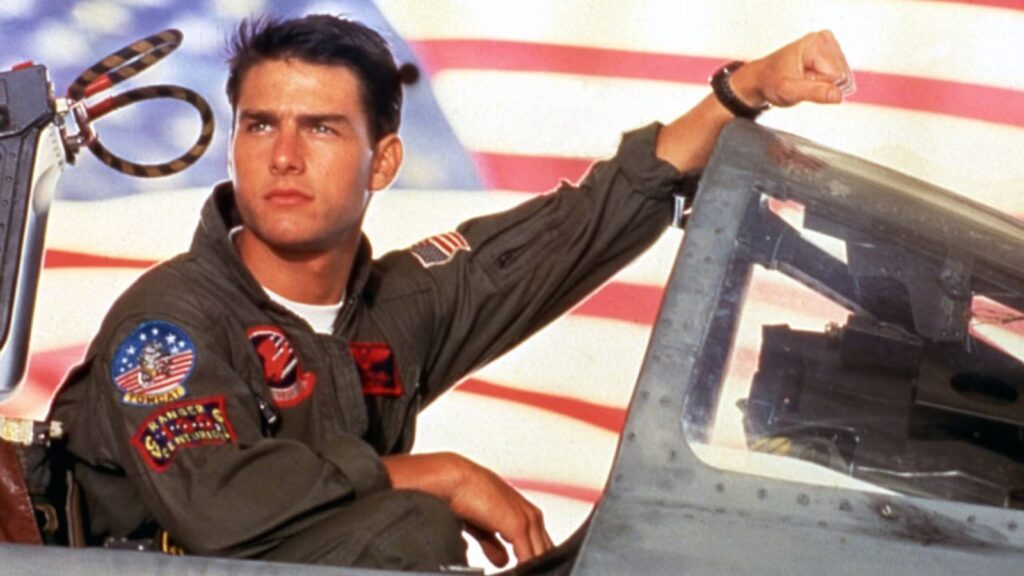
In 1986, Tony Scott elevated military drama cinema when he created Top Gun, the blockbuster that set Tom Cruise on the road to becoming an action hero. It follows the life of Lt. Pete “Maverick” Mitchell, a hotshot naval aviator sent to train at the prestigious Miramar base. There, his hunger for glory clashes with his instructors and peers, leading to tragedy that leaves him questioning his future in the service.
In hindsight, Scott’s film is a well-directed drama, but everything else has aged terribly. It’s a dated movie, from its obsession with the aviator sunglasses look and borderline parody machismo to forced melodrama and questionable rules. Top Gun: Maverick improved on the original in every way possible, leaving Tony Scott’s box-office triumph to feel like a cheesy piece of Hollywood better left in the ’80s.