
Thrillers have always been one of the most popular genres in Hollywood. With the adrenaline rush of solving complex issues and deadly situations often gnawing at the protagonists’ doorsteps, thrillers provide a unique sense of catharsis in the viewers’ minds. Survival thrillers take it a notch above, as watching the characters try to survive amid all sorts of danger, psychological pressure, and moral compromise makes us appreciate life more. The genre helps in exploring the human psyche to such an elemental level that stars like Brad Pitt, Leonardo DiCaprio, and Liam Neeson come back to the genre time and again.
In fact, Pitt’s upcoming movie, Heart of the Beast, is a grueling tale of survival in the Alaskan wilderness. The Oscar-winner plays the role of James Belmont, a Special Forces veteran whose seaplane crashes in the wilderness, and he has to make a 58-mile trek with his traumatized combat German Shepherd to make it to safety. With Pitt’s movie opening in theaters on September 25, it is high time to appreciate the movies that have helped shape the survival thriller canon in Hollywood. Here are 10 such survival thrillers, ranked from great to the absolute best.
Alive (1993) Is a Tale of Collective Endurance When Moral Boundaries Are Pushed To Absolute Limits

Directed by Frank Marshall and based on the events of the tragic Andes flight disaster of 1972, Alive is a story of absolute resilience and the shifting of ethical boundaries in the face of desperation. It tells the tale of the fated Uruguayan Air Force Flight 571 crashing over the Andes, killing many passengers and leaving the remaining stranded. Following days of hardships, including enduring sub-zero temperatures, an avalanche, and starvation, 16 people survived.
With one of the original survivors, Nando Parrado (played by Ethan Hawke in the film), serving as a technical advisor, the film brings out the raw emotions of the harrowing situation. Faced with the ultimate question of survival, the entire group serves as the protagonist, whose collective decisions drive them against the symbolic frozen prison of the Andes. However, their ultimate ethical dilemma comes when they have to choose between survival and morality in the face of starvation and eventual death.
All Is Lost (2013) Proves Isolation Can Be Equally Horrifying
With humans being social animals, very few things are as horrifying as isolation. And if any Hollywood film has depicted the horror of being trapped in isolation with the hope of survival waning with every passing moment, it has to be J. C. Chandor’s All Is Lost. Chandor’s 2013 survival drama stars Robert Redford as a solitary man lost in the vast Indian Ocean in his boat.
While the film contains almost no dialogue — only 51 spoken English words — and minuscule external communication, All Is Lost explores the resilience and perseverance of human beings at the height of hopelessness. As the Alaskan wilderness proves to be the antagonistic force in Brad Pitt’s Heart of the Beast, the enormity and endlessness of the water become the indifferent antagonist in man’s life, where everyday items become objects of survival.
127 Hours (2010) Is a Tale of Survival Through Bodily Sacrifice
If Alive tested the survivors on their ability to sacrifice their moral impetus, 127 Hours takes it a step further when it questions how far one would go to make it out alive. Danny Boyle’s 2010 survival thriller pits its protagonist, canyoneer Aron Ralston, into going through extreme lengths of pain to save his life.
Based on the memoir Between a Rock and a Hard Place by mountaineer Aron Ralston, the film explores the harrowing 127 hours spent by him (played by James Franco) in an isolated Utah canyon until he rescues himself by taking extreme measures. Showing one of the extreme measures taken by a protagonist to survive, the film explores themes of claustrophobia and the transformation of physical confinement to psychological confinement in the face of extreme hardships.
The Road (2009) Is A Post-Apocalyptic Survival Story Where Humanity Has The Last Laugh
If the earlier films explored human survival when faced with improbable decisions in our known world, The Road takes a different road altogether. Based on Cormac McCarthy’s novel of the same name, the film stars the mighty Viggo Mortensen and Kodi Smit-McPhee as the father-and-son duo who make a journey through a post-apocalyptic world in search of safety.
Unlike the other films, where the environment is an indifferent force, in The Road, the environment plays a far more vital role as an antagonist. With survival being the only aim, the Man and the Boy resort to several acts that would be deemed crimes in a normal world, while struggling to maintain their human sensibilities.
Gravity (2013) Shows the Helplessness of a Human Being Against the Enormity of Space
Gravity is terrifying in the sense that it explores that aspect of human fear which is beyond imagination. Stranded alone in space after witnessing the deaths of her co-voyagers and with faulty probes, medical engineer and mission specialist Dr. Ryan Stone (Sandra Bullock) loses the will to live. With Alfonso Cuarón turning outer space into a hostile environment, the film explores the theme of the powerlessness of human life against the infinite nothingness.
With Goeoge Clooney playing an important role as astronaut Matt Kowalski, Gravity further delves deep into the territory of psychological isolation and subjective sense of disorientation in the face of hopelessness. Nevertheless, after showing the nadir of exasperation a human soul can face, it also shows the desperate measures one takes to live.
The Revenant (2015) Takes Survival Instincts to an Almost Mythical Level
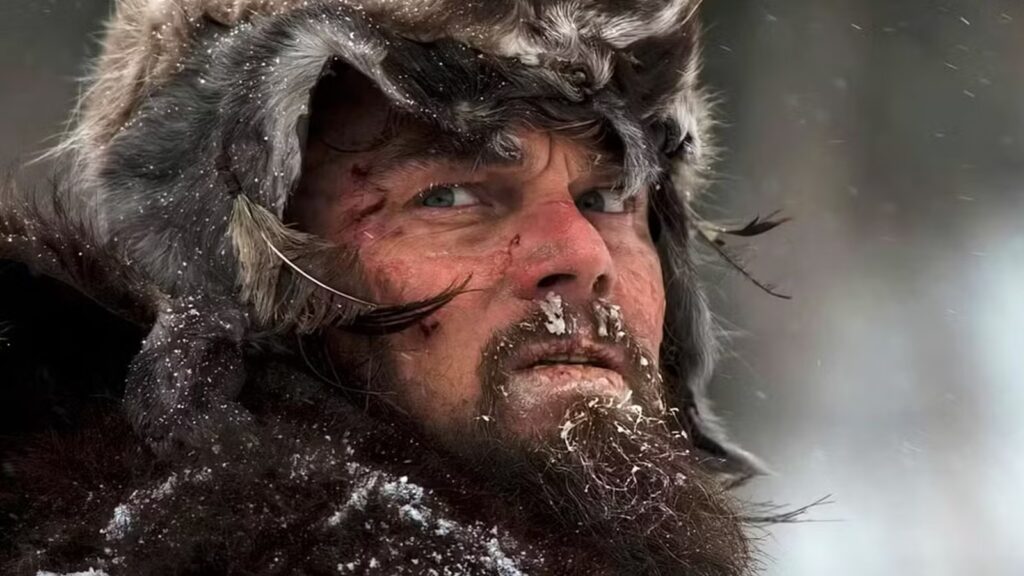
The test of physical endurance is one of the most common themes in survival thrillers, and very few have done it like The Revenant. Adding to the unforgiving nature of the Western frontier, Leonardo DiCaprio’s character, fur trapper Hugh Glass, has to endure not only animal attacks but also betrayal in the brutal survival thriller.
Based on the events of the biographical book The Revenant by Michael Punke, director Alejandro G. Iñárritu painted a grim picture of survival where physical endurance and survival instincts are taken to mythical proportions. With the body and the hostile environment being the two players on opposite sides of the board, survival becomes a war for Glass in The Revenant.
A Quiet Place (2018) Inverts The Narrative of Deadly Silence

In popular culture, silence is mostly associated with the calm before the storm. But in the 2018 survival thriller A Quiet Place starring Emily Blunt, her husband and director inverted the script, where silence is the only way of survival.
The film paints the dark reality of a post-apocalyptic world where a species of blind aliens terrorizes Earth, and humans are constantly in danger of being hunted if they make a sound. With everyday sounds becoming the catalyst for death, survival comes at the cost of adopting silence. The Abbott family’s tireless attempt to escape death becomes the concept board of a survival puzzle, with hostile extraterrestrial creatures providing horrifying challenges at every step.
Society of the Snow (2023) Shows the 1972 Andes Flight Disaster In A Different Moral Light

The third film, based on the 1972 Andes flight disaster (also called the Miracle of the Andes), Society of the Snow showed the tragedy through a different lens. Based on Pablo Vierci’s book of the same name, the Academy Award-nominated film showed survival through the strength of community.
Using the teamwork lesson learned during their rugby sessions, the few remaining stranded passengers of the fated chartered flight fight the adversities to survive amid the harsh conditions of the Andes. J.A. Bayona’s Spanish-language drama time and again highlights the importance of endurance while showing that individual strength is often substantiated by collective wisdom.
The Thing (1982) Takes Away The Basic Human Ability of Trust to Replace It With Survival Paranoia
One of the earliest proponents of the classical survival thrillers, The Thing makes the human capability of trust, or its lack thereof, the central aspect in its fight for survival. Based on the science fiction thriller novella Who Goes There? by John W. Campbell Jr., John Carpenter’s film follows a group of American scientists in Antarctica facing an all-pervasive extraterrestrial threat, called the “Thing,” that imitates other organisms, making it impossible to trust even one’s closest companion.
The Thing works with an interesting dichotomy where community is no longer a safe space. Instead of a community providing the collective endurance like Society of the Snow, the human connection gets weaponized in this survival horror where psychological solidarity comes even before physical victory because of the all-pervasive paranoia.
The Grey (2011) Takes the Crown With Its Psychological Collapse and Existential Dread
Liam Neeson’s 2011 film The Grey (2011) takes the crown for being the best survival thriller of all time because of its unrelenting take on existential philosophy while exploring the effects of environmental hostility coupled with psychological breakdown. Based on the story “Ghost Walker” by Ian MacKenzie Jeffers, director Joe Carnahan presents the story of a group of plane crash survivors learning the hard way that the aviation disaster was not the worst thing that has happened to them.
Set in the Alaskan wilderness, a group of seven oil facility workers survives a plane crash before facing a stealthy, fatal attack from a wolf. Unfolding the ultimate man versus nature narrative, the remaining survivors try to move away from the threats as the combined psychological effect of isolation and hopelessness plays a heavier antagonistic role. As the men, led by John Ottway (played by Neeson), try to survive the wilderness, the visceral filmmaking leads the group to question existential dread and death itself.