The sci-fi genre often explores abstract concepts, introduces technology, and bends our reality into something alien yet familiar. For that reason, it has always been one of my go-to genres when I want mind-bending cinema. I’m passionate about movies that resonate long afterward and beg for a second viewing, whether because the film overloads you with information you can’t pick up the first time or an ending rewrites what came before.
Of course, a movie about time travel or an alien anomaly isn’t automatically confusing. For this list, I picked 10 movies not because they are odd, but because they leave lingering questions. I dug through my personal favorites to come up with several that are ideal for anyone who wants films that will have them coming back for more.
Why You Should Trust Me: I have covered films (including focusing on the sci-fi genre) for over a decade, and I have a particular soft spot for complex movies that reward multiple viewings. I have seen every feature on this list at least twice, and I picked each entry based on genuine structural or narrative ambiguity, not just a complicated premise.
Honorable Mentions
- Donnie Darko (2001): Richard Kelly’s cult classic sends a troubled teenager (Jake Gyllenhaal) through visions of a man in a rabbit costume and a possible universe-ending timeline. The film’s ending is still debated.
- Upstream Color (2013): Shane Carruth’s follow-up to Primer trades time travel for parasitic worms, pig farming, and identity loss.
- Mr. Nobody (2009): Jared Leto plays the last mortal man on Earth in the sci-fi movie Mr. Nobody. The character recounts several contradictory versions of his own life that all branch from a single childhood decision.
- Timecrimes (2007): Nacho Vigalondo’s Spanish time-loop thriller follows one man traveling back a few hours at a time, creating multiple versions of himself who must avoid crossing paths.
‘Tenet’ (2020)
Intended to Be Watched Backward
IMDb: 7.3/10 | Letterboxd: 3.5/5
-
 Warner Bros. Pictures
 -
 Warner Bros. Pictures
 -
 Warner Bros.
In Christopher Nolan’s Tenet, an unnamed operative known only as the Protagonist (John David Washington) is sent into a war fought in inverted time. Objects and people move backward through the same events the forward-moving characters also live through. Robert Pattinson plays his handler Neil, and Kenneth Branagh plays Andrei Sator, a Russian arms dealer who can communicate with the future.
Nolan built the entire second half of the film around temporal pincer movements, sequences where the same event plays out simultaneously forward and backward on screen. While this structure isn’t entirely confusing, once you reach the end, you might make want to give it another go to make sure you’ve pieced both timelines together. Nolan certainly thrives on constructing mind-bending, introspective sci-fi; this isn’t his only film worthy of a spot on this list.
‘Enemy’ (2013)
A Dark Doppelgänger Story

IMDb: 6.8/10 | Letterboxd: 3.5/5
Enemy finds Jake Gyllenhaal playing dual roles: mild-mannered history professor Adam Bell and the actor Anthony Claire. The two meet after Adam spots Anthony in the background of a movie. They switch roles and are led into a dark journey of isolation, obsession, and identity. Directed by Denis Villeneuve, the movie takes some dark turns, blending sci-fi with a gripping psychological thriller.
Enemy pieces together a grounded psychological thriller around personal identity, then ends with a gut-punch that reframes the entire film. Villeneuve said in interviews that the ending is about control and fear. Since the movie focuses on themes, rather than giving a definitive answer, anyone will come up with their own theories and want to watch it more than once.
‘Primer’ (2004)
Extremely Technical Sci-Fi
IMDb: 6.7/10 | Letterboxd: 3.6/5
Shane Carruth wrote, directed, and starred alongside David Sullivan as two garage engineers who stumble into building a time machine while trying to develop something else. Made for a reported $7,000, the film follows the pair as they use the device for small financial gain. As they begin to lose track of their different versions, they begin to weigh the effect their actions have had, and whether they can even fix the timeline.
Carruth deliberately wrote the dialogue in dense, unexplained industry-specific language. While it’s a lot to take in, it’s also oddly hypnotic to hear such an abstract concept explained with technical clarity that makes the time travel believable. Considering the non-linear structure that messes with timelines, there is a lot to piece together when you watch for the second time.
‘Annihilation’ (2018)
Another World Twisting and Turning

IMDb: 6.8/10 | Letterboxd: 3.6/5
Natalie Portman plays Lena, a biologist who joins an all-female expedition (Jennifer Jason Leigh, Tessa Thompson, Gina Rodriguez, and Tuva Novotny) into the Shimmer, a spreading anomaly that scrambles DNA and warps everything inside it. Lena hopes to learn what happened to her husband (Oscar Isaac), the only person who ever returned from a previous expedition, although with a broken mind.
From cells splitting to plants growing in human shapes, the movie pushes further into the unfamiliar through its runtime. Of course, the most divisive and talked-about moment is the almost wordless final sequence. The ending is meant to be interpreted several different ways, which makes it a rewarding multiple-viewing experience. You will want to reexamine not just the ending, but everything leading up to it. It’s also one of the best sci-fi thrillers of the 21st century.
‘Triangle’ (2009)
A Vicious Time Loop
IMDb: 6.9/10 | Letterboxd: 3.3/5

In Triangle, Melissa George plays Jess, a troubled, insecure single mother. When she reluctantly joins friends on a yacht trip, she is caught in a storm and abandoned on a seemingly haunted ocean liner. When a killer starts taking them out, and they find themselves seeing looped versions of themselves as victims, panic, mistrust, and a race to figure out what is going on begin.
Triangle is the movie I would most recommend to fellow horror lovers, as it uniquely combines elements of slasher and sci-fi mystery. This is also the least mind-bending or confusing entry. However, there’s enough that keeps you trying to figure out who is who in which timeline. So, a second watch is a real delight.
‘Predestination’ (2014)
Chasing a Terrorist Across the Timelines
IMDb: 7.4/10 | Letterboxd: 3.6/5

Predestination opens with Ethan Hawke as a mysterious bartender working one last shift in 1970s New York. He hears an incredible life story from a lonely stranger at the bar (Sarah Snook). Hawke’s character is actually a Temporal Agent hunting a serial bomber across decades, and their meeting is the key to solving the case.
The film’s first act is a fairly standard framed conversation before it discloses its central time loop. It then focuses on one character and features a bizarre but entertaining sci-fi paradox that is thrilling one moment and utterly confusing the next. It’s a lot to take in on a single viewing, so this one needs that rewatch.
‘Dark City’ (1998)
A City Forever Stuck in Darkness
-
 New Line Cinema
 -
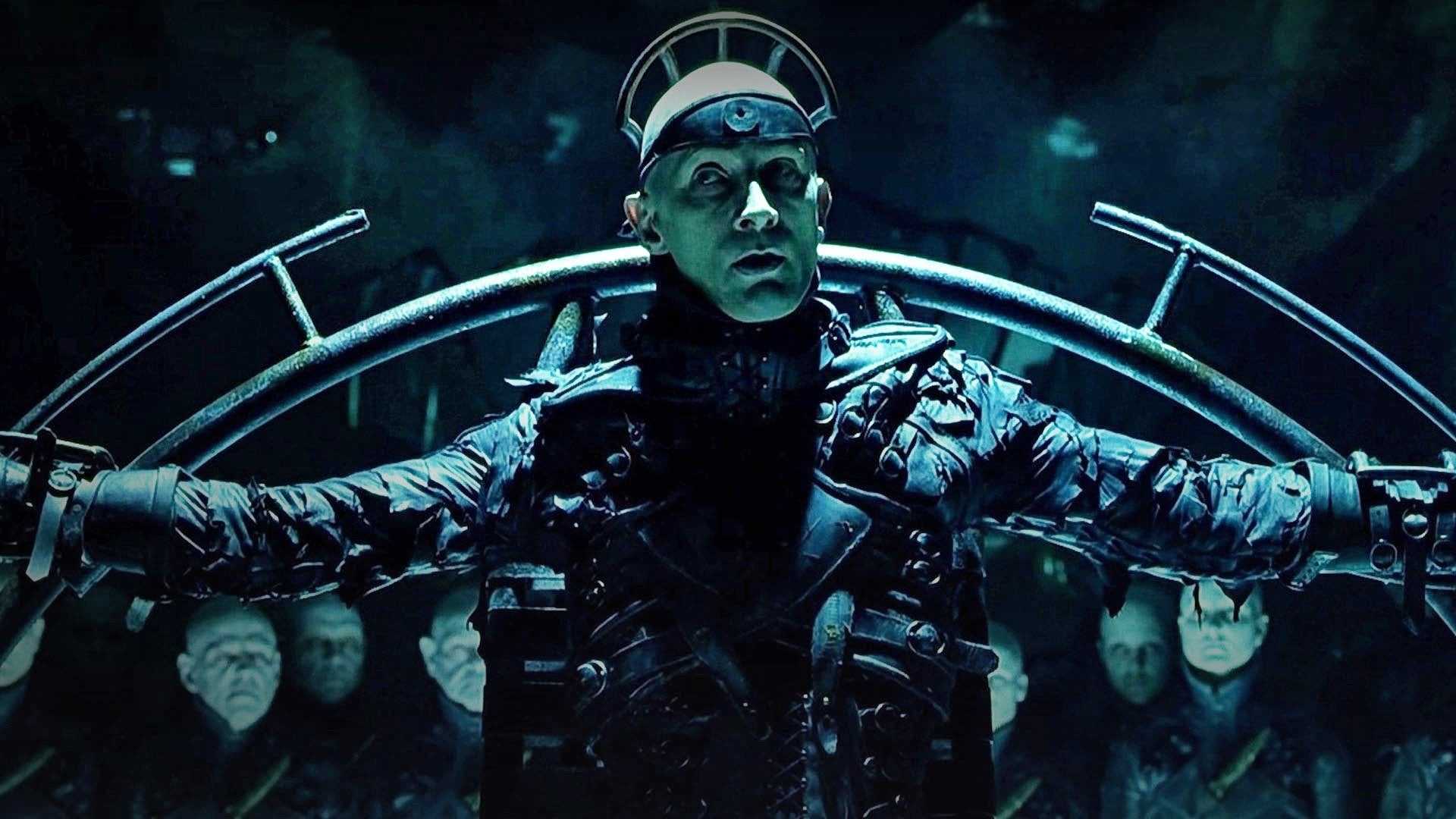
A man in uniform in the sci-fi thriller Dark City (1998) New Line Cinema -
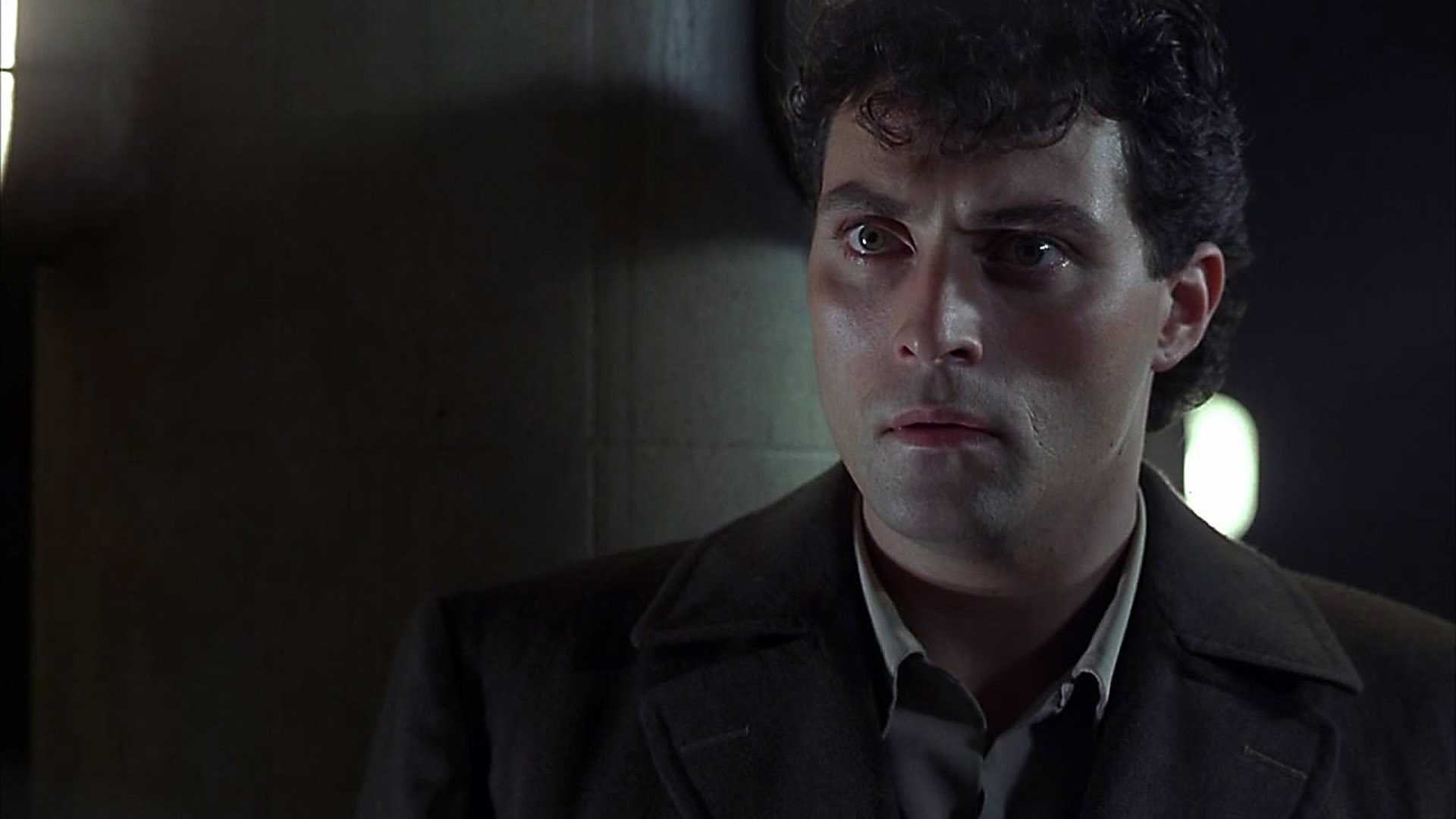
Rufus Sewell in the sci-fi thriller Dark City (1998) New Line Cinema
IMDb: 7.7/10 | Letterboxd: 3.7/5
After waking up in a bathtub with amnesia, John Murdoch (Rufus Sewell) finds himself both convicted of a murder he is unsure he committed and able to witness the continuous shifting of the world. He soon meets Dr. Schreber (Kiefer Sutherland), who lets him into the world of the “Strangers,” who rebuild the entire city’s architecture and citizens’ memories every day at midnight.
Alex Proyas withholds the Strangers’ true nature for most of the runtime, infusing neo-noir elements that build a dark mystery before its shocking reveal. Part horror, part sci-fi, and a welcome overload of the senses, the movie features its big reveal at the end, and the tonal shift really makes this one benefit from more than one watch. Released more than one year before The Matrix, Dark City is often cited as a precursor that received less mainstream attention. While it flopped when it was released, Dark City has earned its cult status.
‘Solaris’ (1972)
A Slow, Philosophical Puzzle

IMDb: 7.9/10 | Letterboxd: 4.2/5
A cosmonaut’s strange behavior sends psychologist Kris Kelvin (Donatas Banionis) to a research station orbiting the planet Solaris, whose crew has stopped responding to Earth. Once aboard, a physical recreation of Kelvin’s late wife, Hari, visits him, which he ties to a sentient body of water on the planet below him.
Long, unbroken takes let the film linger on Kelvin’s grief as much as on its plot mechanics. The film also doesn’t explain itself, allowing you to project yourself into what is real, what is false, and what it all means. The ending is ambiguous, yet perfectly handled; expect no less from Andrei Tarkovsky. The film’s deep philosophical nature asks viewers to come back and reassess everything. Steven Soderbergh’s 2002 version of Stanislaw Lem’s novel is great, but you should watch 1972’s Solaris.
‘Akira’ (1988)
A Landmark Anime With Depth

IMDb: 8.0/10 | Letterboxd: 4.3/5
Set in Neo-Tokyo in 2019, the film follows a biker gang that includes Tetsuo, who develops explosive psychic powers after a government experiment goes wrong. His friend Kaneda tries to stop him before his power spirals out of control and swallows all of Neo-Tokyo. Katsuhiro Otomo adapted his own sprawling manga for the screen while the source material was still being published.
An utter classic of sci-fi anime, Akira‘s sense of confusion comes from its rich, overwhelming visuals and its adapted source. The full explanation of Akira is delivered in fragments and visuals rather than dialogue. The cataclysmic, picturesque conclusion is also more about spectacle than explanation. Honestly, watch the film, read the manga, then watch the film again, if you can.