
Cinema’s most iconic sci-fi movies have introduced some of the greatest main characters in history, but not all of them have survived their fantastical adventures. While it’s a trope of the genre that there are often fake-out deaths, removing a character only for a short time before they return by some sci-fi means, some of the science-fiction genre’s most notable characters have paid the ultimate price, often sacrificing their lives for the betterment of others, but unfortunately dying for good.
From heroes fighting for environmental protection to lone individuals protecting others in a dystopian society, and from heroes trying to restart the sun to a young tech whiz manipulated by an artificial intelligence, these characters are some of cinema’s most tragic. While the likes of Seth Brundle in The Fly, Harry Stamper in Armageddon, Wolverine in Logan, and many more deserve honorable mentions, some sci-fi characters’ deaths had an everlasting impact on the genre and cinema as a whole.
Freeman Lowell Sacrifices Himself for the Forest in Silent Running

Released in 1972 as the directorial debut of Douglas Trumbull, Silent Running followed botanist Freeman Lowell (Bruce Dern), a crew member aboard a space-faring ecological system, the Valley Forge, one of eight freighters carrying plant life from Earth, where forests have gone extinct. When the crew of each freighter receives orders to jettison their forests and return their ships to commercial service, Lowell refuses. He kills his three crewmates, who fight against him, and hijacks the forest ship, hoping to save its cargo.
As the isolated forest begins to die and authority ships close in, Lowell realizes he cannot protect the greenhouse any longer, so he jettisons the final healthy forest dome into space under the care of his robotic drone companion, Dewey, then triggers the self-destruct mechanism. He sacrifices his own life as a distraction for the authorities while Dewey tends to the forest drifting into deep space, proving how powerful one man’s actions can be when fighting for what is right.
Jyn Erso and Cassian Andor Accept Their Fate in Rogue One: A Star Wars Story

During the opening crawl at the start of 1977’s Star Wars: A New Hope, it’s revealed that rebel spies managed to steal plans for the Death Star during a battle against the Galactic Empire. Released in 2016 and directed by Gareth Edwards, Rogue One: A Star Wars Story details this mission, so viewers went into it suspecting how it would end. This gave Rogue One a sense of ease, as Jyn Erso (Felicity Jones) and Cassian Andor (Diego Luna) know they’re unlikely to survive.
Jyn Erso leads a team of volunteers to steal the Death Star plans and transmit information about how her father (Mads Mikkelsen) sabotaged the base to the Rebel Alliance. With their mission complete and escape impossible, Jyn and Cassian retreat to the shoreline of Scarif and accept their fate as the Death Star fires a controlled blast at the site, obliterating the Imperial base that held the plans and engulfing them in a massive fireball, killing them but securing a “new hope” for the future.
Theo Gives His Life for the Future in Children of Men

Alfonso Cuarón’s Children of Men is considered one of the greatest dystopian movies of all time, released in 2006 and exploring a world in which nobody had been born in almost two decades. Shortly after the youngest person in the world dies at age 18, Theo (Clive Owen) is found by his estranged wife, Julian (Julianne Moore), a member of the militant refugee-rights group known as the Fishes, who tasks him with protecting young refugee Kee (Clare-Hope Ashitey), who reveals that she is pregnant.
After she gives birth, Kee becomes a target for the Fishes; however, as the group’s leader, Luke (Chiwetel Ejiofor), tries to claim her and the child. Theo tracks them and confronts Luke, who manages to shoot Theo in the stomach before dying himself. Despite his wound, Theo walks Kee and her newborn baby to safety. He eventually loses consciousness on the rowboat, giving his life to protect not only Kee and her new daughter, Dylan, but also the very future of humanity itself.
James Cole’s Death Is a Major Twist in 12 Monkeys

Bruce Willis delivers a career-best performance in 1995’s 12 Monkeys, Terry Gilliam’s movie that saw James Cole (Willis) travel back in time to gather information about a man-made virus that wiped out most of the human population in his time. Throughout the movie, Cole is plagued by a nightmare of witnessing the shooting of a man at an airport as a child, but he continues his mission in earnest, investigating the Army of the Twelve Monkeys, who he suspects will release the virus.
Cole’s investigation leads him to the Philadelphia International Airport, where he surmises that the Army of the Twelve Monkeys aren’t the culprits and realizes that Dr. Peters (David Morse) is, instead, the suspect. He attempts to shoot Peters, but is shot dead by police before he succeeds—witnessed by the younger James Cole. He becomes the very man he saw killed as a child, contributing to one of sci-fi cinema’s most memorable causal loops and proof that time loops sometimes can’t be broken.
K Rescues Rick Deckard in Blade Runner 2049

35 years after the original Blade Runner’s release in 1982, Blade Runner 2049 continued the story by catching up with Rick Deckard (Harrison Ford) and revealing that he had a child with Rachael (Sean Young), a replicant. Replicants were thought unable to reproduce, but K (Ryan Gosling) embarks on a mission to rescue Deckard from those hunting his child, and reunite him with his daughter. In the final battle against replicant enforcer Luv (Sylvia Hoeks), K is mortally wounded.
Despite his injuries, K manages to kill Luv and save Deckard, who he assumes will be presumed dead after the battle. This gives them cover; that means Deckard can finally reunite with his daughter, replicant memory-maker Dr. Ana Stelline (Carla Juri). While father and daughter meet, K passes away from his injuries on the steps outside Stelline’s building to the tune of the iconic “Tears in Rain” motif, a peaceful death that signifies humanity is not defined by biology, but by empathy and sacrifice.
Robert Capa Saves the World With His Sacrifice in Sunshine

Featuring an ensemble cast and reuniting the team behind 28 Days Later, writer Alex Garland and director Danny Boyle, 2007’s Sunshine follows the crew of the Icarus II as they embark on a mission to reignite the dying sun and stop a global freeze. Among them is physicist Robert Capa (Cillian Murphy), who operates the massive stellar-bomb device that promises to restart the sun, but the mission comes across obstacles when they find the abandoned Icarus I and its murderous captain, Pinbacker (Mark Strong).
In a showdown, Pinbacker attacks and disables the ship. Capa manages to escape and, with help from wounded pilot Cassie (Rose Byrne), manually controls and detonates the payload, succeeding in their mission. In his final moments, Capa reaches out to touch the sun’s surface as it reignites, sacrificing his life to save the world. His death is portrayed not with pain, but with overwhelming peace, and pays off his recurring nightmares of falling into the sun with a beautiful moment of acceptance.
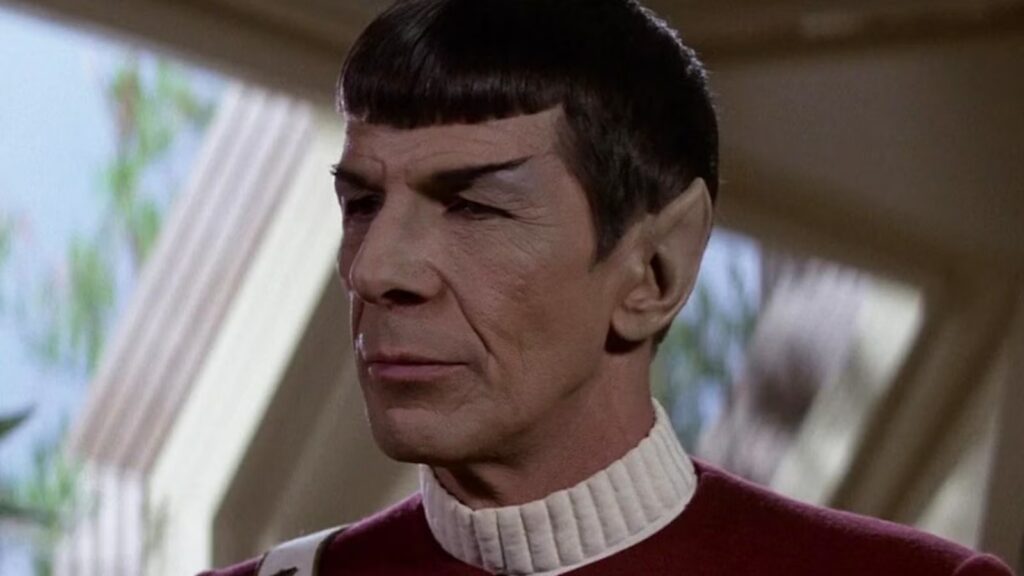
Spock’s Death in Star Trek II: The Wrath of Khan Is Legendary

Directed by Nicholas Meyer as the second installment in the Star Trek film series, based on Star Trek: The Original Series, Star Trek II: The Wrath of Khan completely changed the game by killing off one of the franchise’s most iconic characters. The 1982 movie pitted Admiral James T. Kirk (William Shatner) and the crew of the USS Enterprise against the genetically engineered tyrant Khan Noonien Singh (Ricardo Montalbán), who escapes from a 15-year exile to exact revenge on Kirk.
When Khan activates the Genesis device, the crew of the Enterprise try to move out of range, but the ship’s warp drive is damaged. Spock (Leonard Nimoy) enters the drive to restart it, saving his crew but losing his life, as the warp drive’s radiation poisons him. Spock urges Kirk not to grieve, as his decision to sacrifice himself to save Enterprise was a logical one. This was an incredibly emotional ending, recreated by Zachary Quinto and Chris Pine in 2013’s Star Trek Into Darkness.
The T-800 Sacrifices Itself to Save the Future Terminator 2: Judgment Day
After achieving quick success with The Terminator and Aliens, James Cameron returned to write and direct a sequel to the former. 1991’s Terminator 2: Judgment Day is widely regarded as one of the best sequels ever, catching up with Sarah (Linda Hamilton) and John Connor (Edward Furlong), who are targeted by a T-1000 (Robert Patrick) sent back in time by the artificial intelligence Skynet to kill the young future resistance leader. The T-800 (Arnold Schwarzenegger) is sent back by the resistance to protect Connor.
The battle against the T-1000 leads the Connors and the T-800 to a steel mill, where they manage to push the more advanced robot killer into a vat of molten metal, where it disintegrates. The T-800 then realizes its own technology could be used as a foundation for Skynet, so it sacrifices itself to make the development of the AI impossible. The machine’s final act is a symbolic thumbs-up as he sinks into the steel, famously stating he now understands why humans cry.
Caleb Smith Is Manipulated By Ava in Ex Machina

While Alex Garland brought his incredible screenwriting talents to Sunshine, Ex Machina benefited from not only his script, but also his direction. The 2014 movie took a more grounded and quiet approach to sci-fi, as a search engine company programmer, Caleb (Domhnall Gleeson) is selected to carry out the Turing test on an artificial intelligence created by the company’s CEO, Nathan Bateman (Oscar Isaac). Despite knowing she is artificial, though, Caleb forms a close bond with Ava (Alicia Vikander).
Ava uses this connection to manipulate Caleb into setting her free from her captivity in Nathan’s isolated laboratory. Ava uses the skin of other gynoids to assume a human appearance and then abandons Caleb in the facility with Nathan’s dead body, leaving him trapped in an inescapable room with no means of escape and no rescue on the way, while she ventures to the outside world and assimilates into society. Caleb’s death in Ex Machina is a truly shocking and dark turn of events.
Ellen Ripley Falls to Her Death in Alien 3

Over the course of three feature films, Ellen Ripley (Sigourney Weaver) became one of sci-fi’s most iconic and beloved characters. She debuted in 1979’s Alien as the sole survivor of the Nostromo, and returned in 1986’s Aliens to guide a crew of Colonial Marines to LV-426, where Xenomorphs had wiped out the human colony. At the end of Aliens, Ripley, Hicks (Michael Biehn), Newt (Carrie Henn), and Bishop (Lance Henriksen) go into hypersleep for their return to Earth, but they never make it.
A facehugger attacks the crew in their sleep, leaving only Ripley alive when they crash on the prison world of Fiorina “Fury” 161. Ripley soon realizes that the facehugger impregnated her with a new Xenomorph queen, so she ends her fight once and for all by jumping into a furnace as the alien breaks through her chest. Ripley and the embryo are cloned in 1997’s Alien: Resurrection, but Alien 3’s ending in 1992 marked the true demise of one of sci-fi’s greatest heroes.